Facebook
 Google
 GitHub
 Linkedin
Briefs: AI Data Centers Inspire Tech in Solar, Storage, Fusion
Meta, IBM, Overview Energy, Noon Energy, CATL, Hyperstrong, and Emerald AI are among the companies working toward groundbreaking technology deployments.
AI data centers are driving innovation on numerous fronts, from generation to grid flexibility. Meta will work with Overview Energy to harness space-based solar power for its data centers, while partnering with Noon Energy for energy storage systems. CATL and Hyperstrong are also focused on energy storage, as CATL prepares its sodium-ion batteries for commercial mass production.
IBM is aiming bigger, broader, and more long-term: the tech giant has created a model for understanding nuclear fusion plasma and made it open source. Back on Earth, Emerald AI and Silicon Valley Power are piloting a demonstration to use AI to enable data centers to send energy back to the grid when needed.
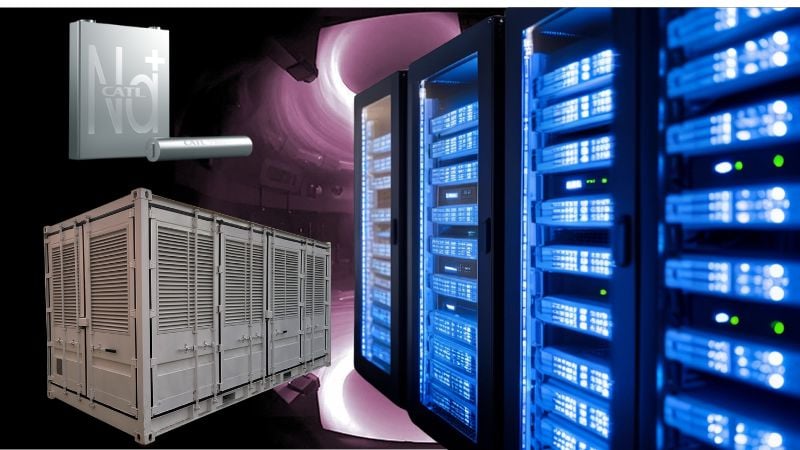
![]() Can energy generation, storage, and grid flexibility ease the path to AI data center expansion?
Can energy generation, storage, and grid flexibility ease the path to AI data center expansion?
Meta Partners for Out-Of-This-World Data Center Power
Meta has entered into partnerships with two companies to tackle AI data center energy needs using space-based solar power. The tech giant will work with Overview Energy to develop the space-based solar technology, while joining forces with Noon Energy to create energy storage systems that can outlast lithium-ion batteries.
Overview Energy will use satellites orbiting 22,000 miles above the Earth’s equator to collect solar energy and beam it to Earth as near-infrared light. Synchronized with the orbit, the satellites can continuously harvest sunlight and avoid the day-night cycles that conventional solar must contend with. The Earth-based facilities that receive the beams will convert them into electricity for the grid.
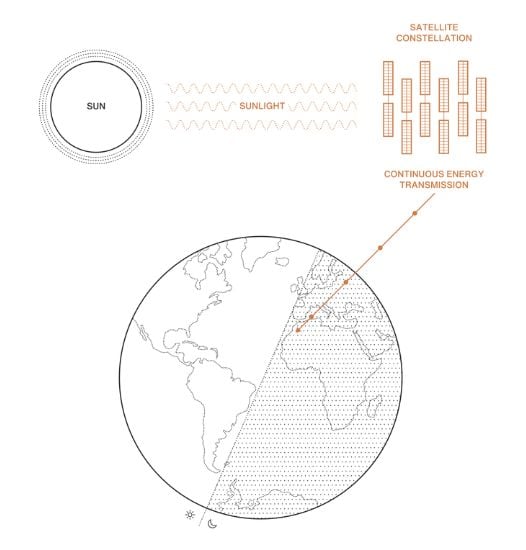
The space-based solar model. Image used courtesy of Overview Energy
The initial orbital demonstration is projected for 2028, with commercial power delivery in 2030. Meta will have early access to up to 1 GW of Overview’s capacity.
Meta’s second partnership is with Noon Energy, which makes modular, reversible solid oxide fuel cells and carbon-based storage that can outperform lithium-ion batteries in an energy storage system. Noon’s solid oxide fuel cells can deliver over 100 hours of energy storage systems.
Meta has reserved up to 1 GW/100GWh of long-duration energy storage capacity. An initial 25 MW/2.5 GW pilot will be completed in 2028. Meta states that the energy storage will provide grid resilience and support its AI infrastructure.
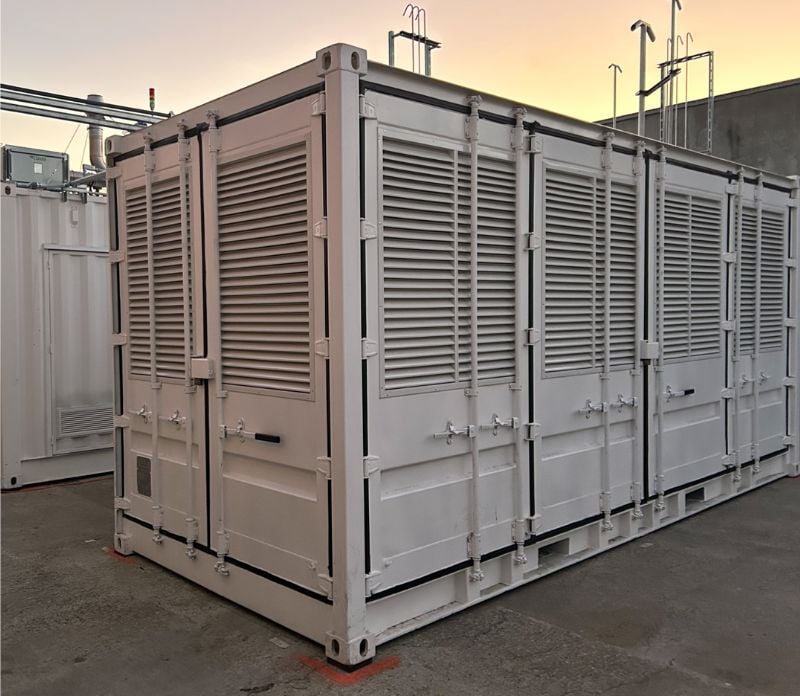
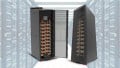
Noon’s energy storage unit. Image used courtesy of Noon
CATL and HyperStrong Make Deal for Sodium-Ion Energy Storage
Chinese battery giant CATL has signed a cooperation agreement with HyperStrong to develop sodium-ion battery storage in Fujian. The deal will jumpstart CATL’s efforts for commercial mass production of sodium-ion batteries. It is the world’s largest sodium-ion battery supply agreement to date.
In the three-year agreement, the companies will work together on R&D, product applications, and deployment. The plan is to create 60 GWh of sodium-ion batteries.
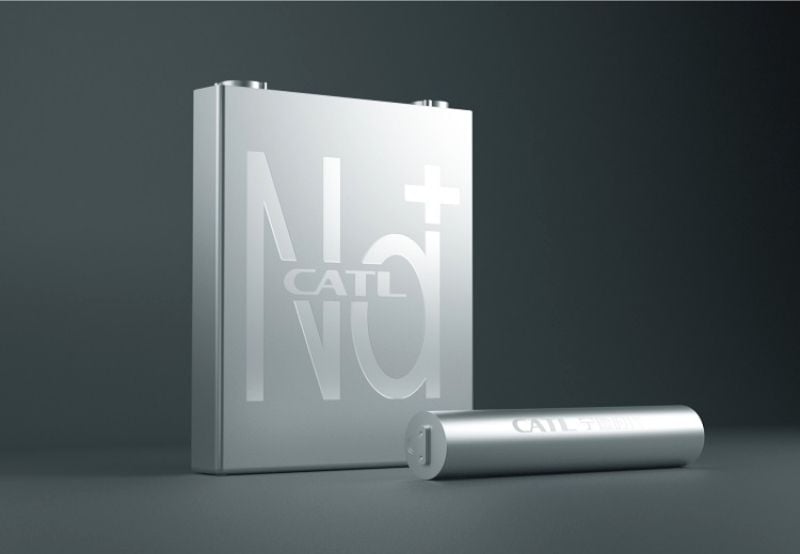
CATL sodium-ion battery. Image used courtesy of CATL
CATL has worked to refine manufacturing processes using core technologies such as angstrom-level pore-size regulation, adaptive dynamic formation, and surface molecular water-locking. CATL’s sodium-ion design uses the same form factor as lithium-ion and is compatible in similar deployments.
IBM Builds World’s First AI Model for Fusion Plasma
IBM has created the first AI foundational model for fusion plasma and made it open source. The TokaMind model can harmonize sensor data from tokamak fusion reactors to understand plasma behavior.
IBM worked with the U.K.’s Atomic Energy Authority (UKAEA) and the STFC Hartree Centre to gather years of complex, high-frequency data from UKAEA’s Mega Ampere Spherical Tokamak (MAST). From this data, they leveraged AI algorithms to harmonize the 40 distinct signals into a unified representation of how plasma responds to a tokamak’s operational settings.
While TokaMind currently represents only the UKAEA, scientists intend to add data from other tokamaks and compare the results. They aim to apply mathematical physics, create simulations of plasma behavior, and formulate new methods to control and amplify its performance.
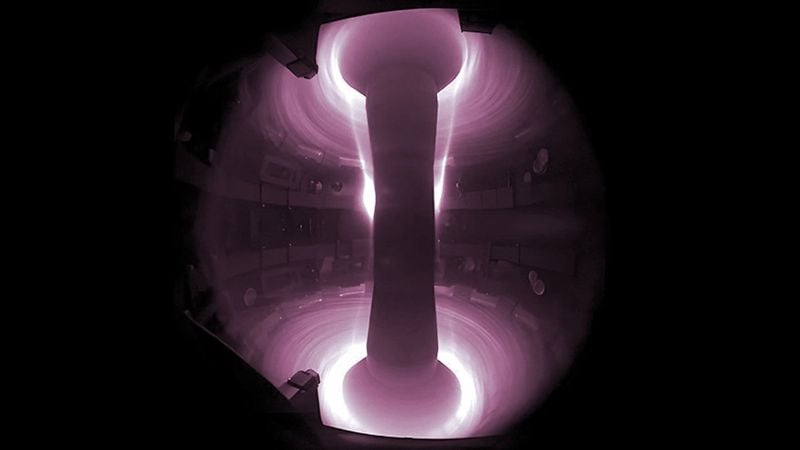
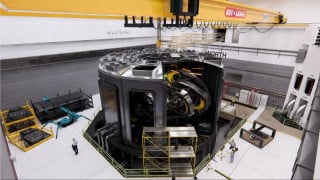
Inside the MAST fusion reactor. Image used courtesy of IBM/UKAEA
Scientists are already running experiments on UKAEA’s MAST Upgrade. The seconds-long experiments evaluate how the confined plasma reacts to various manipulations. The results will contribute to the prototype fusion plant, Spherical Tokamak for Energy Production, expected to become operational in the 2040s.
Emerald AI and Silicon Valley Power Pilot Grid-Responsive Power for AI Data Centers
Silicon Valley Power of Santa Clara, California, has entered a pilot program with Emerald AI to demonstrate how flexible data centers can assist with grid reliability. Flexible data centers can adjust their power consumption in response to grid conditions.
The demonstration will use Emerald AI’s Conductor platform and software to manage and dispatch flexible data centers when the grid needs support. The pilot will focus on grid reliability, efficient use of infrastructure, future planning, and affordability.
A multi-megawatt data center will serve as the first pilot site. Emerald’s AI will be integrated with Nvidia DSX Flex capability, allowing the data center to respond to SVP signals for support during peak load times.
Emerald AI and Nvidia have conducted similar demonstrations at five data centers worldwide.