Facebook
 Google
 GitHub
 Linkedin
Pros and Cons: Are DC Microgrids Worth the Hype?
DC microgrids can benefit industry and communities, but don’t overlook the drawbacks.
Both AC and DC currents are used across the energy distribution network. AC is typically used for microgrids and long-distance transmission, whereas DC powers everyday electronics. Renewable energy sources also generate DC. Inverters must switch the DC to AC before it enters the distribution grid.
AC and DC have strengths and weaknesses in the grid, but inverters can invoke losses in the grid and hold back energy efficiency. The sheer number of inverters used with renewable energy sources in the grid can add up to large energy losses. It might be advantageous to use DC microgrids―especially local on-site microgrids—so that energy isn’t lost from the generation source to the user. However, understanding DC microgrids’ various advantages and disadvantages is essential.
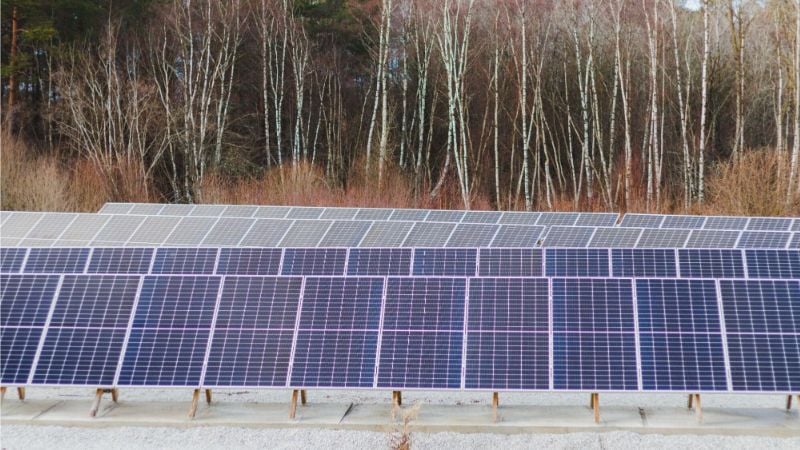
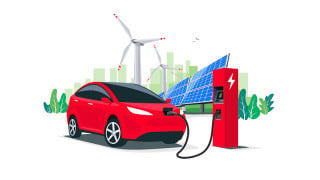
Solar energy. Image used courtesy of Adobe Stock
DC Microgrid Interest
Most loads taken from the grid are DC-supplied. This includes office and home electronics and industrial equipment. Many industries are shifting toward using DC electricity to power systems traditionally run on AC to save energy. For example, DC arc furnaces are installed in the steel industry because they consume less energy than AC.
Each power conversion stage loses around 2.5% of the energy it converts. Creating local and on-site DC microgrids using local DC generation doesn’t need power conversion, so more generated energy could be used rather than lost to the environment.
DC Microgrid Advantages
DC microgrid advantages include:
- Local power generation sources (such as renewable energy) can integrate easily without conversion processes. It’s also easier to coordinate their operations once installed.
- A DC microgrid is easier to control than an AC microgrid and does not require the distributed energy generations to be synchronized, making it easier to suppress circulating currents.
- It reduces dependence on inverters, which cause energy loss and delay renewable energy projects due to the interconnection process required for installation.
- With localized DC microgrids, the distance from energy generation to the usage point is shorter, which reduces transmission losses.
- DC currents can achieve efficiencies above 90%, so there’s less reliance on AC transmission than in the past. Since most technology is DC-based, the need to keep converting the energy between the two currents is decreasing.
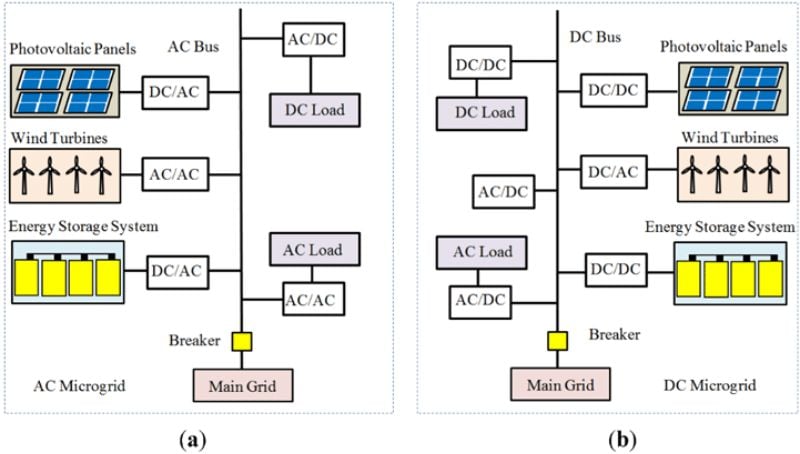
DC microgrids and converter use. Image used courtesy of Fahad Saleh Al-Ismail
- Load fluctuations on the local grid and renewable energy generation's intermittent nature can be directly compensated by energy storage devices.
- Wiring in DC because DC can save costs by only needing two conductors, whereas AC requires three.
- More companies and facilities are pursuing their own off-grid solar and/or battery storage microgrid-type installations to power charging stations, which will directly accelerate the future of e-mobility.
- The electrochemical industry predominantly uses DC currents to minimize losses from multiple conversion stages, adding inefficiencies along the delivery chain.
- Data centers use multiple conversion stages to connect the storage batteries to a DC bus. However, a DC microgrid could avoid these losses by distributing power directly in a DC form. Studies from Lawrence Berkeley National Laboratory have shown that data centers could save up to 28% of energy by switching to a DC microgrid.
DC Microgrid Disadvantages
Alongside the advantages of DC microgrids, various disadvantages need consideration before installing a DC microgrid.
- All major transmission lines still use AC since traditional energy generation is AC. Using DC microgrids to supply energy back to the grid still requires inverters.
- If huge power requirements are required, AC power plants have more capacity than distributed DC energy generation. DC could be scaled up, but it will take time.
- Negative input resistance can cause oscillations that lead to instability. Due to their low inertial dynamics, DC microgrids can impact the power grid’s stability if energy is returned to the grid. The risk of arc faults and electrocution is higher due to lower fault clearance times.
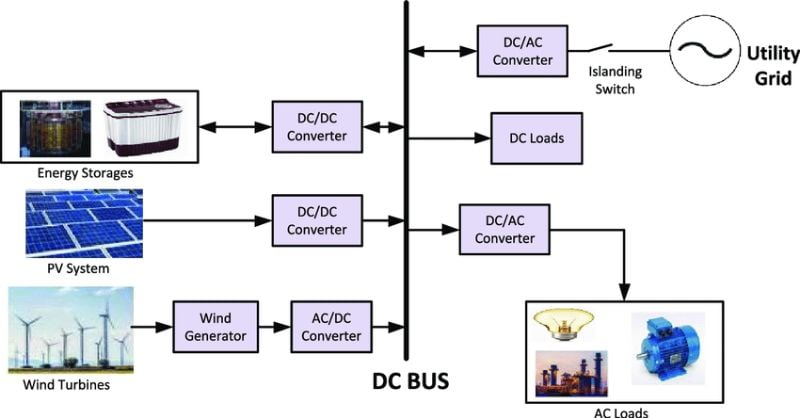
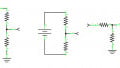
DC vs. AC microgrids. Image used courtesy of Motjoadi et al.
- DC microgrids have lower voltage levels than AC currents and cannot easily integrate high-voltage sources or loads without converters.
- DC microgrids have no natural zero crossing point, which can cause protection issues for sensitive electrical connections.
- Standards and regulations are lacking for the voltage levels, protection devices, and connectors in DC microgrids. No comprehensive standard exists for how DC power is generated and distributed.
Industries Already Use DC Distribution
Renewable energy advances are helping spearhead DC microgrid development, but DC power distribution systems are already in place. For example, the NASA International Space Station uses two independent DC systems with different voltage levels to provide over 100 kW of power. The Duke Energy data center in Charlotte, NC, also uses a 380 V DC distribution system. The Electric Power Research Institute has shown that this system uses 15% less energy than a conventional AC system.