Facebook
 Google
 GitHub
 Linkedin
‘Super’ Energy Storage for AI Data Centers
Flex and Musashi Energy Solutions will collaborate to develop a hybrid supercapacitor energy solution to meet data center power demands.
Data centers processing artificial intelligence are growing exponentially, leading to larger power requirements than traditional data centers. AI’s energy demand can be intermittent, causing spikes in demand that threaten grid reliability and performance.
Learn more about Musashi’s supercapacitor energy storage for data centers. Video used courtesy of Musashi Energy Solutions
Several companies are developing solutions to mitigate AI’s impact and balance the grid’s load demands. Flex and Musashi Energy Solutions are partnering to assist grid operators in managing AI-caused power fluctuations.
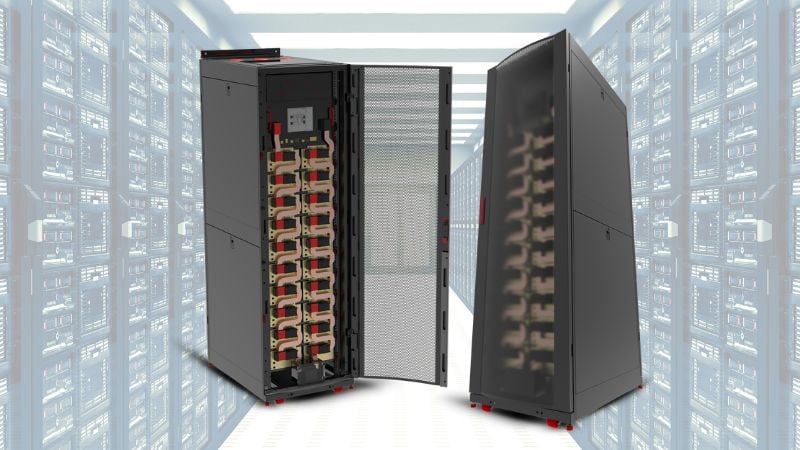
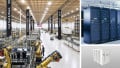
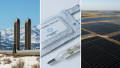
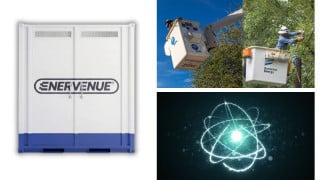
Hybrid Supercapacitor technology for data center servers. Adapted from images used courtesy of Canva and Musashi Energy Solutions
Power Challenges in AI Data Centers
AI consumes more power than traditional computing operations. For example, a simple ChatGPT query requires 2.9 Wh of electricity compared to just 0.3 Wh for a Google search—a ten-fold increase on a simple search operation. The increase in simple searches is partly due to the intermittent but frequent power drains from the grid. This intermittent energy drain is known as “power bursting.” The power drawing from the grid can swing by as much as +/- 50%. With so much AI usage today, these power bursts can occur every few seconds.
Goldman Sachs estimated that data centers’ power demand from data centers will grow by 160% by 2030. Data centers consume 1-2% of overall power, but it could double up to 4% by 2030, with power consumption up to 200 TWh per year. Goldman Sachs also stated that AI could be responsible for 19% of all data center power demand by 2028. Solutions are needed to tackle AI data centers’ increasing power demands before they create a major and long-lasting impact on the power grid.
Flex and Musashi Energy Solutions Combine to Mitigate AI Power Challenges
Flex and Musashi Energy Solutions have developed a capacitor-based energy storage system (CESS) to tackle data centers’ power demands. The system uses Musashi's Hybrid SuperCapacitor (HSC) technology and can integrate with server rack power systems.
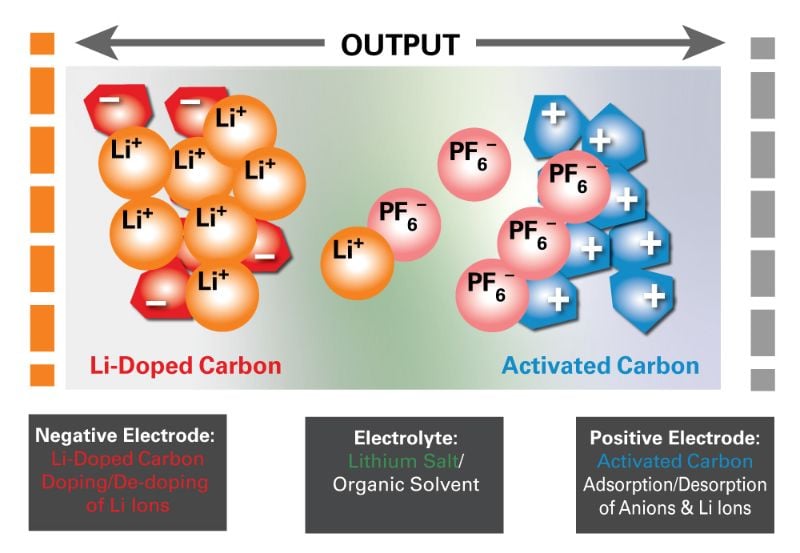
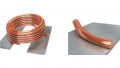
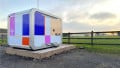
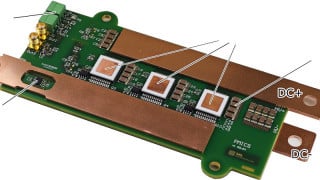
Hybrid supercapacitor technology. Image used courtesy of Musashi Energy Solutions
The CESS aims to balance peak power and protect the grid from intermittent power surges and line disturbances. The CESS will be used during AI training and inference activities in data center environments. Musashi’s HSC technology has already proved highly reliable, with a high power density and longevity in energy storage applications.
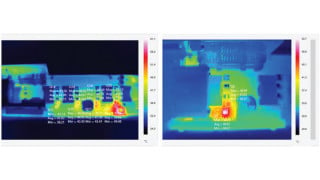
Using the HSC technology, Flex will develop the CESS to balance power supply systems during large power transients and reduce the transient power spikes by alternating the release and uptake of energy into the hybrid supercapacitor. The CESS will have a longer lifespan than other battery systems employed in data centers, potentially undergoing millions of charge/discharge cycles. The CESS is verified via UL 810A certification and UL 9540A testing for thermal runaway at the cell level, showing high thermal stability and safety. It can work in operating temperatures of -30 to 70°C (-22 to 158°F).
CESS Production Set for 2025
Data centers will likely experience explosive power demand growth over the next few years. Flex and Musashi’s CESS aims to address AI’s long-term energy transitions. Flex plans to begin production in the first half of 2025.