Facebook
 Google
 GitHub
 Linkedin
Digital Future-Proofing: Microgrids and DERs in Data Centers
A multi-year approach to building microgrids and distributed energy resources is integral to meeting the growing energy needs of data centers.
The rapid increase in energy demand from data centers is one of the most urgent challenges facing global energy infrastructure today. Advancements in artificial intelligence (AI) present unparalleled challenges for the energy infrastructure ecosystem. Between 2023 and 2030, data center power consumption is projected to increase by 160 percent, with U.S. data centers devouring nearly 800 TWh of electricity in 2030, over double the 2024 data center baseline load demand.
Excluding cryptocurrency mining, data centers will go from consuming between 3 and 4 percent of total U.S. power today to 11 and 12 percent in 2030, making up to 21 percent of global energy demand by 2030. However, dilapidated infrastructure, transmission congestion, and arduous permitting and siting requirements pose substantial challenges for meeting the explosive demand of data centers. The U.S. electricity grid is woefully unprepared for the astronomical load growth expected not just from AI and data centers, but also from the continued electrification of the economy and transportation. Microgrids and distributed energy resources (DERs) offer a powerful solution to meet today’s energy needs, while also paving the way for secure, clean, and cost-effective power generation in the future.
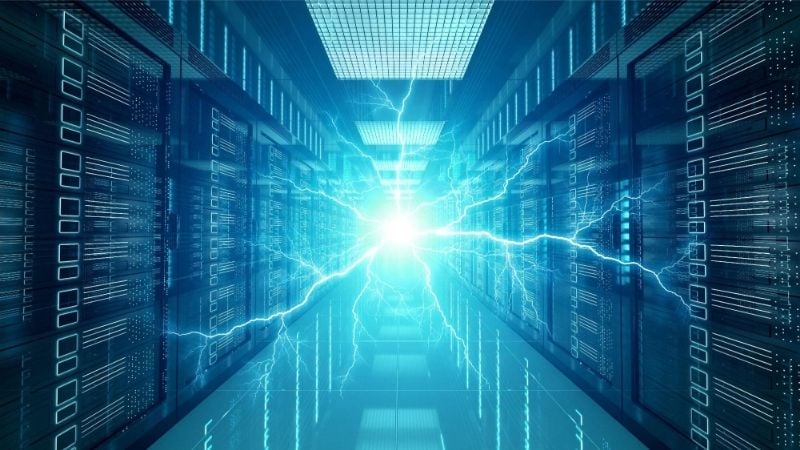
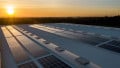
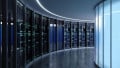
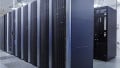
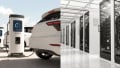
Data centers are a driver of increased energy usage. Image used courtesy of Adobe Stock
The Role of Microgrids: A Resilient, Sustainable Solution
Microgrids offer a compelling solution to the energy and sustainability challenges of the data center boom. Microgrids can provide lower energy costs than utility power in many cases, especially considering the many hurdles associated with grid infrastructure expansion. By integrating generation, energy storage, and flexible loads, microgrids can:
- Provide the power needed for data centers (sometimes they are the only timely solution to do so)
- Ensure energy reliability and resilience for critical operations.
- Optimize cost-efficiency and grid independence through advanced energy management systems.
- Integrate low-carbon energy sources, aligning with corporate decarbonization goals.
Microgrids can integrate multiple energy sources, such as renewables and thermal generation, energy storage, and combined heat and power (CHP) systems, offering both short-term and long-term energy solutions. Microgrids can be understood as a single, controllable energy production and consumption ecosystem that’s largely independent from the grid. In the best-case scenario, a microgrid can reliably deliver energy below utility rates. And in the worst-case scenario—grid failure—microgrids can enter “island mode,” providing ample power to a facility’s critical operations regardless of grid conditions.
While there is no telling what DERs and new technologies will emerge or be popular in the future, building dynamic load flexibility into the power generation system will be crucial to longevity and adapting to new technologies. This includes building flexibility for the emergence of small modular reactors (SMRs), which are poised as a potential solution to provide clean, reliable baseload power and thermal energy to meet a variety of energy needs. And though SMRs aren’t quite ready to make their commercial debut, they’ll likely become commercially viable in the 2030s. DERs like CHP, solar energy, and battery storage can meet immediate energy needs while paving the way for SMR (or other DER) integration as they become commercially available in the coming years. Microgrids build the flexibility needed to reliably provide the energy needs of the future, no matter which future DER technology will be added to the microgrid that gets implemented now.
Building Resilient Data Centers: A Multi-Year Strategy for Future-Proof Microgrids
In the past, large energy projects relied on utilities to upgrade their distribution systems and central power plants to meet projected energy demands. However, this approach overlooks the potential for sustained demand growth and the impact of emerging energy technologies, such as efficiency improvements or microgrid technologies. Additionally, the outdated one-time strategy often requires costly upgrades to transmission and generation infrastructure, which can take years or even decades to complete. If a data center developer becomes frustrated with the slow pace of infrastructure development or if economic conditions change, they may pull out, leaving costly grid upgrades as stranded investments that ratepayers are left to cover.
A multi-year planning approach can mitigate these risks by strategically deploying microgrids and DERs to reduce reliance on utility electricity. In contrast to a centralized solution, this multi-year approach using DERs and microgrids provides predictable operating costs, hedges against price volatility, and offers immediate economic benefits. A future-proof microgrid design features multiple generation sources for both heat/cooling and electricity, battery storage, and an eye for realistic future technologies. This innovative method accounts for factors like increasing energy rates, equipment wear and tear, and shifting energy demands, ensuring that investments align with real-world conditions and the unpredictable nature of the digital landscape.
Thankfully, predicting the future doesn’t have to be guesswork or an act of faith. Thanks to advancements in microgrid modeling, algorithmic analysis can enable optimized decision making at each stage where investments should be made, as well as account for system degradation and future upgrades that will likely be needed. These models can also provide advanced economic projections to inform planners, investors, and other stakeholders.
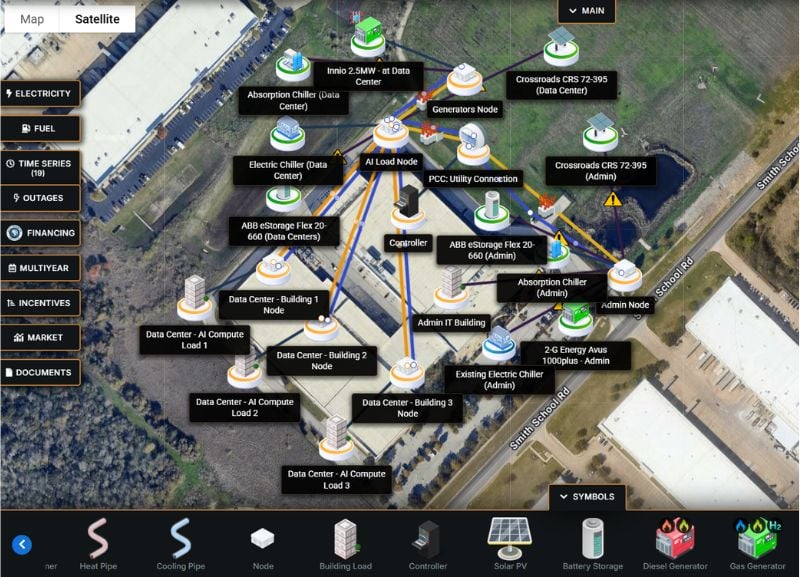
Figure 1. A multi-node data center modeled in Xendee that includes PV, battery, electric and absorption chillers, and generators.
There are two phases to the multi-year microgrid approach:
Phase 1 involves implementing on-site power generation and co-location, such as gas turbines or renewable energy, CHP, and energy storage. These DERs can reliably meet the growing energy needs of data centers while reducing costs, cutting pollution, and embedding flexibility that can grow and adapt with the facility’s unique needs. In an ideal microgrid, the DERs installed now pave the way for Phase 2, the emergence of SMRs and other potentially game-changing technologies as reliable, clean sources of baseload power that data centers will need in the coming decades. Deploying SMRs, for example, will provide medium- and long-term baseload power that’s clean, safe, and affordable. This two-phase strategy also demonstrates how investment in DERs spawns significant economic and environmental benefits as compared to delaying action until SMRs are commercially available in the 2030s.
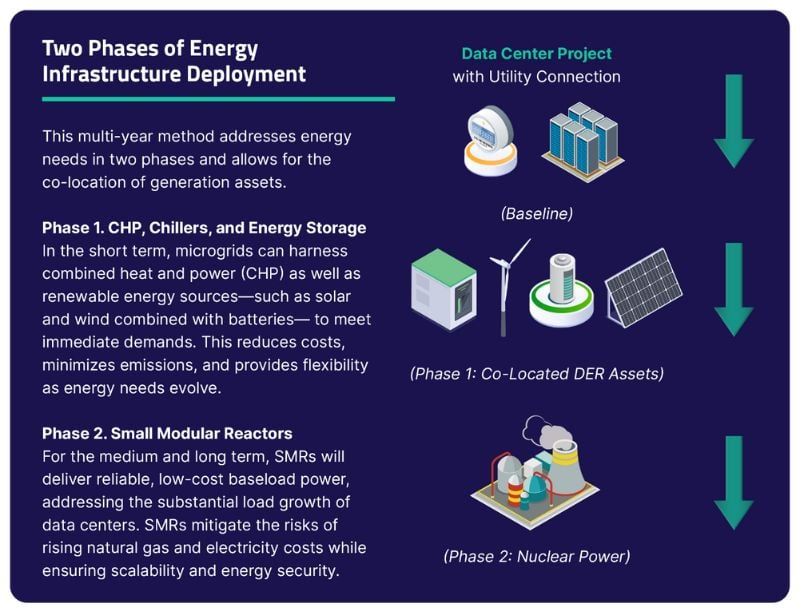
Figure 2: Primary phases of the multi-year approach.
Why Data Centers Should Start Planning for Emerging Technologies
Continuing our example, if data centers choose to put off, for instance, SMR preparation until mid-2030, they’ll have to bear the brunt of installing both the reactor and its ancillary support infrastructure. In the meantime, the data center is still reliant on the grid for its growing energy demand, which exposes the facility to fluctuations in energy markets. In contrast, the multi-year approach incorporates on-site gas generators and absorption chillers, thereby reducing utility dependence and providing the support infrastructure needed for SMR implementation later (or any other technology).
By 2035, additional SMRs can complement the already installed DERs like solar and wind power, offsetting any remaining fossil fuel use while ensuring cost-effective and clean energy production. This effective strategy allows current investments not only to solve immediate energy challenges but also drastically reduce future costs to install SMRs and other next-generation DER technology, thereby future-proofing data centers for sustained growth.
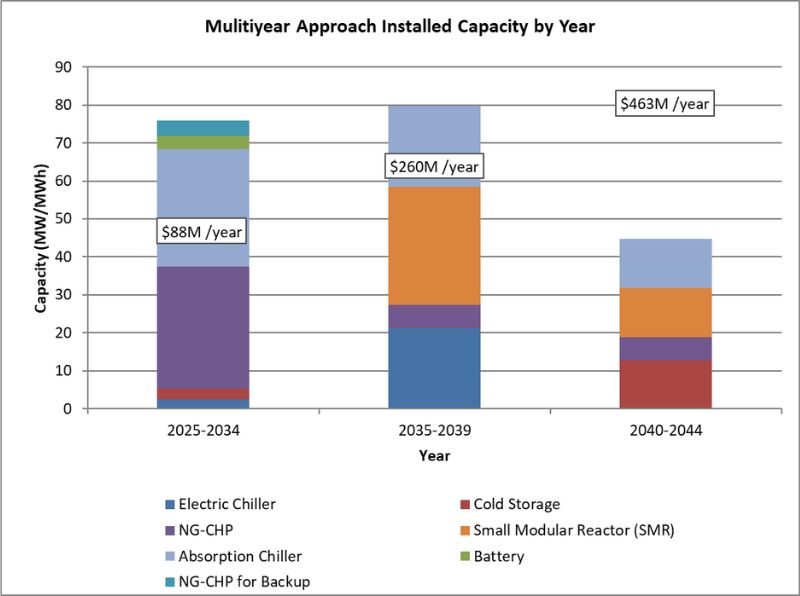
Figure 3: Implementation of DER technologies within a phased approach.
Case Studies
By using a multi-year, integrated approach, data centers can meet their energy needs and support grid resiliency while preparing for the future deployment of SMRs. Real-world data center examples in Santa Clara, California, and Ashburn, Virginia, illustrate the effectiveness of integrating multiple energy solutions through microgrids. These case studies demonstrate that a multi-year optimization approach that integrates DERs from the start and transitions to SMRs later can lead to significant cost savings (60-80% reduction in operational costs) and significant emissions reductions. The multi-year approach also ensures that investments remain viable by reducing reliance on traditional grid infrastructure and avoiding stranded investments.
An analysis of two data centers, one in Santa Clara, CA, and the other in Ashburn, VA, provides a clear picture of the economic and environmental benefits of integrating this multi-year staged approach versus alternative scenarios. Using advanced modeling techniques that consider Capex, costs per kWh can be accurately estimated for various energy mix scenarios.
For the Santa Clara case, early deployment of DERs within a robust microgrid is the most significant differentiator in achieving the lowest possible energy costs in both the long- and short-term. Deploying DERs via a microgrid starting in 2025 results in 79.66% reduced OpEx and an 8.69% reduction in emissions over the project lifetime.
By comparison, for the Ashburn, VA case, the Utility with SMR case produces 59.51% OpEx savings and a 23.86% reduction in emissions over the project period.
Looking Ahead
As the energy demands of data centers continue to skyrocket, adopting a multi-year strategy that integrates microgrids and DERs unlocks a sustainable and cost-effective solution to meeting the growing energy needs of data centers. A multi-year approach not only addresses immediate energy needs but also prepares facilities for the future integration of emerging technologies such as SMRs, ensuring long-term energy reliability, cost savings, and environmental benefits. By proactively deploying DERs and leveraging advanced technologies like predictive modeling, data centers can gain independence from aging grid infrastructure and create resilient, self-sustaining energy ecosystems. Investing in this phased approach positions data centers to meet the challenges of a rapidly evolving digital landscape while paving the way for a cleaner, more efficient energy future that benefits the larger energy ecosystem.
Except where noted, all figures used courtesy of Xendee.