Facebook
 Google
 GitHub
 Linkedin
800 V SiC Power Module With Integrated Current Measurement
Take an integrated PCB-based power module and combine it with coreless current sensing. This story describes how it can deliver a compact, efficient, and thermally robust solution for next-generation EV traction inverters.
Article co-authored by Silicon Austria Labs' Thomas Langbauer and Asahi Kasei Microdevices' Taiga Kyosaki, Takahisa Shikama, and Takaya Higa.
This article is published by EEPower as part of an exclusive digital content partnership with Bodo’s Power Systems.
The electrification of vehicles is accelerating the demand for traction inverters that are not only compact and lightweight but also highly efficient. To meet these requirements, the industry is moving towards 800 V architecture and SiC (Silicon Carbide) power devices, which enable faster switching speeds, improved thermal performance and higher efficiency.
However, these advancements introduce new challenges in structural design, requiring a holistic approach that integrates electrical performance, thermal management, and sensing capabilities into a single platform.
Miniaturization is a key driver for next-generation inverter designs. Reducing size and weight without compromising reliability demands innovation in packaging and component integration. Among these, coreless current sensing has emerged as a critical technology, enabling smaller footprints while maintaining high accuracy and bandwidth
Challenges for Current Sensing in Next-Generation Inverters
Current sensing is essential for closed-loop control in traction inverters, ensuring precise motor operation and system safety. However, next-generation systems impose challenging design constraints. SiC devices operating at 800 V generate extremely steep voltage slopes, requiring sensors with high dv/dt immunity. The rapid switching characteristics of SiC also demand sensors that can track fast current transients without delay, while maintaining accuracy under low torque conditions typical of city driving.
Conventional cored sensors provide a high signal-to-noise ratio (SNR) and robustness but add bulk and weight, limiting design flexibility. To overcome these limitations, coreless current sensors are increasingly favored for compact inverter designs. For this proof of concept, AKM’s EZ232L was selected because it meets all critical requirements:
- High resolution (approximately 1 ARMS) across a wide current range
- Wide bandwidth and fast response for SiC switching
- Robust immunity against high dv/dt noise
In addition to integration benefits, the choice of sensing technology plays a critical role in system performance. Compared to Sibased Hall sensors, which suffer from low sensitivity and typically require a magnetic core, compound Hall technology (InAs) used in AKM’s EZ232L provides high sensitivity without the need for a core, enabling miniaturization and flexibility.
While TMR sensors also offer high sensitivity, they face inherent reliability challenges: large surge currents or transient signals can disturb the magnetic balance, reduce accuracy and introduce hysteresis. Hall-based sensors, on the other hand, are well-established and highly robust, maintaining stable performance even under strong magnetic fields and harsh operating conditions, outlined in Table 1.
These characteristics make compound Hall sensors an ideal choice for next-generation traction inverters, where precision, reliability, and compact design are essential.
Table 1. Comparison of magnetic sensors
| Feature | Compound Hall (AKM) | Si Hall | TMR |
| SNR | High | Low | High |
| Robustness against strong magnetic field | Excellent | Excellent | Limited |
Proof of Concept: Compact and Efficient Power Module
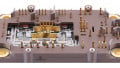
The proposed power module shown in Figure 1 demonstrates a new approach to miniaturization and efficiency. It offers an all-in-one solution, integrating aluminum oxide direct copper bonded (DCB) substrates atop SiC power semiconductors, gate driver circuits, and current sensing capabilities.
By leveraging standard PCB technology and off-the-shelf components, the design achieves both flexibility and cost advantages for small-to-medium production volumes. This integration concept addresses the growing need for compact, scalable solutions in EV power electronics.
The EZ232L Hall-effect IC enables coreless current sensing with high accuracy and resolution, supporting improved inverter efficiency over a wide operating range. Mounting the sensor directly on the PCB under the busbars ensures robust current measurement and a wide bandwidth without adding extra bulk.
Several innovations make this power module suitable for high-power EV applications. First, the use of top-side-cooled QDPAK Infineon semiconductor devices, combined with a PCB substrate and close-by added DC link bypass capacitors, achieves an exceptionally low loop inductance of approximately 5 nH, which is critical for stable high-speed switching while maintaining low voltage overshoots.
A two-sided cooling approach enables a compact footprint even with integrated gate drivers and sensors, while maintaining adequate thermal performance. This is made possible by effective heat spreading through the QDPAK heat slugs and the integrated isolation for each discrete device.
Additionally, the cooling concept resolves typical planarity issues associated with top-side cooling, as the assembly is clamped between two cooling plates. By integrating control and gate electronics in close proximity to the power devices, the PCB-based design supports robust and reliable commutation—even at very high current levels. This layout minimizes parasitic inductance and ensures clean commutation, which is essential for SiC-based systems operating at high voltages.
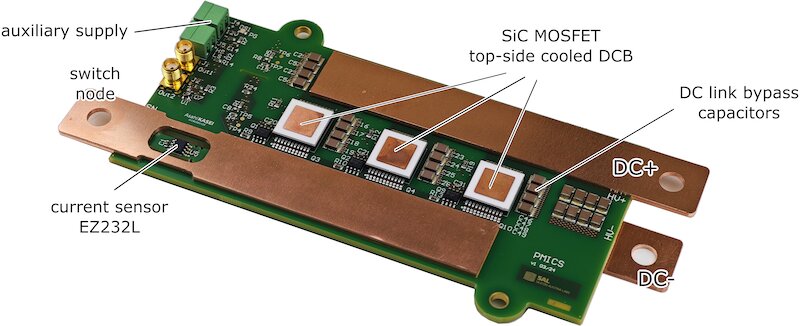
Figure 1. Proof of Concept board of the current sensor integrated power module. Image used courtesy of Bodo’s Power Systems [PDF]
Measurement Result
Figure 2 shows the schematic of the test setup. The current sensor EZ232L was used for the following tests. Three SiC half-bridged devices are utilized in parallel, and 15 V DCDC converters are used as an isolated power supply for the gate drivers.
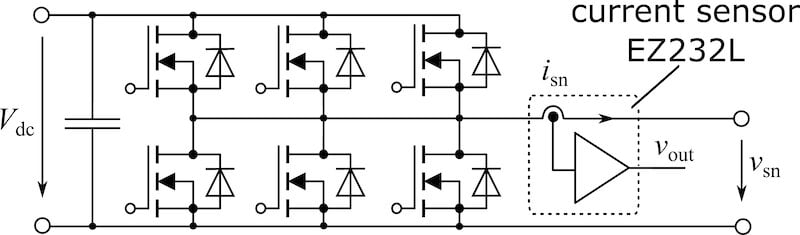
Figure 2. Schematic of the test setup. Image used courtesy of Bodo’s Power Systems [PDF]
An external 420 µF film capacitor with a 2.6 mΩ ESR is used to stabilize the DC link supply.
Figure 3 illustrates the actual measurement of a pulse current. The pink trace represents the reference signal isn captured by a Rogowski coil, while the yellow trace shows the output from the EZ232L sensor vout. The measured response time tresponse for the EZ232L (at 150 A, half load current) was 808 ns, demonstrating its ability to follow rapid current changes with minimal delay.
Figure 4 presents the measurement results for dv/dt performance. To evaluate the influence of voltage slew rates on the sensor output, the half-bridge was operated without load at 800 V, producing voltage slopes of 98 V/ns. The EZ232L sensor output vout was monitored at the BNC connector, which corresponds to the yellow trace, the pink trace represents the current probe isn, and the light blue is the DC link voltage Vdc, and the green traces show the switch node voltage vsn. These results confirm the sensor’s robustness under extreme dv/dt conditions.
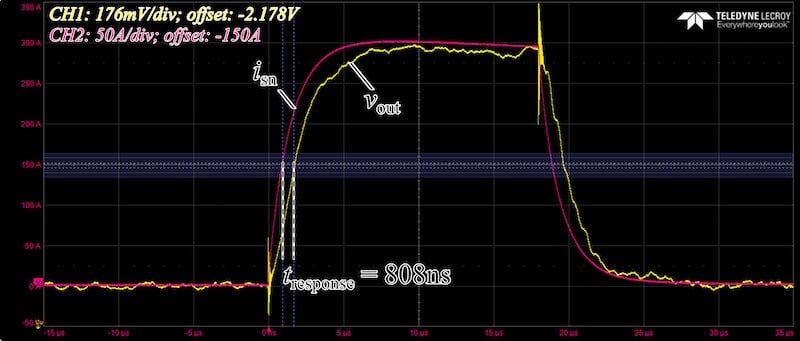
Figure 3. Response time measurement. Image used courtesy of Bodo’s Power Systems [PDF]
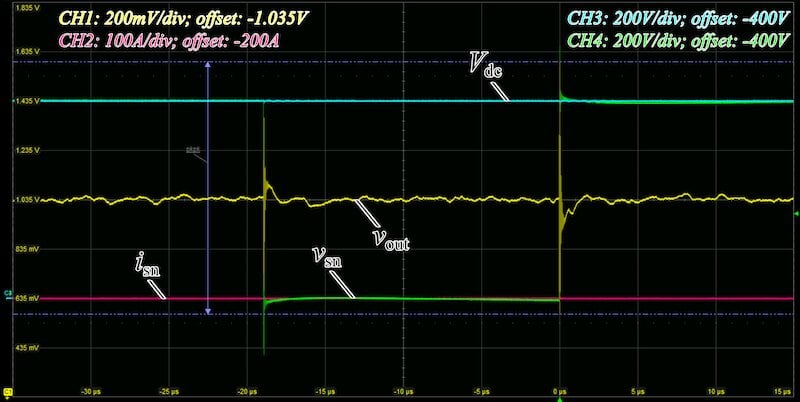
Figure 4. dv/dt measurement. Image used courtesy of Bodo’s Power Systems [PDF]
Conclusion
This proof of concept illustrates how PCB-based power module integration, combined with coreless current sensing, can deliver a compact, efficient, and thermally robust solution for next-generation EV traction inverters.
By merging electrical performance, thermal reliability, and sensing accuracy into a single platform, this approach sets the stage for standardized, cost-effective designs that meet the demands of future high-voltage EV architectures. The EZ232L offers several benefits for automotive traction inverter applications and is well-positioned to support future requirements.
This article originally appeared in Bodo’s Power Systems [PDF] magazine and is co-authored by Patrick Salcher, Research Engineer, Silicon Austria Labs; Thomas Langbauer, Team Leader Architectures & Topologies, Silicon Austria Labs; Taiga Kyosaki, Technical expert of Current Sensors, Asahi Kasei Microdevices Corporation; Takahisa Shikama, Strategy & Business Leader of Magnetic Sensor Products, Asahi Kasei Microdevices Corporation; Takaya Higa, Field Application Engineer, Asahi Kasei Microdevices Europe GmbH