
 Facebook
 Google
 GitHub
 Linkedin
Is a Fully Electric Cruise Ship On The Horizon?
German shipbuilder Meyer Werft has unveiled a concept that could put a fully battery-powered cruise liner on the water by 2031, using technology that already exists.
The cruise industry has long been one of the more stubborn holdouts in the global push toward clean transportation. However, a new concept from one of the world's most respected shipbuilders may signal that a turning point is near.
Meyer Werft has unveiled Project Vision, a fully battery-electric cruise ship concept that the company says could reduce greenhouse gas emissions by up to 95% compared to conventional vessels. Unlike so many promises, this one doesn't rely on technology that's still decades away.
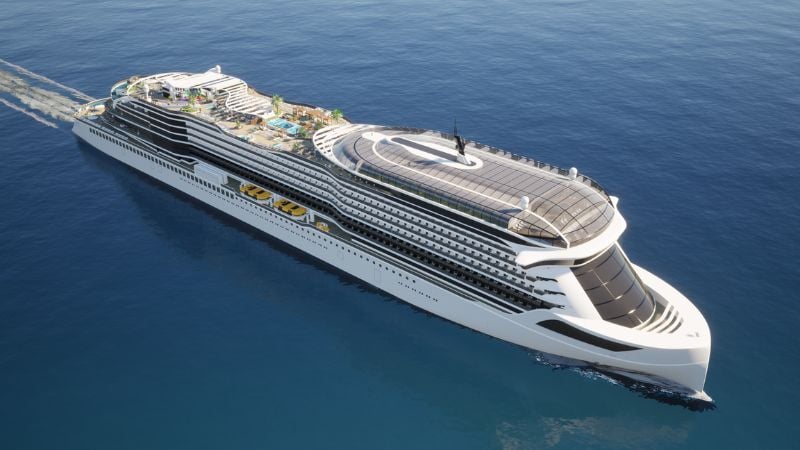
Will cruise ships soon go electric? Image used courtesy of Meyer Werft
What Is Project Vision?
Project Vision is Meyer Werft’s concept study for the world's first 100% battery-electric large cruise ship, with a gross tonnage exceeding 82,000 GT. The vessel is designed to be 275 meters (about 902 feet) long and capable of accommodating 1,856 passengers, making it a genuinely large ship, not a niche coastal ferry dressed up as a cruise ship.
Meyer Werft is developing the battery system in partnership with Corvus Energy, a Norwegian firm that has already equipped more than half of the world's hybrid and fully electric seagoing vessels. Meyer Werft states it is building on proven technology and scaling up what already works. The technology is already available; it just has to be built.
The Emissions Breakthrough
Meyer Werft’s case for Vision is notable. By eliminating combustion engines, the ship is projected to cut greenhouse gas emissions by up to 95%.
This is a shift for an industry that has faced mounting pressure over its carbon footprint. A single cruise ship can emit over 421.43 kg each day. A 2022 study by Transport and Environment on 214 cruise ships in Europe found that they emitted 509 tonnes of sulfur dioxide, as much as a billion cars. They also emitted 19,125 tonnes of nitrogen oxide and 448 tonnes of PM2.5.
Where Can the Electric Ship Cruise?
One practical question surrounding any large electric vessel is range. The Vision ship is designed primarily for European cruise routes, and the battery system can cover a significant portion of typical itineraries in that market, including the popular run between Barcelona and Civitavecchia, the port serving Rome.
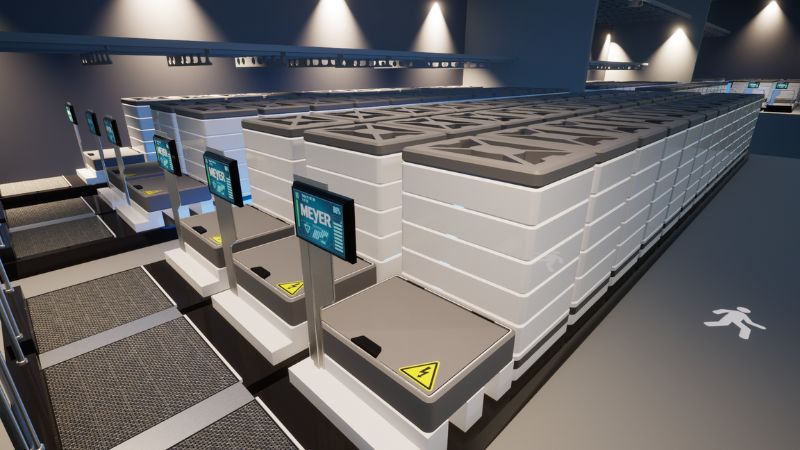
Project Vision’s battery compartment concept. Image used courtesy of Meyer Werft
By 2030, Meyer Werft projects that around 100 ports across Europe will have the necessary shore-power charging infrastructure in place.
For operators who need more flexibility, Vision can also be built as a hybrid, fitted with small generators to handle longer routes, including transatlantic crossings. This option makes the concept more commercially attractive, allowing cruise lines to enter the electric market without fully abandoning longer-haul itineraries.
A Redesigned Ship From the Inside Out
Going electric doesn't just change what's in the engine room. It changes the entire ship.
Because the electric ship produces no exhaust, the vertical shaft that typically runs through a cruise ship to manage exhaust treatment and the funnel occupying sun deck space can be eliminated. The result is an unobstructed top deck with more passenger room.
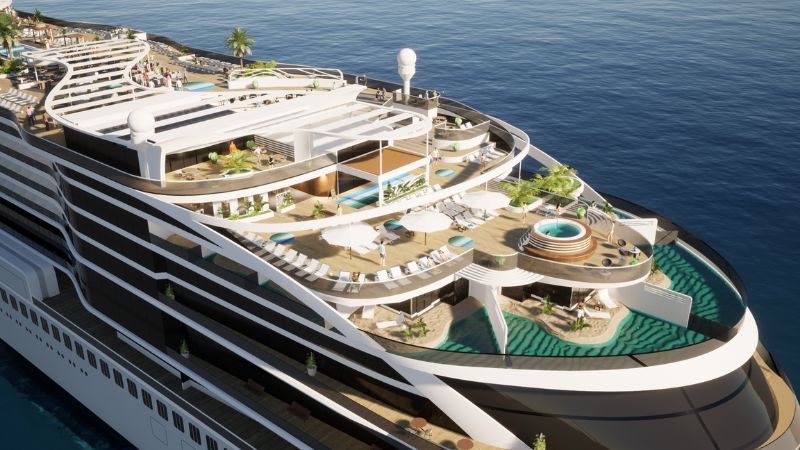
The redesigned electric ship allows more space for passengers. Image used courtesy of Meyer Werft
The design also takes an all-weather approach, featuring fully glazed, weather-protected areas throughout. The signature onboard water park has been moved indoors to the stern, making it usable year-round rather than just on sunny days. With no main engines rumbling below decks, passengers will experience noticeably less noise and vibration.
The Timeline
The Vision timeline could be near-term. According to Meyer Werft, if orders are placed this year, the first ship could be delivered as early as 2031. Fredrik Witte, CEO of Corvus Energy, described the collaboration as "a defining moment for the cruise industry," adding that scaling to fully electric cruise ships demonstrates the technology is "safe, mature, and ready to change the game."
Whether cruise operators move quickly enough to meet that window remains to be seen. But with the engineering answers now in hand, the question has shifted from “can it be done?” to “who will be first to do it?”












Certainly the cruises will be between well dfinde ports with recharging available. And what about all of the other electrically powered amenities?? Conside that a cruise IS a LUXURY TRIP, where economy has no place. At least that was my experience. Of course, with no engines or fuel tanks there will be a lot of room for batteries.