Facebook
 Google
 GitHub
 Linkedin
Tech Briefs: EV Chargers Push Boundaries in Use and Design
Innovations in electric vehicle chargers include heating homes, vehicle-to-grid car sharing, and space-saving chargers that blend into the urban landscape.
Electric vehicle charging is expanding and diversifying in style and use. EV chargers are powering buildings, supporting the power grid, and charging fleets. They’re also appearing in unusual forms and places.
The latest developments include an EV charger with an integrated heat pump, a vehicle-to-grid car-sharing system, and two innovative designs for curbside charging in urban areas.
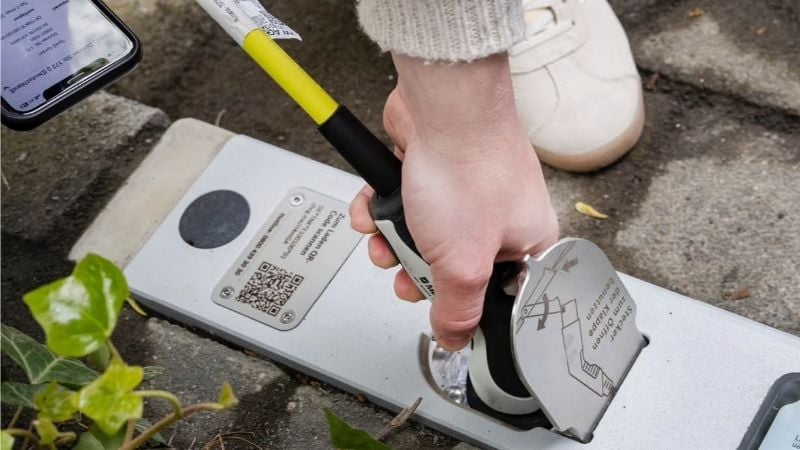
Curb Charger. Image used courtesy of Rheinmetall
EV Charger + Heat Pump
Mitsubishi Electric and Ireland-based EVHACS have developed an EV charger that integrates a heat pump. The world’s first all-in-one system can integrate into homes or commercial buildings to provide heating, cooling, and vehicle charging.
The compact unit can fit into limited wall space, such as in apartments, townhomes, and businesses. The unit needs only one electrical connection.
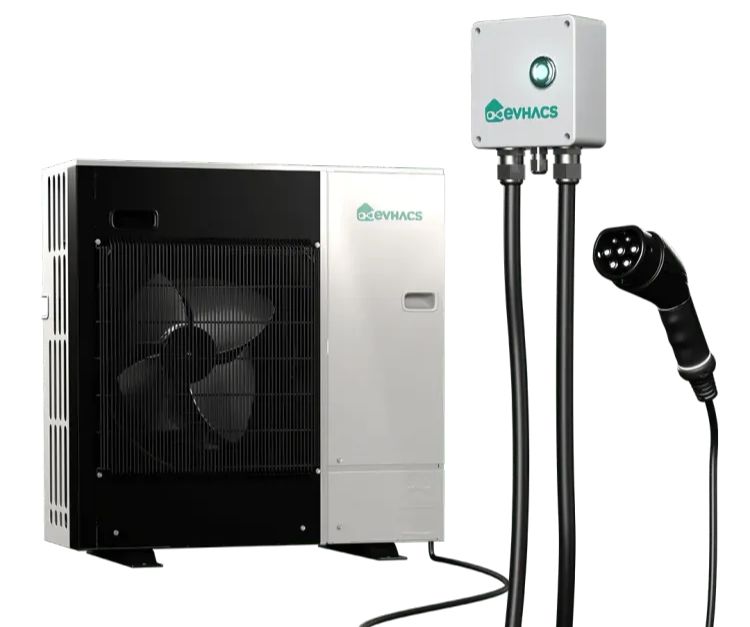
EV charger and heat pump. Image used courtesy of EVHACS
The system optimizes energy use to balance the three functions to prevent grid overloads. Smart charging technology allows users to schedule EV charging based on costs, building occupancy, or energy demand. The system can also dynamically balance electrical loads between the EV charger and heat pump.
The EVHACS chargers are available as tethered chargers, remote tethered chargers, and remote socket chargers.
Vehicle-to-Grid Car Share Service
The city of Ultrecht, Netherlands, has launched a vehicle-to-grid car-sharing service using 50 Renault 5 E-Tech EVs with bidirectional charging capabilities. The project plans to scale up to 500 vehicles, which could provide 10% of the V2G flexibility needed to balance peak demand in the area.
When parked in the car share lot, the vehicles can use bidirectional charging to supply excess energy to the local grid, where it can be used to balance intermittent renewable energy sources. The expansion to 500 vehicles will include Megane E-DTech and Scenic E-Tech EVs, all equipped with Mobilize’s bidirectional technology.
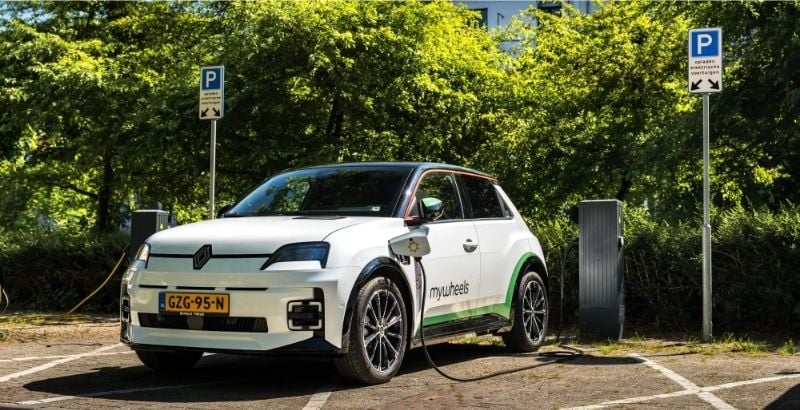
Renault EV. Image used courtesy of Renault Group
The Netherlands’ largest car-sharing company, MyWheels, will manage the platform. We Drive Solar will develop the charging infrastructure.
Charging on the Lampposts
A lamppost EV charger has been installed in Ypsilanti Township, near Detroit. The Voltpost charger will be the first step in a larger project to expand EV charging infrastructure with 12 chargers across the Detroit area.
The modular Voltpost Level 2 charger can be retrofitted to existing lampposts, which eliminates the need for additional construction or infrastructure upgrades. Its space-saving design provides EV charging stations in parking lots and along curbs in urban and suburban areas. The unit can be installed in about one hour. The chargers can accommodate two to four EVs for charging.
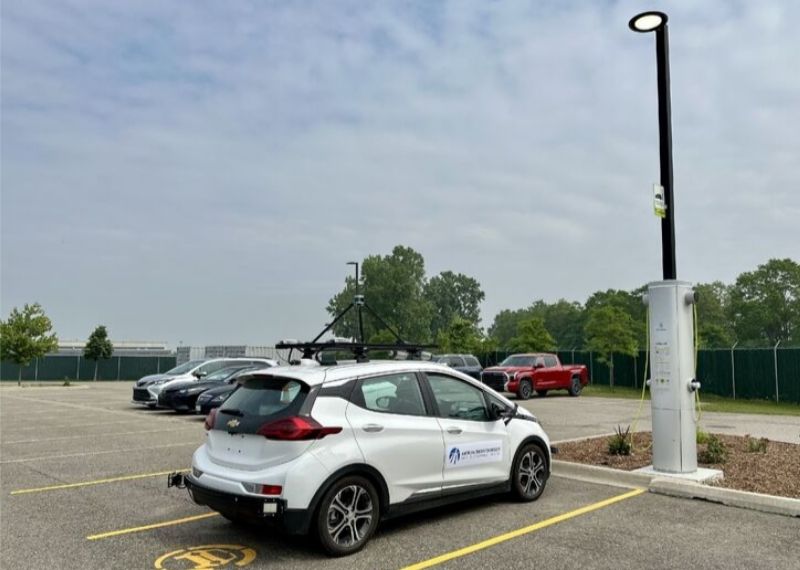
Lamppost EV charger. Image used courtesy of Voltpost
The project is a collaboration among Voltpost, the ACM, the Michigan Office of Future Mobility and Electrification, and Next Energy.
Plugging into the Curb
In Germany, developers are skipping the lamppost and going straight to the curb. Rheinmetall’s Curb Chargers allow EV drivers to charge up by plugging into a recessed charging port in the curb.
The charger offers up to 22 kW of charging power and can be used year-round and in all weather. A built-in heater melts snow and ice buildup. A 4G modem and Ethernet are integrated for fast communication between the charger and management systems. It uses a Type 2 charging plug.
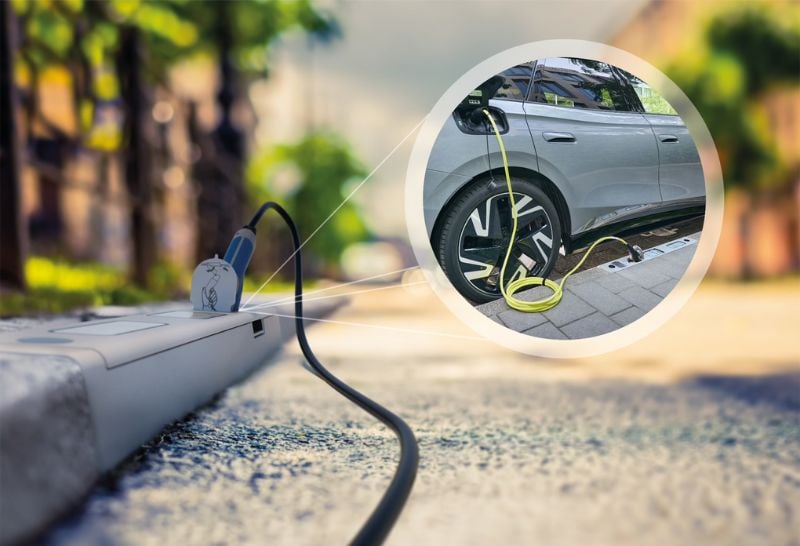
Rheinmetall Curb Chargers. Image used courtesy of Rheinmetall
The standard unit weighs about 80 kg and measures 1,000 x 250 x 120/150 mm³ but can be modified. It includes surge protection and fault detection. Rheinmetall states the embedded charger saves space, deters vandalism, and keeps sight lines clear.
The city of Cologne, Germany, hosted a 12-month pilot project for four Curb Chargers, which ended in April. During that time, the four chargers provided over 2,800 charging cycles, an average of two per day, with an availability of 99%.
More than 50 MWh of energy was used, with 19 kWh per charge cycle, enough to drive 120 km. Rheinmetall collaborated on the pilot with TankE, an IT developer.