Facebook
 Google
 GitHub
 Linkedin
Tech Briefs: Making Strides in EV Battery Performance
Toyota, CATL, and other electric vehicle makers and battery technology companies have made small but notable advances that could add up to big improvements in EV technology.
Advancements in electric vehicles and electric vehicle batteries often take baby steps. Improvements in range, charging time, and other technology moves in increments, eventually adding up to better-performing and more reliable EVs.
Recent developments show a focus on battery technology, from development to “second life.” Toyota is upgrading its EV tech sold in the U.S., while planning a long-range EV SUV using solid-state batteries in the near future. CATL is focusing on swappable batteries for electric trucks. To deal with used EV batteries, two companies are joining forces to give them new life in energy storage systems.
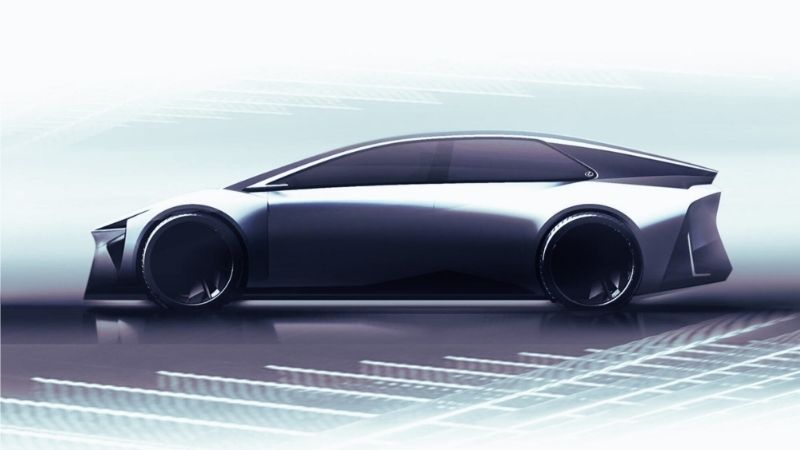
Toyota’s EV SUV prototype promises more than 700 miles in range. Image used courtesy of Toyota
Toyota Upgrades Tech for Its U.S. EV
Toyota has redesigned and renamed its only electric vehicle sold in the U.S. The former bZ4X will be known simply as bZ for the 2026 model.
The car’s new tech increases the EV’s range by 25%, from 252 to 314 miles per charge. The upgrade also boosts horsepower by 50%, from 214 to 338 hp for all-wheel drive models. The front-wheel drive EVs will increase to 221 hp. The 2026 bZ will use Tesla’s North American Charging Standard, allowing for fast charging. The EV will charge to 80% battery capacity in 30 minutes, according to Toyota.
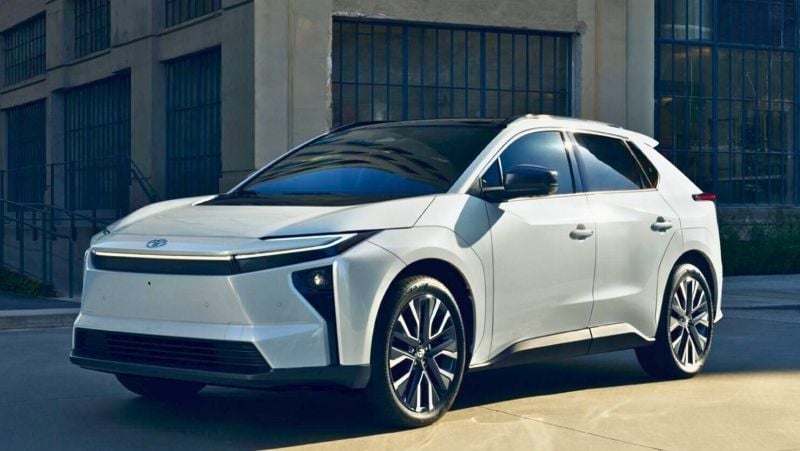
The 2026 Toyota bZ. Image used courtesy of Toyota
The original bZ4X model floundered in performance. Shortly after its release in 2022, the bZ4X was recalled for reports that its wheels could fall off.
An EV SUV With a 745-Mile Range? Toyota Says It’s Coming
Toyota is developing a prototype for an electric SUV with a 745-mile range on one charge and a 10-minute recharge time. The vehicle is tentatively planned for 2027 or 2028.
The EV SUV will use Toyota’s solid-state lithium-ion batteries. The batteries use a solid electrolyte, which allows for faster ion movement and greater tolerance of high temperatures and voltages.
Until then, Toyota is extending its bZ4X line by introducing the Touring model SUV with extended length and height. The EV features a 33% larger load compartment capacity. It features 74.7 kWh lithium high-capacity batteries for up to 348 miles of range. It will be released only in the U.K. and Europe.
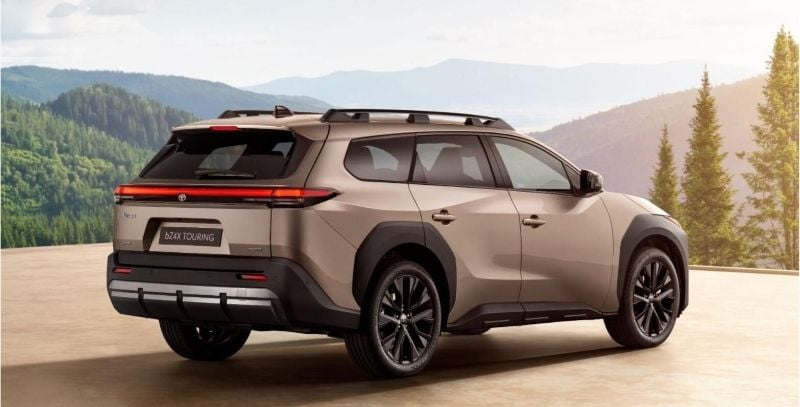
Toyota bZ4X Touring EV SUV. Image used courtesy of Toyota
CATL Expands Battery-Swapping for EV Trucks
More electric trucks may soon be able to take advantage of battery swapping. Chinese battery giant CATL has redesigned and standardized its battery pack for compatibility with swap-enabled heavy-duty electric trucks.
CATL says its battery pack, dubbed 75#, offers the lowest lifecycle tonne-kilometer cost. The chassis-based battery swapping system decouples the battery from the vehicle, thus lowering R&D and purchasing costs. CATL has already partnered with 10 EV makers to produce 30 battery-swappable vehicle models.
The company plans to create a battery-swapping network covering 80% of China’s truck route capacity by 2030.
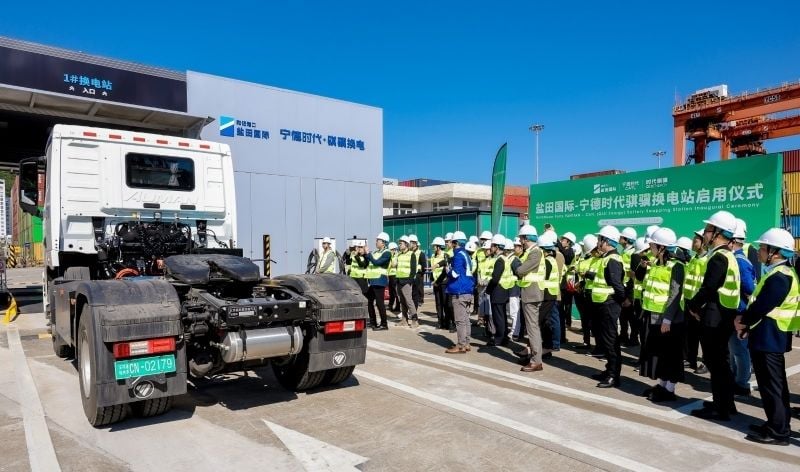
CATL’s truck battery swapping station. Image used courtesy of CATL
Connected Energy and Forsee To Create ‘Second-Life’ Storage Systems
Connected Energy will partner with Forsee Power to create grid-scale battery energy storage systems using recovered batteries from electric buses. The first deployment of 2.5 MWh is set for later this year in the U.K., with plans to expand to France.
The storage systems will use Forsee Power’s ZEN 35 and ZEN 42 batteries, which are used in about 1,500 electric buses throughout Europe. Connected Energy will repurpose the batteries for second-life use in energy storage systems to support renewable energy projects.
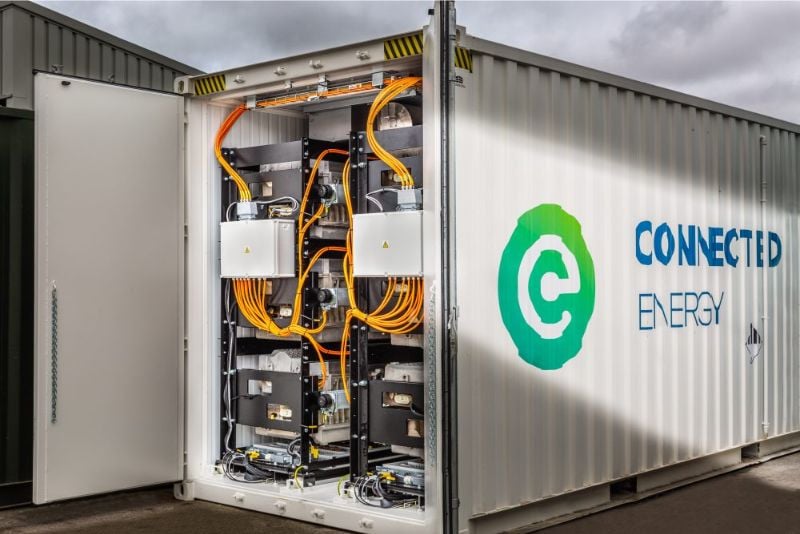
Energy storage system using second-life batteries. Image used courtesy of Connected Energy
The companies plan to develop an operating model for future large-scale commercial deployment.