Facebook
 Google
 GitHub
 Linkedin
APEC 2025 Showcases Power Component Innovation
Part 1 of our on-site coverage highlights ICs, power converters, current-sense transducers, SiC MOSFETs, TVS diodes, and more.
The IEEE Applied Power Electronics Conference and Exposition (APEC) celebrated its 40th year with over 6,000 attendees, more than 750 technical presentations, and 18 professional education seminars within a three-day exposition that attracted more than 300 exhibitors at the Georgia World Congress Center in Atlanta.
EEPower was onsite to learn about the latest developments in power and energy. APEC 2025 featured so many notable products and innovations that we needed two parts to highlight them. Here’s Part 1, with more to come.

APEC 2025 exhibits. Image used courtesy of Carl "Bill" Lundin
Power Integrations
Power Integrations presented expert talks and live demonstrations and introduced several new products. Highlights included:
- InnoMux-2 switcher ICs for single-stage flyback designs with multiple independently regulated outputs, including the world’s first 1700 V GaN power devices
- HiperLCS-2 chipset for half-bridge LLC resonant power converters, now supporting 1650 W output
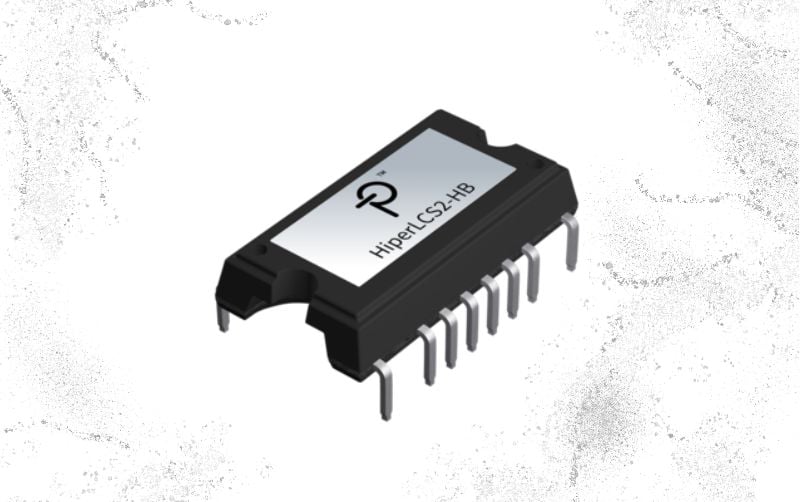
Hiper LCS2-HB. Image used courtesy of Power Integrations
- AEC-Q100-qualified InnoSwitch3-AQ switcher ICs for up to 1200 V input
- BridgeSwitch-2 motor driver ICs and MotorXpert Suite software for high-efficiency BLDC motors
- SCALE-iFlex LT NTC dual gate drivers with negative temperature coefficient sensing
Power Integrations has also launched an addition to its family of integrated off-line switcher integrated circuits (ICs). TinySwitch-5 extends the product range up to 175 watts of output and achieves up to 92 percent efficiency, thanks in part to basic diode rectification and optocoupler feedback.
The company has sold more than 6 billion TinySwitch IC units worldwide. They are commonly used as bias and auxiliary supplies in computing, communications, appliances, industrial, and medical applications.
Danisense
Denmark-based Danisense displayed several current sense transducers at the booth of its U.S. distribution partner, GMW Associates. Danisense also demonstrated a smart residual current monitor (B/B+ type) for measuring DC and AC residual current up to 100 kHz.
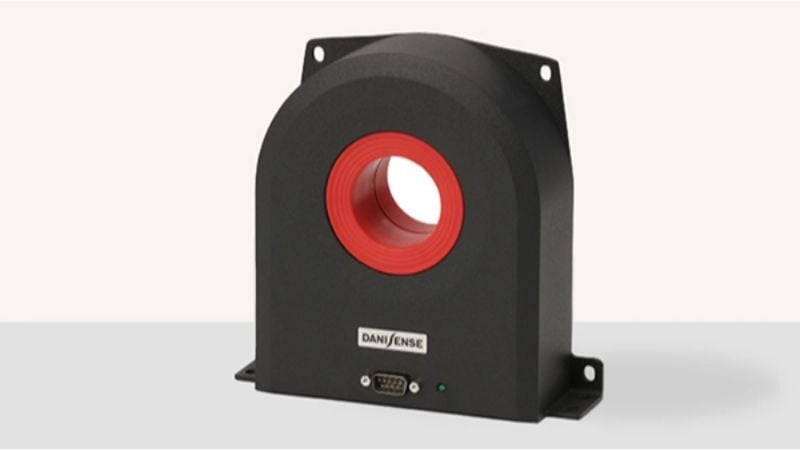
Current sensor. Image used courtesy of Danisense
Danisense also launched its Transducer Electronic Datasheet for its wide range of current transducers, allowing streamlining of lab testing processes.
SemiQ
SemiQ launched its 1700 V and 1200 V Gen 3 SiC MOSFETs, which deliver improved performance with a smaller die size and lower cost. The 1200 series includes automotive-qualified (AEC-Q101) options with verification at voltages exceeding 1400 V and avalanche testing to 800 MJ.
The 1700 V MOSFET family, which has AEC-Q101 certification, is designed for medium-voltage, high-power conversion applications, including photovoltaics, wind inverters, energy storage, and electric vehicle power systems and chargers. It can also be used in uninterruptible power supplies and induction heating and welding systems.
Taiwan Semiconductor
Taiwan Semiconductor demonstrated its new Super Clamp Transient Voltage Suppressor (TVS) diode. A TVS is a high-performance protection device designed to safeguard electronic circuits from damaging voltage surges. These devices are crucial in preventing damage caused by transient voltages, such as those resulting from electrical fast transients, electrostatic discharge, inductive load switching, and lightning strikes.
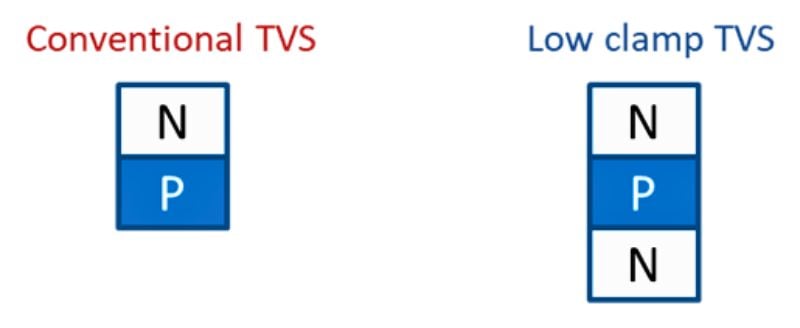
Super Clamp TVS vs. conventional TVS. Image used courtesy of Taiwan Semiconductor
The Super Clamp snapback diode can clamp transient voltages at a lower level than their breakdown voltage, providing better protection for sensitive components. Compared to conventional TVS and metal oxide varistors, this lower clamping voltage allows designers to use lower-working-voltage and less costly components (capacitors, switching MOSFETs, reverse polarity protection diodes, and regulators) while still attaining performance goals.
Taiwan Semiconductor also expanded its PerFET family of power MOSFETs with 80 V and 100 V versions.
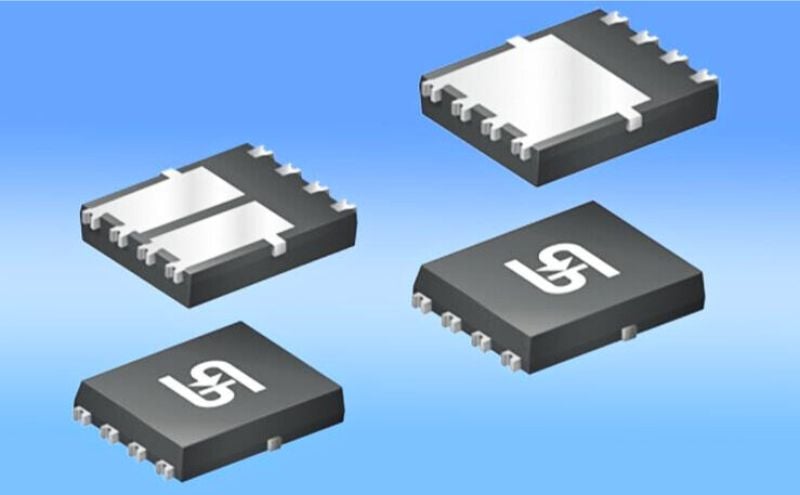
PerFET MOSFETS. Image used courtesy of TSC
The 80 V/100 V N-channel power AEC-Q-qualified MOSFET devices are ideal for automotive power applications; however, they are also suitable for non-automotive commercial and industrial power applications.
TDK Corporation
TDK Corporation announced its FS160 series of its microPOL (μPOL) power modules, a compact, high-performance DC-DC converter. These modules are part of a new generation of power solutions that integrate advanced semiconductor technology and innovative packaging to achieve high power density in a very small footprint.
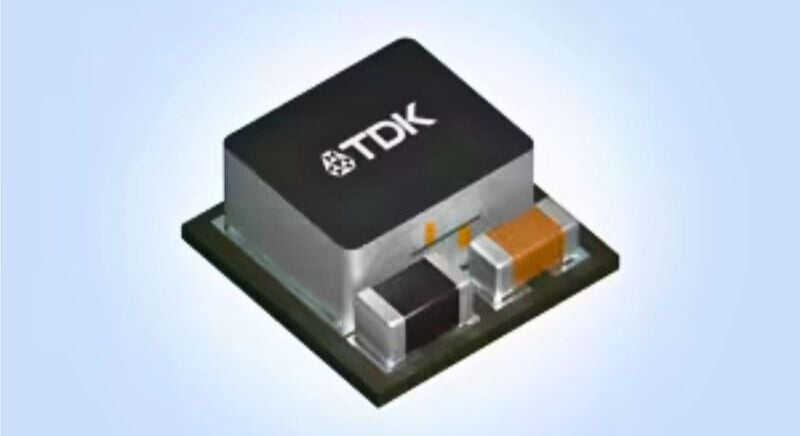
DC-DC converter modules for high power-density applications. Image used courtesy of TDK
μPOL modules are remarkably small, with some models measuring as little as 3.3 mm x 3.3 mm x 1.35 mm, making them ideal for space-constrained applications. They offer high power density, with some models delivering up to 25 A of continuous current, making them suitable for demanding applications like artificial intelligence, 5G, and IoT. μPOL modules integrate power semiconductors and inductors into a single package, reducing the external components needed and simplifying system design. Many μPOL modules allow output voltage configuration via I²C communication, enabling flexibility in various applications without requiring external components for voltage adjustment.
The FS160 series provides full telemetry capabilities, including voltage, current, and temperature monitoring, which can be accessed through an I²C interface. This feature supports predictive maintenance and advanced power management. These power modules are designed for use in applications requiring high-performance and compact power solutions, such as supporting high-density computing environments and enabling efficient power delivery in telecommunications and networking devices.
TDK also announced a power-over-coax (PoC) inductor that is compatible with high currents of up to 1600 mA. It can sustain operations over a wide temperature range from -55 °C to +155 °C. The expansion of the ADL3225VF series (3.2 x 2.5 x 2.3 mm; L x W x T) of wire-wound inductors for automotive PoC is designed for automotive cameras and sensors that enhance driving safety.
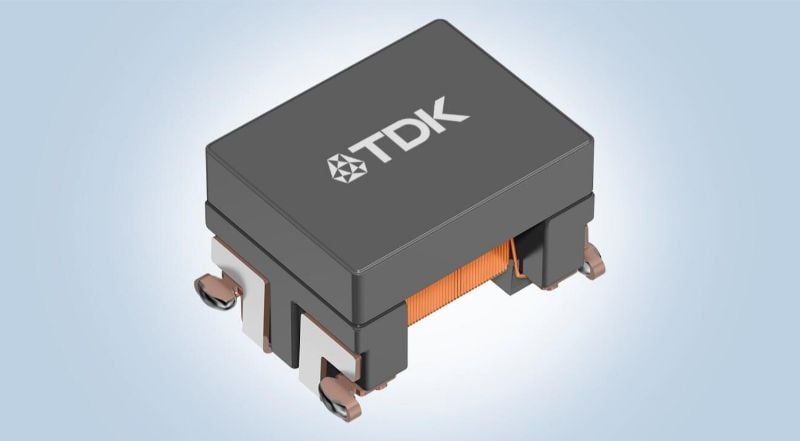
PoC inductor. Image used courtesy of TDK
Using PoC technology, a single coaxial cable can simultaneously carry power and data, which simplifies and reduces cabling requirements and reduces vehicle weight for improved range or fuel economy and lower emissions.
pSemi
pSemi, a subsidiary of the Murata Company, announced several innovations in multi-level buck regulator technology the company says will revolutionize the mobile battery charging industry.
Multi-level buck regulator technology is an advanced form of DC-DC conversion that enhances traditional buck converters’ efficiency and performance. The technology is particularly beneficial in high-power applications where efficiency, reduced switching stresses, and lower ripple are crucial. Unlike conventional buck converters, which switch between the input voltage and ground, multi-level buck converters can switch between multiple intermediate voltage levels, typically involving flying capacitors to achieve these levels. Multi-level technology is capable of high efficiency and faster battery charging.
pSemi introduced the world’s first 4-level buck converter for battery charging applications. The device adapts to input voltages. Its 4-level mode is enabled for higher-level input voltages, and its 3-level buck mode comes into play for mid-to-low input voltages. It can also be operated in fixed ratio in a capacitor divider mode with divider ratios 2 and 3 when the input voltage is a programmable power source. Up to 6 amps of current can be delivered per device, with the option to parallel devices to achieve faster charging times.
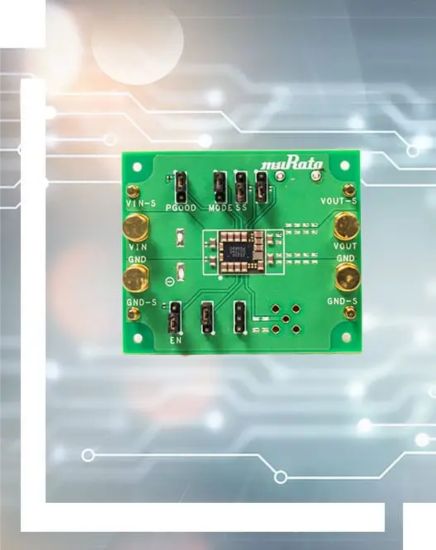
Power management IC. Image used courtesy of pSemi
Just before APEC, the company released its PE24111, 3.3Vin, two-stage regulator that can supply up to 20 A, and the PE25213 divide by 2 and 3 capacitor divider. The PE24111 is designed for use in step-down DC-DC converter solutions in a variety of applications.
The PE25213 works as an ultra-high efficiency charge pump that can be configured to divide an input voltage by two or three. It can deliver up to 10 amps with a 99 percent peak efficiency. Applications include 12 V input systems in data centers and networking applications.
AmberSemi
California-based AmberSemi introduced its first semiconductor line for AC to DC power conversion applications. The AC-DC conversion device offers a major size reduction compared to other conversion devices and was designed to simplify design.
_compared_to_conventional_power_supply_(left).jpg)
AmberSemi (right) compared to conventional power supply (left). Image used courtesy AmberSemi
AmberSemi also introduced its Power Switch Control and Protection Platform. The integrated circuit (IC) combines a configurable logic array with an analog front end featuring low-latency window comparators. It is well-suited for time-sensitive switching and protection applications in both AC and DC circuits. The company says that this is a first-of-its-kind power switching and protection device that delivers intelligent control and fast protection enabled by direct digital control and precision sensing for higher reliability and better uptime.
APEC Through the Years
APEC 2025 represents a big step forward from the first conference 40 years ago in April 1986 in New Orleans. That event had a total of 250 attendees, 34 technical papers in seven sessions, six professional education seminars, and a two-day exhibition with 20 exhibitors.
Today, APEC has become one of the premier power electronics conferences and expositions. Power electronics professionals, academics, and students worldwide gather to share and learn about the latest research, technologies, trends, and products for power electronics, which have applications ranging from milliwatt-power electronics to gigawatt-power renewable energy farms.
Part 2 of EEPower’s APEC 2025 coverage highlights more new products and innovations.