Facebook
 Google
 GitHub
 Linkedin
5 Data Center Energy Strategies To Prioritize in 2025
Decentralization, artificial intelligence, and energy consumption will challenge data centers over the next year.
Artificial intelligence and machine learning applications are demanding more energy, space, capacity, and infrastructure than ever before. Data center owners and operators must set priorities when planning for upgrades and expansions for future needs, according to Eaton’s 2025 Data Center Progress Report.
Digital tools are essential in optimizing data center efficiency. Video used courtesy of Eaton
The report highlights five strategies to help data center operators prioritize their short- and long-term growth plans. It identifies trends in capacity and infrastructure, energy efficiency and sustainability, and digital tools. The report analyzed responses from 345 commercial data center owners, operators, and executives in 160 countries worldwide. S&P Global Market Intelligence prepared the report for Eaton.
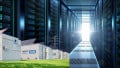
Data center. Image used courtesy of Pixabay
1. Adjusting Capacity
Data center operators' top concerns include meeting computer and storage demands for heavy AI workloads. In Eaton’s report, survey respondents indicated that meeting computing and storage demands for artificial intelligence was their top concern. Data center executives also expressed a need to understand the difference in compute needs between AI model training and real-time processing.
In addition, AI applications using graphic processing units are more energy-intensive than those using central processing units. Data center power needs in the U.S. topped 280 TWh in 2024, according to the report.
Strategies to increase capacity include adding to existing facilities, building new locations, and stretching current capabilities. Data center pros named specific actions they have taken:
- 82% of respondents run accelerated computing workloads.
- 35% stated they employ rack densities of 21-50 kW. Rack densities of over 100 kW are predicted to increase from 9% to 15% over the next five years.
- 89% of centers with higher rack densities use at least one type of liquid cooling. That number is expected to rise to 94% in five years.
2. Using AI to Optimize Operations
Many data center owners are employing artificial intelligence and other digital tools to optimize capacity. These methods are more timely and less expensive than building or expanding new centers.
AI, machine learning, and advanced analytics can use historical data and real-time information analysis to meet several goals efficiently. They can predict maintenance and optimize energy use for IT networks, power, and cooling systems and forecast future capacity needs.
AL/ML algorithms can also improve the intelligence of electric power monitoring systems (EPMS) and data center infrastructure management (DCIM) software. Some 38% of survey respondents stated they use or plan to use EPMS and DCIM to monitor data center equipment, network and IT systems, and power/cooling systems.
3. Addressing Sustainability and Energy Efficiency
The enormous increase in data center power consumption has challenged many companies’ sustainability goals. Data center professionals must meet short-term energy needs while also managing long-term net-zero goals, according to Eaton’s report.
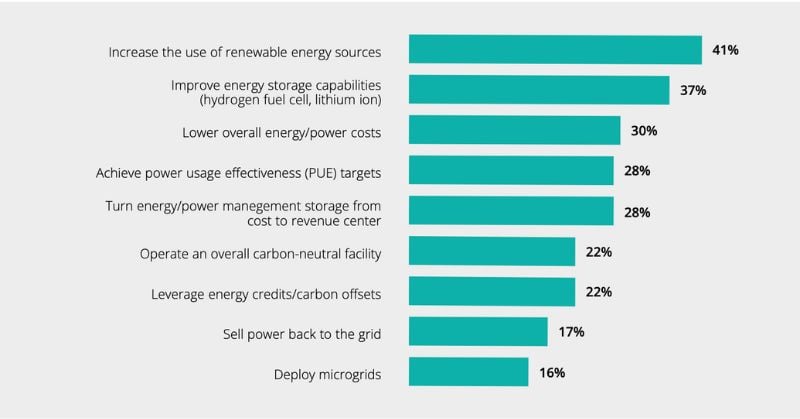
Data center strategies for meeting sustainability goals. Image used courtesy of Eaton
Data center owners prioritize using renewable energy. Wind, solar, and energy storage systems are increasingly available in the U.S. and North America. However, these developments often experience delays in grid transmission and distribution infrastructure improvements.
4. Preparing for Edge Computing and Decentralization
A growing trend in computing-heavy industries is workload decentralization. These industries are spreading operations among several venues to seek better performance, lower costs, and higher security. The rise of these edge data centers is changing the data center landscape.
However, the edge computing model makes monitoring, maintenance, and power sourcing more complex in planning and managing.
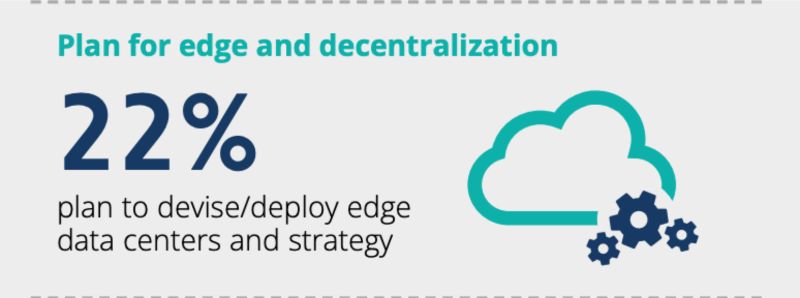
Respondents planning strategies to meet edge computing needs. Image used courtesy of Eaton
5. Shoring Up Security and Compliance
In Eaton’s report, cybersecurity was a major concern for 56% of data center professionals. Cyber attacks can disrupt operations, compromise data, and cause shutdowns. At the same time, regulations covering privacy requirements are increasing. Decentralization has made cybersecurity more challenging.
Many large data centers are turning to zero-trust architectures to guard against growing attack risks. This security model requires all users to verify their identities each time they access the network or an application that uses it.
Data Center Future
Eaton’s report also indicates tremendous opportunities for data centers as more industries incorporate AI and ML into their operations. However, data centers will also face power consumption, capacity, and security challenges. Planning now can help owners and operators manage future demand.