Facebook
 Google
 GitHub
 Linkedin
Data Centers in Space? Energy Demands Could Make It Reality
Artificial intelligence will require so much power from the grid that placing data centers in space is beginning to look feasible.
Artificial intelligence systems, particularly machine learning models like deep neural networks, demand immense computational resources. This is especially true during the training phase, where models process vast amounts of data to learn patterns and make predictions. The complexity of AI models continues to increase, with each new generation offering enhanced performance but consuming more power than its predecessor.
Is space the next frontier for AI data centers? Video used courtesy of Lumen Orbit
AI operations rely heavily on data centers, which house the necessary hardware and infrastructure. These facilities require significant electricity to power the servers and maintain optimal operating conditions, including cooling systems to prevent overheating. Many AI systems, especially those powering services like ChatGPT, must be available 24/7. This constant uptime translates to continuous energy consumption, as the models must always be ready to respond to user queries.
Companies are devising clever solutions to meet growing energy demand, including a space-based, solar-powered, orbiting data center.
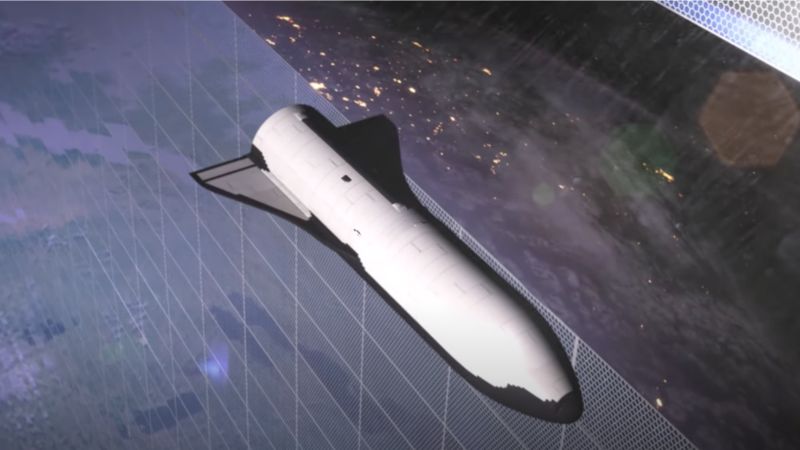
Can an orbiting solar array power data centers in space? Image used courtesy of Lumen Orbit
Grid Under Pressure
A single ChatGPT query reportedly uses nearly 10 times the electricity of a traditional Google search. If ChatGPT were integrated into all Google searches, electricity consumption would increase by as much as 10 TWh annually. Training a large language model like GPT-3 can consume about 1,300 MWh of electricity, equivalent to the annual power consumption of 130 U.S. households. By 2027, AI servers could consume between 85 and 134 TWh each year, comparable to the electricity usage of countries like the Netherlands. By 2034, data centers globally are expected to consume more than 1,580 TWh per year—more energy used by all of India.
Because the U.S. government originally developed the Internet at locations in Northern Virginia, that region still dominates the world in data centers. It hosts between 250 and 300 data centers and more than 35% (150) of the world’s known hyperscale data centers. Amazon estimates that 70% of global internet traffic is routed through servers located in Northern Virginia. By 2030, Northern Virginia is projected to require energy equivalent to powering six million homes.
According to Bloomberg, Virginia’s power grid is already straining under the demand, and places like Georgia and Arizona, which are also becoming data hotspots, are feeling the pinch. Meeting the demand has increased reliance on fossil fuels, primarily natural gas, resulting in a significant increase in U.S. greenhouse gas emissions. Some major data-driven corporations, such as Microsoft, Google, and Amazon, are restarting mothballed nuclear power plants to meet the power demands.
Data In Space
The need for more power has led to an out-of-this-world concept—space-based data centers. That’s an idea that Redmond, Washington-based Lumen Orbit has presented. They plan to take advantage of the high-intensity solar power available to a satellite in orbit to train AI models while reducing power costs by up to 95%. Because a space-based data center could be parked in an orbit that receives constant sunlight, the solar array could be huge, and battery systems wouldn’t be needed to store solar energy. Further expansion would be unrestrained from terrestrial land use considerations.

Space-based data center. Image used courtesy of Lumen Orbit
One challenge is the cost of launching satellites and solar panels into orbit. These costs are coming down, thanks partly to SpaceX and other commercial space ventures. Some applications with latency requirements requiring a near-instant response, such as financial transactions, would probably be ruled out because of the travel time for data needed over distances. Another challenge is the usual space problems of cosmic radiation, impacting debris, near total vacuum, and temperature extremes that would need to be considered to make a robust, fully automated system. Lastly, a space data center in a geosynchronous orbit could be vulnerable to attack by killer satellites or debris from other failing satellites.
Lumen isn’t the only party interested in space-based data centers. The European Commission, led by global space manufacturer Thales Alenia Space, has conducted a feasibility study called Ascend to examine the benefits of deploying a large data center in space. Ascend is particularly interested in developing data centers for astronauts on space missions to reduce processing times resulting from sending raw data to Earth and back. Instead, an orbital data center could process and download only relevant data to the ground.
Money Talks
According to Bloomberg, over the next 10 years, the generative AI market will grow to $1.3 trillion ($40 billion in 2022). Creating the type of space-based data center envisioned would take years of study and development. But with so much money at stake and the AI industry growing so quickly, space-based data centers might be here sooner rather than later.