Facebook
 Google
 GitHub
 Linkedin
AI Devours Power. Can It Also Save the Grid?
While artificial intelligence taxes the grid, could it also be part of the solution to alleviate energy strain?
Artificial intelligence can positively or negatively affect the power grid. While AI is beneficial when implementing smart grids, data centers’ growing energy demand could cause grid demand issues in the coming years.
However, although AI is part of the problem, it could also be part of the solution if used correctly. When applied strategically in grid networks, AI can increase energy efficiency and ease renewable energy integration.
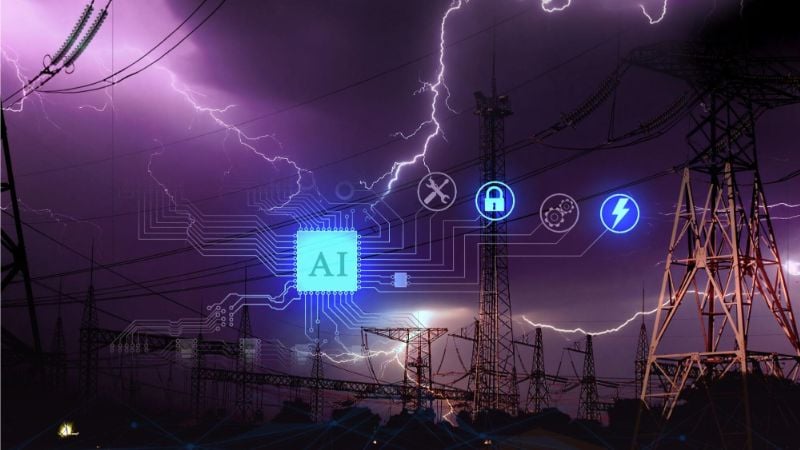
Concept of AI-enhanced power grid. Image used courtesy of Adobe Stock
Data Centers, Power Demand, and Grid Issues
Energy usage from data centers, AI, and cryptocurrency mining will rise significantly in the coming years. Some 8,000 data centers exist globally, with around one-third in the U.S.
Data center power demand will more than double in the next decade, putting more pressure on the grid and leading to more frequent power outages. Generative AI models such as ChatGPT use over 500,000 kWh per day, and this is just one branch of AI. By comparison, the average U.S. household uses 29 kWh of electricity per day.
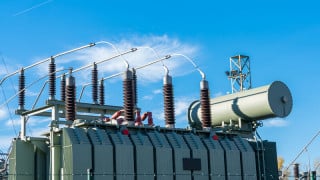
Overall, energy demand is expected to grow across the U.S. by 4.7% in the next five years, double the previous estimate of 2.6%. On the infrastructure side, the U.S. power grid is experiencing a shortage of transformers. The increasing demands of AI and data centers in the years to come will only exacerbate these issues.
How AI Reduces Energy Consumption
While AI could significantly increase energy demand, it could improve operational efficiency and save energy if used properly. AI algorithms’ computational power is expected to double every 100 days, with global energy demand increasing by 26-36% from AI alone in the next few years.
However, this energy will come from data processing and storage operations, which will improve data management, analytics, resource optimization, and facility operation. Using AI to make other processes more energy efficient could help reduce AI's net impact on the energy grid.
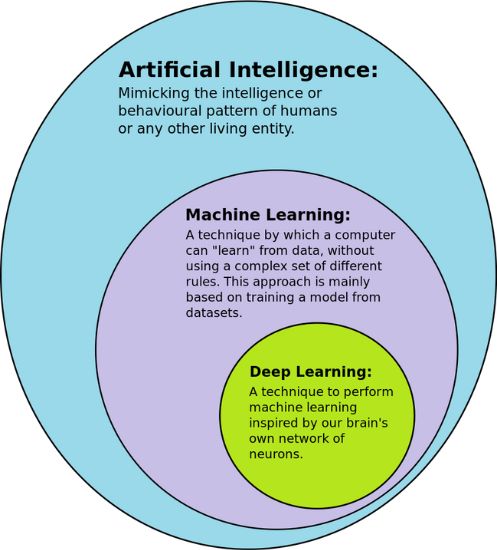
AI types. Image used courtesy of Wikimedia Commons
For example, the extra energy usage is directly attributed to higher computational power. However, AI, with its faster computational power, could help realize higher efficiency in various processes, modeling, simulations, and data analysis, which will reduce energy consumption.
Another approach is changing how and when AI algorithms are used. The grid is strained during peak times. If computation AI processes could be performed during off-peak hours rather than peak hours, it would help improve efficiency, grid reliability, and energy system capacity. For example, the AI training phase—when data is fed to the algorithm so it can learn—could be implemented during off-peak hours instead of standard operational hours. This simple switch could help to reduce load demand.
Another way to reduce AI's energy demands is to share data center capacity and cloud storage. This approach could make processing resources available via a virtual network, lowering data center size and energy consumption.
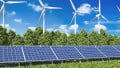
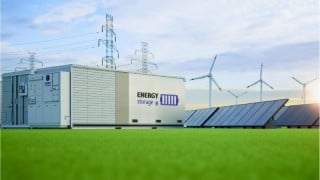
Distributed energy resources (DER), such as renewable technologies, could help support AI technologies. DERs could be installed at AI operational facilities sites to add an extra energy source to reduce the energy demand from the grid, especially in peak times.
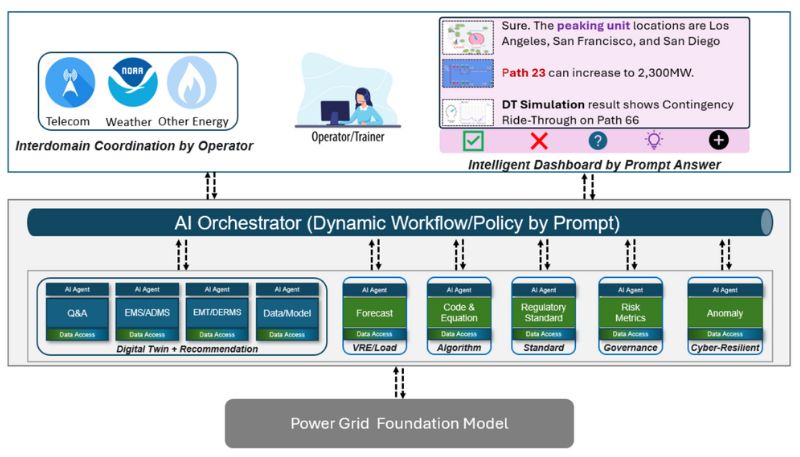
Concept of AI used in power grid. Image used courtesy of Department of Energy
AI could also be used in smart grids if all infrastructure becomes digitized. Using AI in smart grids could optimize processes, balance loads, and control energy demands from within the grid itself. It could also work with load-balancing operations from companies and the general infrastructure. AI could improve the grid’s efficiency and reliability from within if widely implemented, which could help offset some energy demands in the wider AI ecosystem.
AI Algorithms: Good or Bad for the Grid?
Whether AI is a positive or negative power grid force is unclear. The answer relies on multiple factors, including AI algorithms’ actual energy usage compared to the energy they save by optimizing other processes.
Realizing additional efficiencies with AI will be key to reducing grid demand in the coming years and decades. It will depend on multiple factors, including human participation, requiring a multi-pronged approach. Governments must speed up DER adoption, and private companies should foster AI efficiencies and shift some operations from peak demand time to reduce the grid’s load. How much AI can offset its energy load demand by improving efficiencies in other areas remains to be seen. It will likely be a dynamic environment that changes as new solutions, regulations, and operations appear in the coming years.