Facebook
 Google
 GitHub
 Linkedin
Will EVs Flourish or Flounder in the Next 4 Years?
Part 2 of this three-part series evaluates how policy changes in Washington, D.C., could affect electric vehicle technology and supply chains.
The Inflation Reduction Act directed over $369 billion toward sustainable job creation and clean energy initiatives. The IRA also provided significant tax credits for new and used electric vehicles—tax incentives considered an important factor driving EV adoption.
After Donald Trump’s election to a second term, his transition team indicated he was considering repealing the IRA and eliminating the EV tax credit as part of a broader tax reform initiative.
Repealing the IRA could significantly slow the transition to renewable energy sources like wind and solar power. Eliminating tax incentives could slow EV sales and keep more fossil fuel-powered vehicles on the roads. The IRA has also spurred significant private investment in clean energy and EV production, and repealing it could discourage further investment, slowing technological advancements in these areas.
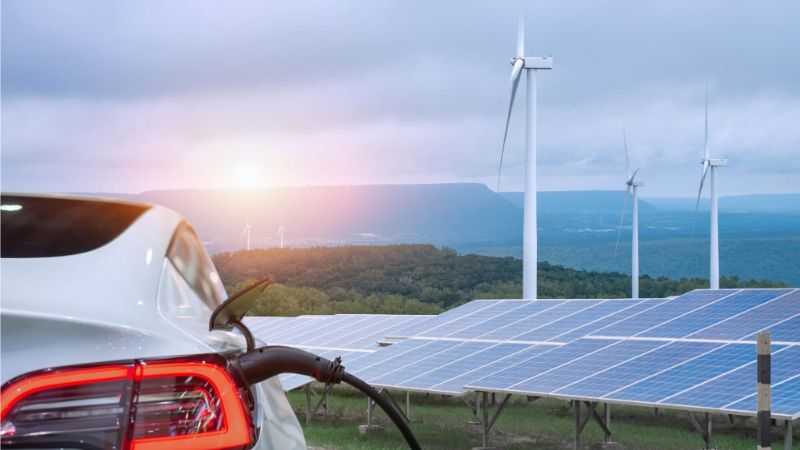
EV charging with renewable energy. Image used courtesy of Adobe Stock
The IRA and the Environment
Repealing the Inflation Reduction Act could have significant environmental impacts, particularly in climate change mitigation efforts. The IRA was projected to slash U.S. climate pollution by 43-48% below 2005 levels by 2035, compared to an expected 27-35% reduction without the legislation.
The U.S. government subsidies for fossil fuels are notably higher than those for renewable energy sources. For example, the permanent tax expenditures favor fossil fuels over renewables by a ratio of approximately 7 to 1. The Trump administration has not suggested that these subsidies will be reduced.
Change In EV Policies
Donald Trump's anticipated policies regarding electric vehicles could significantly impact the global automotive landscape, particularly benefiting China's and Europe's auto industries in the long term. His plans include eliminating federal incentives such as the $7,500 tax credit for EV buyers. Trump’s transition team believes repealing the EV tax credit would be politically feasible within a Republican-majority Congress. This would also align with the interests of the oil industry and traditional energy sectors, which have historically opposed subsidies for renewable energy sources.
This move is expected to reduce consumer demand for EVs in the U.S. market, which could lead to a decline in domestic production and innovation within the American auto industry. Analysts predict that if these incentives are removed, demand for EVs could plummet, with estimates suggesting a potential 20 percent decrease in battery demand by 2030 compared to previous forecasts. U.S. automakers may struggle to compete with their European and Chinese counterparts, who benefit from substantial subsidies and incentives in their home markets. Removing U.S. tax credits could make American EVs less attractive than those from China and Europe, which continue to receive strong governmental support.
China has established itself as a leader in the EV supply chain, particularly in battery production. If Trump's policies decrease U.S. demand, Chinese manufacturers could capture a larger global market share as they continue to innovate and produce at scale without similar regulatory constraints.
Trump's proposed tariffs on imported goods, including vehicles and components from China, might initially seem detrimental to Chinese automakers. However, if these tariffs increase production costs for U.S. automakers, they could inadvertently make Chinese products more competitive internationally as they maintain lower production costs.
The potential revocation of the $7,500 federal electric vehicle (EV) tax credit could result in scaled-back investment in EV research and development, slowing progress on improving battery technology, range, and performance. The rollout of new EV models and platforms will likely be delayed as U.S. automakers would have less capital to invest in advancing their EV capabilities than global competitors.
Technology and Brain Drain
Under the Trump administration, revoking the $7,500 federal EV tax credit could threaten specific EV technologies and battery innovations for U.S. automakers.
- Solid-state batteries: Research and development into this next-generation battery technology, which promises higher energy density and faster charging, could slow down due to reduced funding.
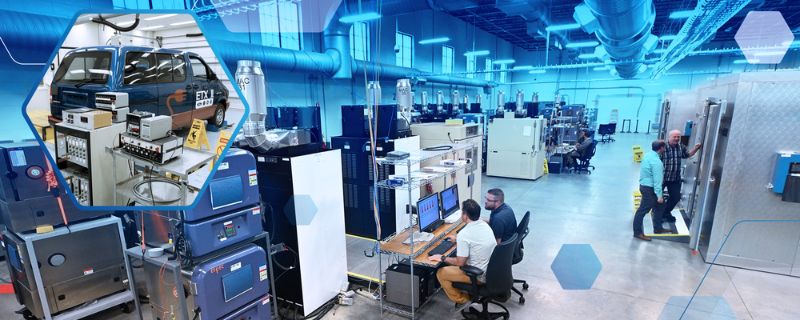
Battery research at Idaho National Laboratory. Image used courtesy of Idaho National Laboratory
- Silicon anode improvements: Efforts to increase the use of silicon in battery anodes to boost energy density and reduce costs may be hampered.
- Advanced cathode materials: Developing new cathode compositions to enhance battery performance and reduce reliance on scarce materials could be delayed.
- Ultra-fast charging systems: Investment in developing and deploying high-power charging stations that could add hundreds of miles of range in minutes might be scaled back.
- Vehicle-to-grid technology: Progress on bidirectional charging capabilities allowing EVs to support the power grid could stall.
- Next-generation electric motors: Research into more efficient and compact motor designs using advanced materials might slow.
- Power electronics improvements: Developing more efficient inverters and converters to maximize battery-to-wheel efficiency could be delayed.
- Battery cell production: Efforts to bring battery cell manufacturing in-house to reduce costs and improve integration could be scaled back.
- Energy management software: Improvements in software to optimize battery performance and extend range could be delayed.
Lower EV sales volumes would make it more difficult for U.S. automakers to achieve the economies of scale in EV and battery production that drive down manufacturing costs. This would also make achieving price parity between EVs and gas vehicles more difficult. The slowdown in the U.S. EV market could result in job losses in EV engineering and manufacturing and a reduced ability to attract and retain top EV talent worldwide.
Looking Ahead to Part 3
Part 3 of this series will examine the challenges facing U.S. legacy automobile manufacturers and how changes in EV policy in California and nationwide will affect Tesla and Elon Musk. Part 1 discussed climate change and electric vehicle policies.
The views and opinions expressed in this article are those of the writer and do not necessarily reflect those of EEPower or EETech.