Facebook
 Google
 GitHub
 Linkedin
9 Notable Renewable Energy Successes in 2024
What’s driving the banner year the U.S. experienced, and what barriers might renewables face?
Addressing climate change has significantly driven the increase of renewable energy capacity. According to a 2023 Pew Research study, 74% of Americans support the country's participation in international efforts to reduce climate change effects, and 67% place alternative energy source development, such as wind, solar, and hydrogen power, as more important than increasing fossil fuel production.
The 2021 Infrastructure Investment and Jobs Act is scheduled to invest $1.2 trillion in resilient infrastructure to help reduce emissions. The landmark 2022 Inflation Reduction Act (IRA) allocated $369 billion to increase clean energy and reduce emissions. The IRA is estimated to have the greatest impact on U.S. climate goals of any previous policy. Before these policies, the U.S. cut greenhouse gas emissions by about 2% per year. With the IRA, this pace is projected to increase to 4% annually.
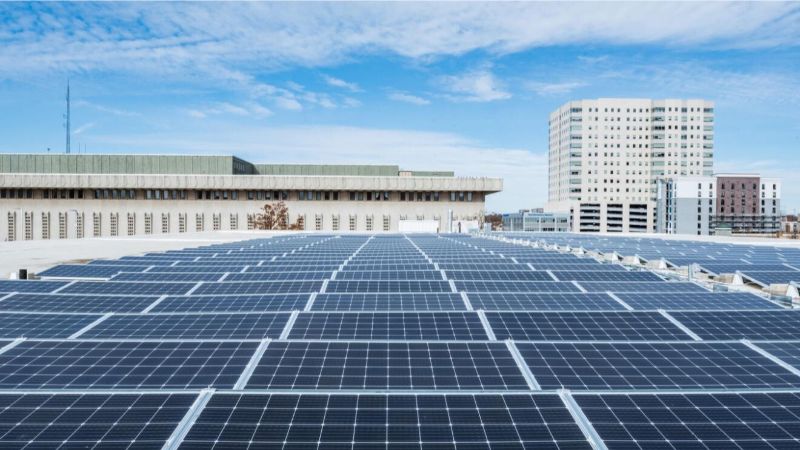
Solar panels in downtown Tulsa. Image used courtesy of the Department of Energy/Jared Heideann
Renewable Energy Growth
Renewable energy grew as a percentage of total energy consumption in the United States from 2009 to 2023. Over this period, renewable energy's share increased steadily, reflecting a significant shift toward sustainable energy sources.
According to Climate Central, renewable energy in 2009 accounted for approximately 8.4% of total energy consumption. That percentage grew incrementally yearly, surpassing 10% in 2014 and reaching 15% by 2020. Between 2020 and 2023, the growth accelerated, with renewables rising from about 15.8% to 20.5%.

The rise of renewable energy. Image used courtesy of Climate Central
In 2024, wind and solar energy grew significantly in the U.S. Solar power generation increased by nearly 26%, with utility-scale solar growing by 30.1% and small-scale solar by 16.%, contributing over 7% to the total U.S. electricity generation. Wind power generation also saw a boost, increasing by 6.6% during the first nine months of the year and contributing 9.9% to the nation's electricity. Together, wind and solar accounted for 17% of U.S. electricity generation in 2024.
Other renewable energy forms include hydropower, once the leading renewable source, which now contributes 6% of total U.S. electrical generation. Biomass accounts for about 1.1%, and geothermal for approximately 0.4% of total electricity generation.
Driving Forces for Renewable Energy
While addressing climate change has been a major driver, other factors have influenced renewable energy capacity growth. Solar panel and wind turbine costs have dropped significantly over the past decade, making these technologies more competitive than fossil fuels. For example, utility-scale solar costs have declined by over 80% since 2010, while wind costs have fallen by about 70%. Battery storage costs have also decreased, enabling better renewables integration in the grid. Solar panel efficiency, wind turbine design, and grid infrastructure improvements have enhanced the performance and reliability of renewable energy systems.
At the same time, policies like solar’s Investment Tax Credit and wind’s Production Tax Credit have played major roles in incentivizing renewable energy projects. Renewable Portfolio Standards in many states require sourcing a certain percentage of utilities’ electricity from renewables, increasing demand. The Inflation Reduction Act has also provided long-term renewable energy project incentives like tax credits for standalone energy storage and domestic manufacturing investments.
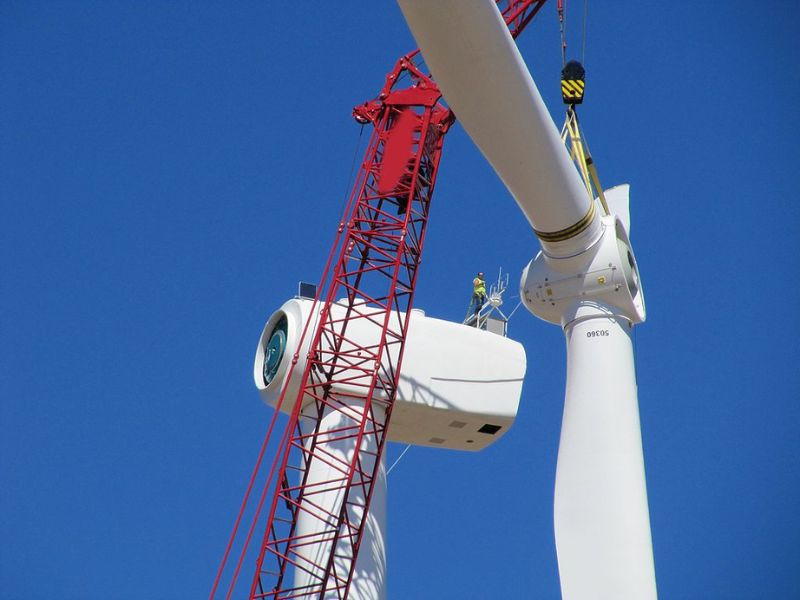
Wind turbine construction. Image used courtesy of Wikimedia Commons
In addition to federal and state government programs, many corporations have set ambitious decarbonization goals, increasing investments in renewable energy to meet these sustainability targets. Substantial private and public investments in renewable energy projects have accelerated deployment. In 2023 alone, over $141 billion was invested in clean energy in the U.S.
9 Notable U.S. Renewable Energy Successes in 2024
Nine renewable energy advancements highlight successes in 2024.
1. Wind and solar: These renewables were the fastest-growing new electricity sources, contributing 18.6% of U.S. electricity generated during the first half of 2024.
2. Vineyard Wind Project: This offshore wind project in Massachusetts is the first large-scale offshore wind farm in the U.S., expected to generate 800 MW.
3. Gemini Solar Project: This solar farm in Nevada includes a 690 MW photovoltaic plant and a 1,400 MWh battery storage system.
4. SunZia Wind Project: Spanning New Mexico and Arizona, it will generate over 3,000 MW, powering 2.4 million homes.
5. Champlain Hudson Power Express: This New York project delivers hydroelectric power from Canada via a 333-mile transmission line.
6. Western Spirit Wind: These wind farms in New Mexico have a combined capacity of over 1,050 MW.
7. New growth: The U.S. Energy Information Administration predicts renewable energy deployments will grow by 17% to 42 GW in 2024, accounting for almost a quarter of electricity generation.
8. Economic and job growth: Renewable projects like Vineyard Wind and Champlain Hudson Power Express have created thousands of jobs and boosted local economies.
9. Expansion: The combined share of wind and solar is growing rapidly, with solar expanding by 30% and wind growing by 33% in June 2024 alone.

Underwater transmission line in Lake Champlain. Image used courtesy of Champlain Hudson Power Express
Moving Forward With Renewable Energy
With the successes of the Inflation Reduction Act and the growth of renewable energy in the U.S. in 2024, further development in the coming years would seem assured. However, after the recent presidential election, the incoming administration has expressed support for the fossil fuel industry and skepticism toward solar and wind renewable energy.
Before the November 2024 election, solar and wind were expected to make up more than 50% of energy capacity in 46 states by 2035. Combined wind and solar capacity were expected to increase in 27 states at least five-fold by 2035 compared to 2024, and 12 states were predicted to see at least an increase by a factor of 10 in combined wind and solar capacity by 2035.
Still, renewables are the least expensive way to add new capacity to the power grid, outperforming fossil fuels like natural gas and coal and proving far less expensive than nuclear energy. How this advantage will balance the fossil fuel industry’s influence on government policy will play out in the coming years.