
 Facebook
 Google
 GitHub
 Linkedin
Wireless EV Charging Electrifies Highway in France
A 1.5-km wireless charging test road near Paris demonstrates how Electreon’s dynamic inductive charging technology could reshape electric vehicle infrastructure.
Even as electric vehicle charging stations advance, they still demand long stops, maintenance-heavy hardware, and significant grid investment issues. These issues are more challenging for electric truck and bus fleets. To ease the strain, engineers and policymakers are searching for alternative charging solutions.
One answer may be integrating wireless charging on roads. In France, engineers are testing about 40 km of dynamic wireless charging beneath 1.5 km of road on the A10 motorway. Under the asphalt, engineers have embedded induction coils connected to power and control systems. Early results show that the system can deliver more than 300 kW of peak power and around 200 kW of average power, roughly matching or exceeding today’s fastest plug-in chargers, even as vehicles maintain highway speeds.
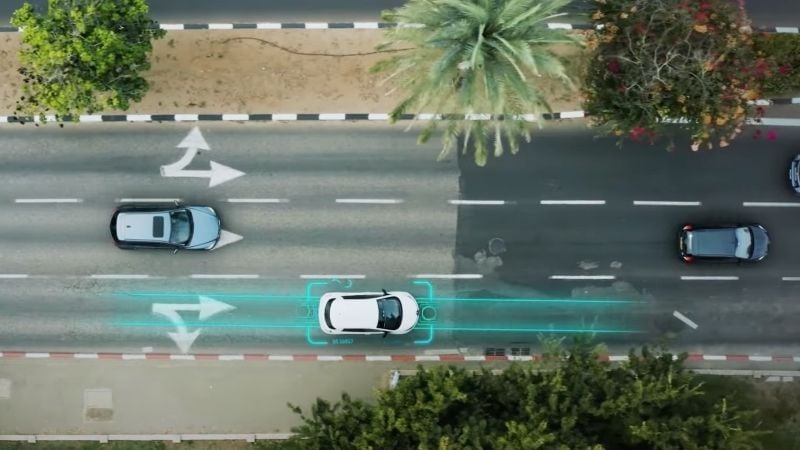
Electreon’s charging road. Image used courtesy of Electreon
France’s A10 Pilot: Proving Real-World Durability
The Charge as You Drive project is the first live dynamic wireless charging demonstration on an active roadway in France. When an EV equipped with a receiver coil passes overhead, energy transfers through a magnetic field to the battery, allowing vehicles to charge while in motion.
Before installation, researchers spent two years testing road materials at Vinci Construction’s Road Research Center and Gustave Eiffel University’s LAMES lab. They used traffic simulators to mimic 25 years of truck wear in just a few weeks, and the coils held up well even under heavy stress. After those tests, the French government gave the go-ahead for live trials on the A10.
So far, four vehicles (a heavy truck, a delivery van, a passenger car, and a bus) have been equipped with receiver kits to evaluate charging behavior in real traffic.
During the first months of testing, three laboratories monitored data showing consistent energy transfer and minimal signal loss even under varying weather and traffic conditions. The system’s modular coil design allows maintenance or replacement without major road disruption, addressing one of the most common concerns about long-term deployment. The next phase will scale testing to larger fleets and evaluate grid impact under continuous use.
Electreon’s Expanding Wireless Road Portfolio
France’s A10 project is only one piece of Electreon’s larger rollout. The company already has wireless charging roads running in Germany, Norway, Israel, and parts of the U.S. Recent examples include the first public setup in Detroit and a pilot at UCLA that will power campus shuttles before the 2028 Olympics.
Electreon’s approach uses coils installed beneath road surfaces or parking areas that communicate with a vehicle-mounted receiver. When a vehicle drives or stops above a coil, the system automatically transfers power without cables, plugs, or downtime.
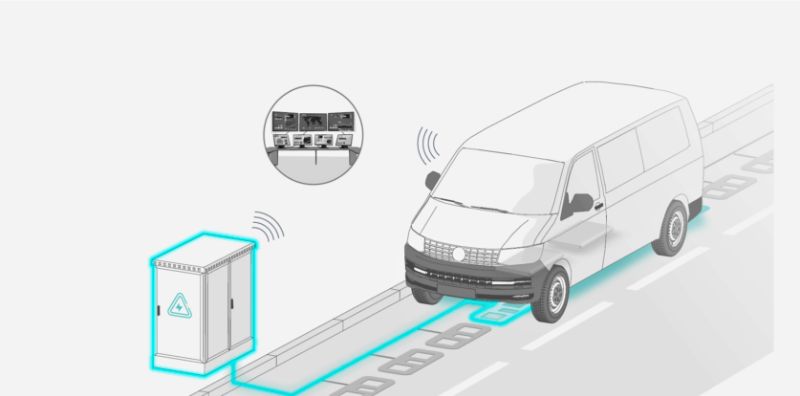
Electron’s wireless charging system. Image used courtesy of Electreon
Electreon reports that just 1.6% of city streets equipped with this technology (at intersections, loading docks, and bus stops) could keep most EVs running indefinitely, reducing battery size, cost, and raw material use. The company’s cloud-based management platform also balances load demand, shifting energy use to off-peak hours and reducing grid stress.
Advantages and Challenges Ahead
Dynamic wireless charging offers major advantages for logistics fleets, transit systems, and high-utilization vehicles. Continuous charging reduces the need for massive battery packs, lowering vehicle weight and improving range. The absence of plugs or exposed hardware also reduces vandalism and maintenance. Moreover, by distributing charging across the network, the system smooths demand on the grid instead of concentrating it at a few high-power stations.
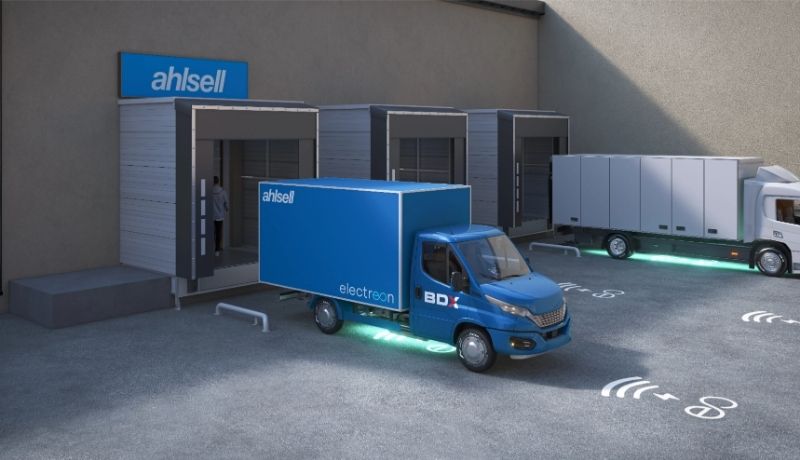
Wireless charging for parked vehicles. Image used courtesy of Electreon
The challenges are still significant: installation costs, grid upgrades, and manufacturer standardization of receive hardware across platforms. Decades of real-world wear must prove durability and repairability, especially for heavy transport corridors. Yet, early projects like the A10 in France and Detroit’s Michigan Avenue pilot suggest the model is both technically feasible and economically promising.
The Road Ahead
Dynamic charging probably won’t replace plug-in stations completely, but it’s already changing how cities and fleets look at electrification. By building the energy transfer right into the road, engineers are creating systems that cut downtime and reshape what charging means for electric vehicles. With proven durability, growing global pilots, and government backing, wireless roads may soon power more than the conversation; they may power the vehicles themselves.










A couple of questions:
1. How many vehicles can be charged simultaneously per 100 km of road and at what power level?
2. What is the projected cost (at scale) per km?
No numbers are for efficiency (for some strange reason) .
This is highly unlikely to ever be practical except for a minority of circumstances, much like EVs.