Facebook
 Google
 GitHub
 Linkedin
4 Improvements in EV Charging Tech and Infrastructure
The latest innovations in electric vehicle charging include charging time optimization, wide bandgap technology, and wireless EV charging.
Advances in electric vehicle charging are critical for the automotive industry’s future. Better plugs and chargers make public stations and charging equipment more accessible. Each year, innovations have gradually changed the landscape and progressed the sector.
Here are four leading charging innovations expected for 2025 and beyond.
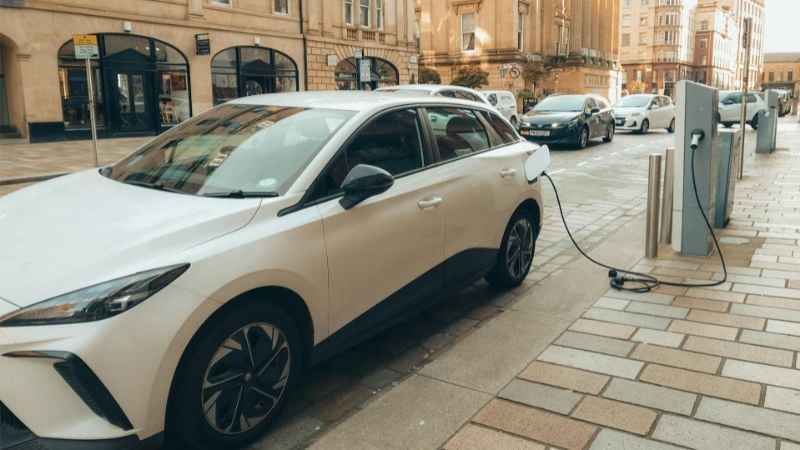
EV at city charging station. Image used courtesy of Pexels
1. Emulate Energy’s Platform Charging for Simplified Load Control
In mid-November, Emulate Energy from Lund, Sweden, developed ways to balance the grid when charging. The system increases grid reliability during peak demand. The company partnered with Smartcar to support more electric models, including EVs from Tesla, Volvo, and other manufacturers.
This innovation focuses on distributed energy resources (DERs) and simplifies their management. With more EVs on the Emulate Energy platform, Smartcar can help energy providers onboard DERs. One significant advancement is automated vehicle data retrieval. Emulate’s technology can automatically obtain charging information and optimize when the EV can charge to save the most money.
Due to differing needs, emulate Energy and Smartcar prioritized scalability when developing this technology. Engineers can determine the necessary resources and aid a public charging station or a charger exclusively for an office building. With Smartcar’s compatibility, nearly every EV can connect to the platform and leverage its automation. Another Emulate Energy priority was optimizing data retrieval while mitigating latency and server loading times.
Energy consumption isn’t exclusive to the EV’s motor—it can come from the air conditioner or heat pumps. Emulate Energy’s technology regulates power consumption from each charging station. With enhanced platform charging, companies can turn each EV device into a virtual battery and trade them on electricity markets. Overall, the aim is to unify the API to help EV owners and utilities.
2. Nexperia and KOSTAL’s Automotive-Grade Wide Bandgap Devices
Nexperia has contributed to the EV charging landscape by producing wide bandgap devices that streamline connections with automotive applications. The Dutch company will produce these technologies, and German-based KOSTAL will validate the designs. With this partnership, these industry leaders can improve EV semiconductors and performance compared to conventional devices.
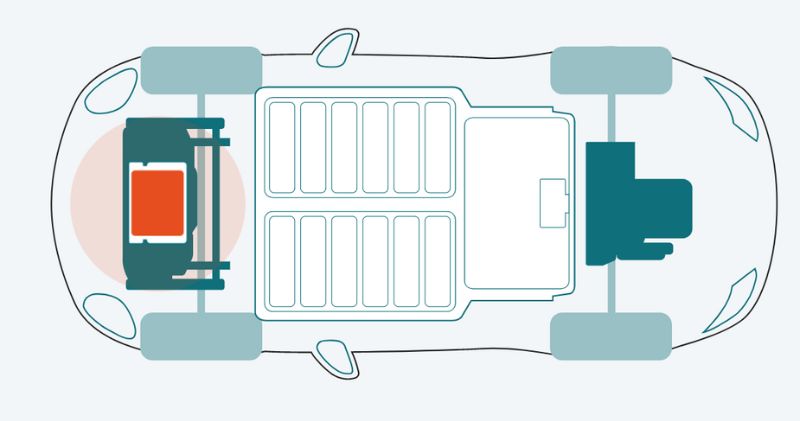
EV onboard charger. Image use courtesy of Nexperia
The partnership with KOSTAL is critical, considering this German company’s influence in car production worldwide. Nexperia has relied on them for decades, and now the relationship extends to wide bandgap devices. KOSTAL’s role in this business venture is validating devices when charging an EV and providing data to Nexperia to enhance performance further.
In 2024, Nexperia invested $195 million (€184 million) to develop more wide bandgap semiconductors. These technologies will contain gallium nitride, silicon carbide, and other essential compounds for EV charging. With the investment, Nexperia will also enhance its transistor and silicon-diode water fab capacity. These factors combine to support Nexperia’s decarbonization goals.
While wide bandgap devices improve upon silicon-based products, the chemical element is still integral to Nexperia’s future in EV charging technologies. The two European companies will prioritize the development of the SiC-based MOSFET. This technology will assist KOSTAL’s onboard chargers and increase EVs’ reliability.
3. Zerova Technology’s High-Performance Charging Equipment
At the 2024 Singapore International Transport Congress and Exhibition, Zerova Technology showcased its high-performance charging equipment. The Taiwan-based manufacturer featured its AX32 Level 2 AC charger and a series of fast-charging equipment for residential and commercial purposes. With the AX32 socket, an EV charger can reach a frequency of 60 Hz and 415 VAC.
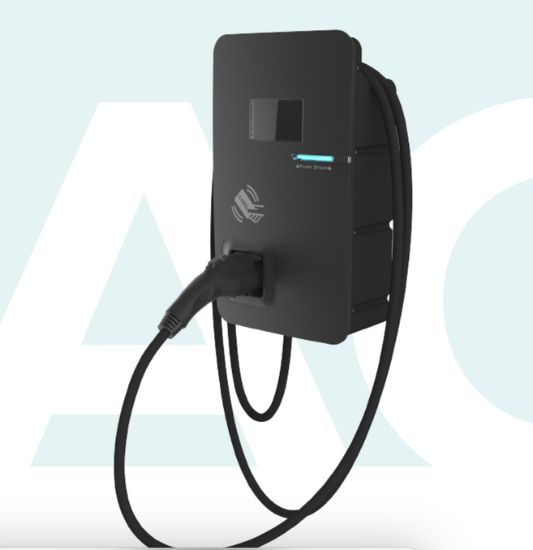
Wall-mounted AC charger. Image used courtesy of Zerova
One of Zerova’s most significant displays was the DD series, featuring a 360 kW fast charger. With this station, two EVs can charge simultaneously and use cables up to 5.7 meters. Zerova makes the machine more accessible because of its cable retraction system. While the charger is powerful, its footprint remains small for urban spaces and residential neighborhoods.
Zerova’s most powerful machine is the DQ480, which can produce up to 480 kW of energy. This more substantial charger can charge up to four vehicles simultaneously. Increasing charger connections reduces installation costs per vehicle, lessening the strain on utility companies. Zerova’s four-charger station is most helpful in dense urban locations where finding an unoccupied cable could be challenging.
Another key addition for Zerova is the Megawatt Charging System for long-haul trucks. This heavy-duty charger aims to ease logistics companies’ transition to cleaner energy. With this equipment, companies can use high-capacity and fast charging to get their trucks on the road. Medium- and heavy-duty trucks make up 23% of the auto industry’s greenhouse gas emissions, so Zerova’s equipment will go a long way toward reducing them.
4. InductEV’s Wireless Charging System
While companies have made great strides with cables, some innovations have paved the way for wireless charging systems. Using an in-ground method, InductEV has developed a wireless mechanism to charge EVs on pads. The current lineup allows EV owners to select between 50 and 450 kW for high-powered charging. The Pennsylvania-based company’s innovation has helped large EVs carry smaller batteries and maintain high performance.
For instance, InductEV’s pads come with 75 kW per device. Six pads can reach 450 kW to charge large trucks and industrial equipment. Some companies may utilize these most substantial options for railroads and port applications. On a slightly smaller scale, city buses and heavy-duty trucks may take advantage of the 300 kW wireless charging system with four pads. All the driver needs to do is attach a pad to the bottom of the vehicle.
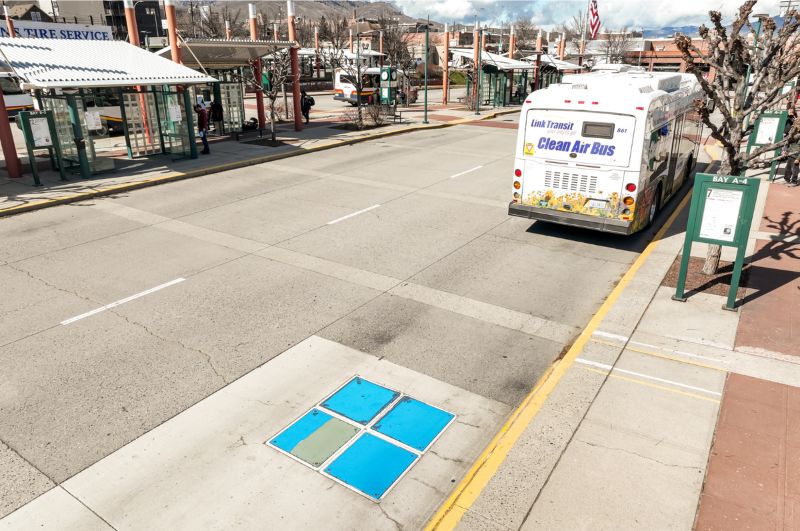
Wireless charging for buses. Image used courtesy of InductEV
The wireless charging system will be critical in 2025 and beyond as InductEV expands its services nationwide. For example, Seattle Sound Transit uses these wireless electric charging pads for the city’s double-decker buses. On the East Coast, InductEV’s innovation charges the electric port tractors at the AP Moeller Maersk Terminal in Port Elizabeth, New Jersey.
While InductEV impacts industrial applications in the U.S., it also impacts passenger cars worldwide. In November, InductEV announced its partnership with Volvo Cars to aid wireless charging technology for commercial fleets. With this initiative, the companies aim to increase uptime for electric taxis and charging technology in Gothenburg, Sweden. InductEV and Volvo’s impact will be hands-free, wireless charging in 2025 and beyond.
Improving the EV Charging Infrastructure in 2025
EVs are part of the automotive industry’s present and future. Therefore, improving their inner workings is integral to increasing uptime for personal, commercial, and industrial applications. Research and development worldwide has enhanced EV chargers by making them wireless, raising power limits, and simplifying onboarding.