Facebook
 Google
 GitHub
 Linkedin
Solid-State Batteries Race to Mass Production
With differing technologies, Toyota, Samsung SDI, QuantumScape, and others are vying for breakthroughs in solid-state batteries for electric vehicles.
Solid-state batteries (SSB) are accelerating toward mass production, with several companies pursuing different strategies to challenge conventional battery technologies.
Factorial’s quasi‑solid cells maintain compatibility with existing factories. Samsung SDI leverages partnerships to validate sulfide cells, while Toyota eyes sulfide chemistry with enhanced longevity. Meanwhile, QuantumScape focuses on anode‑free lithium metal with ceramic separators, and ProLogium pushes all‑inorganic architectures with high ionic conductivity.
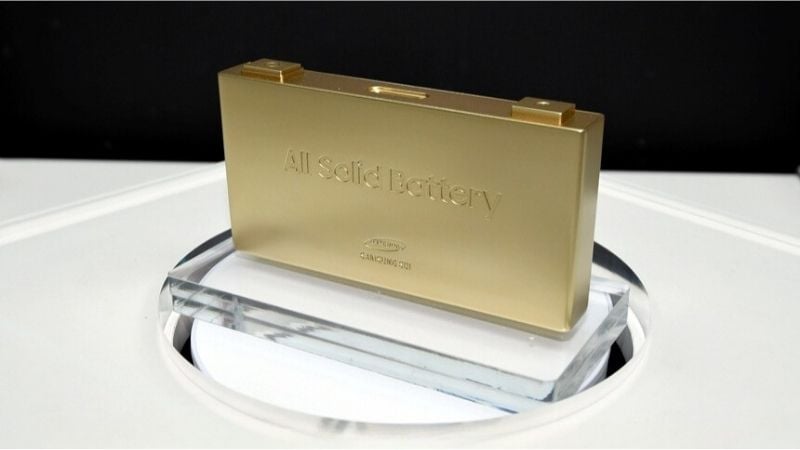
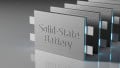
Samsung SDI targets 2027 for all-SSB production. Image used courtesy of Samsung SDI
Donut Lab’s All-SSB for Motorcycles
At the 2026 CES, Finnish startup Donut Lab claimed to have solved the decades-long challenge of building commercially viable all-solid‑state batteries, touting a high-performance solution for electric motorcycles that delivers 400 Wh/kg, charges from empty to full in 5 minutes, and has a design life of 100,000 cycles.
According to Donut Lab, the first production systems would power Verge motorcycles on public roads in the first quarter of this year. The company suggests that its cell is safe because it eliminates flammable liquid electrolytes and mitigates dendrite formation. It's less expensive than lithium-ion batteries because it's made from abundant materials rather than rare elements.
Although Donut Lab is starting with motorcycles, its ambitions extend to larger platforms that are universal across applications such as drones, high-power charging systems, and defense.
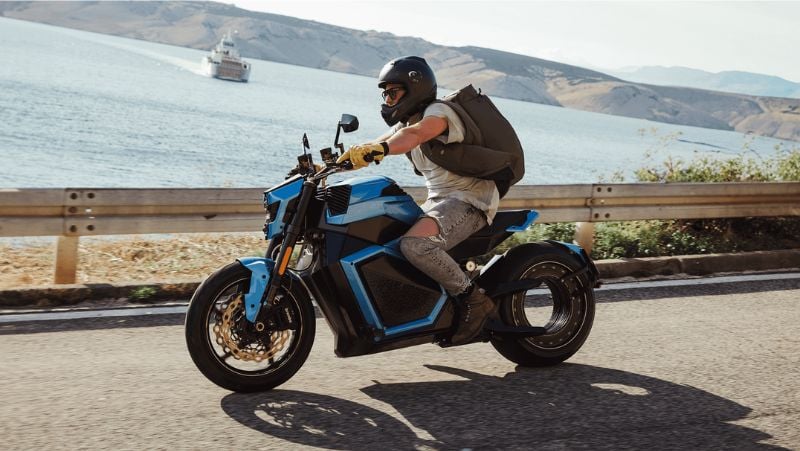
Donut Lab’s solid-state battery will be used in Verge motorcycles. Image used courtesy of Donut Lab
Factorial's Quasi-Solid-State Cells
Among the latest leaders in quasi-SSBs is Factorial Energy's Electrolyte System Technology (FEST), which combines a high-capacity cathode with a polymer-based quasi-solid electrolyte that's compatible with lithium-metal anodes. This hybrid architecture balances the safety benefits of SSBs with the manufacturability of conventional lithium‑ion cells, targeting applications like electric vehicles, drones, and marine vehicles.
Rather than using a fully all-solid electrolyte, FEST blends features of solid and liquid systems. These semi-solid or hybrid-solid electrolyte architectures offer improved safety and energy density without the interface challenges of all-solid cells. Factorial claims its batteries are 40% lighter and 33% smaller than lithium-ion alternatives.
The company is also developing Solstice, a sulfide‑based all‑solid‑state electrolyte manufactured using a dry coating process designed to cut costs.
Factorial's SSBs have demonstrated promising performance in real-world tests in a modified Mercedes-Benz EQS, exceeding 745 miles of range on a single charge. Stellantis labs also confirmed the cells' fast-charging performance and high energy density.
ProLogium Adds Ceramic Chemistry into Superfluidized SSB Platform
ProLogium takes a different materials route with a battery platform comprising a non-flammable, superfluidized all-inorganic solid-state electrolyte, an all-silicon anode, and an all-ceramic separator that mitigates thermal risks.
The company claims a volumetric energy density up to 860 Wh/L, ionic conductivity of 57 mS/cm—five times that of many sulfide or liquid electrolytes—and the ability to recharge 60% to 80% in four to six minutes.
Safety is a major selling point, as the inorganic electrolyte is non‑flammable and the ceramic separator prevents direct contact between electrodes. ProLogium claims that testing the active safety mechanism showed no signs of thermal runaway, which the company describes as an industry first for electrochemical systems.
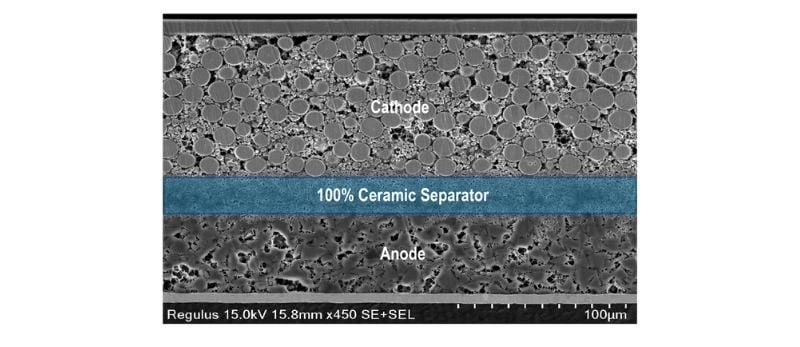
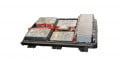
Ceramic separator in ProLogium batteries. Image used courtesy of ProLogium
ProLogium has demonstrated mass-production capabilities, having shipped over 600,000 cells from its Taiwan gigafactory, and is breaking ground on a facility in France, with planned capacity ramping up in phases toward 12 GWh by 2032. The company aims to serve EVs, electric bikes, and energy storage systems for data centers, among other applications.
QuantumScape's Anode-Free Lithium‑Metal Cells Progress Toward Pilot Production
California startup QuantumScape is pursuing a different architecture, with an anodeless lithium‑metal cell that relies on a thin ceramic separator. By removing the anode and using a solid-state ceramic separator, QuantumScape aims to achieve very high energy density without dendrite formation. The cells have an energy density of 844 Wh/L and can charge from 10% to 80% in 12.2 minutes.
In late 2024, the company announced that it had integrated Cobra, a next‑generation heat‑treatment system for separator production, keeping it on track to deliver higher‑volume QSE‑5 samples the following year. QuantumScape began shipping those QSE‑5 B1‑sample cells in 2025, following a live demonstration on a modified Ducati V21L race motorcycle.
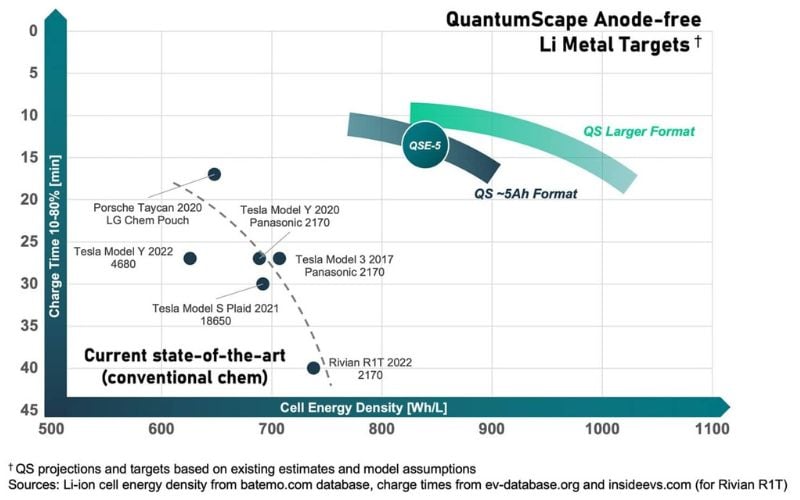
QuantumScape's anode-free SSB unlocks higher energy densities than lithium-ion batteries. Image used courtesy of QuantumScape
QuantumScape has reportedly installed key equipment for its “Eagle Line,” which will combine the Cobra separator process with highly automated cell production. The equipment will be inaugurated in February 2026 and is intended to satisfy customer demand for QSE‑5 cells.
Samsung SDI's All-Solid Battery Plans with Sulfide Cells
Samsung SDI, long known for its lithium‑ion packs, is targeting 2027 for mass production of its all-SSBs.
Last year, it signed an agreement with BMW Group and Colorado‑based Solid Power to co‑develop and validate all‑SSB cells. Under the partnership, Samsung SDI will supply cells that use Solid Power’s sulfide-based electrolyte, while BMW will build battery modules and packs and integrate them into a demonstration vehicle for further validation.
Samsung SDI has been running a pilot line at its R&D facility in South Korea since 2023, producing prototype cells and conducting sample tests with customers. The company touts improved safety and energy density (900 Wh/L) over its existing batteries and notes that these cells could also serve robotics and other applications, in addition to EVs.
_vs._SSB_..jpg)
Lithium-ion battery (left) vs. SSB. Image used courtesy of Samsung SDI
Samsung has also developed fast-charging technology offering an 80% charge in just five minutes, aiming for commercialization in the late 2020s.
Toyota's Sulfide Chemistry
While Toyota was criticized for arriving late to EVs, it's emerging as a key player in SSBs. Although it initially planned to introduce the technology in hybrid EVs, the Japanese automaker has since set a goal to launch its first all‑solid‑state BEV between 2027 and 2028.
The first‑generation pack targets a 621-mile range and the ability to charge from 10% to 80% in under 10 minutes. Toyota is working with Sumitomo Metal Mining on high‑durability cathode materials and with Idemitsu Kosan to produce lithium sulfide for solid‑state electrolytes.
Sulfide electrolytes offer efficient power transfer, reduced fire risk, and high energy density. Toyota aims to deliver a 40‑year lifespan, allowing the cells to retain 90% capacity after decades of use. If the company can meet those goals, it could surpass current lithium‑ion packs in performance and longevity.