Facebook
 Google
 GitHub
 Linkedin
Google and Tesla Lead Coalition for Grid Optimization
The Utilize coalition wants to address the energy crunch by maximizing the power grid’s efficiency through software tools, battery storage, and virtual power plants.
Google, Tesla, Carrier, and other tech-focused companies believe the answer to meeting the growing energy demand is to maximize the existing power grid. They have formed Utilize, a coalition aimed at bringing together industry leaders, utilities, and think tanks to find ways to increase grid efficiency while avoiding costly new infrastructure.
The coalition plans to use software-driven grid management, storage batteries, and virtual power plants to meet peak demand periods and balance the load. The group claims its efforts will allow faster grid connection for new AI data centers and manufacturing facilities and save consumers $100 billion in electricity costs over the next decade.
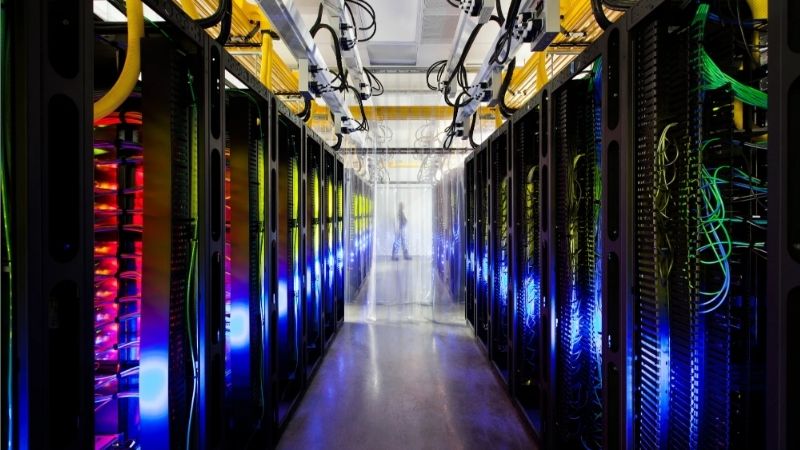
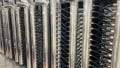
Inside a Google data center. Image used courtesy of Google
The Need for Grid Modernization
According to Utilize, building new infrastructure isn’t necessary to address the rising energy demand. It cited a Duke University study that reviewed 22 U.S. regional power systems and concluded that, on average, the power grid operates at only 53% of its capacity. The researchers estimated that the grid could handle 76 to 215 GW of additional demand, with assistance for only a limited number of peak hours.
Additionally, Stanford University examined the Western U.S. grid and found that most transmission lines were operating at only 18-52% of their capacity, even during peak hours.
The Brattle Group conducted independent research and suggested that improving grid utilization could save U.S. consumers over $100 billion over the next decade.
Utilize’s Approach
Utilize plans to maximize capacity through education, advocacy, and bringing together utilities, legislators, government regulation agencies, and other stakeholders.
Its planned actions include:
- Working with grid operators, governors, and other state-level officials to establish technology-neutral goals for grid utilization.
- Advocating for the deployment of modernization tools such as grid-enhancing technologies, virtual power plants, smart HVAC, and battery storage systems.
- Educating the public through public events, media appearances, and policy papers.
The coalition claims it has already had success. In Virginia, Utilize members advocated for legislation (SB 621/HB 434), which requires major utilities to measure and report grid utilization to the State Corporation Commission (SCC). The SCC then uses the metrics to decide on future grid investments.
Utilize Coalition Members
The coalition’s most notable members are Google and Tesla, both of which are leading the charge in electrification.
Google is investing $185 billion to build data centers for its AI and cloud services, with new sites under development or in proposal stages in North Carolina, Virginia, Texas, and Nebraska. It plans to create “mega-campuses” to support its Gemini 3 and other AI models. At the same time, the company is partnering with developers of small modular nuclear reactors, geothermal systems, and solar facilities with battery storage.
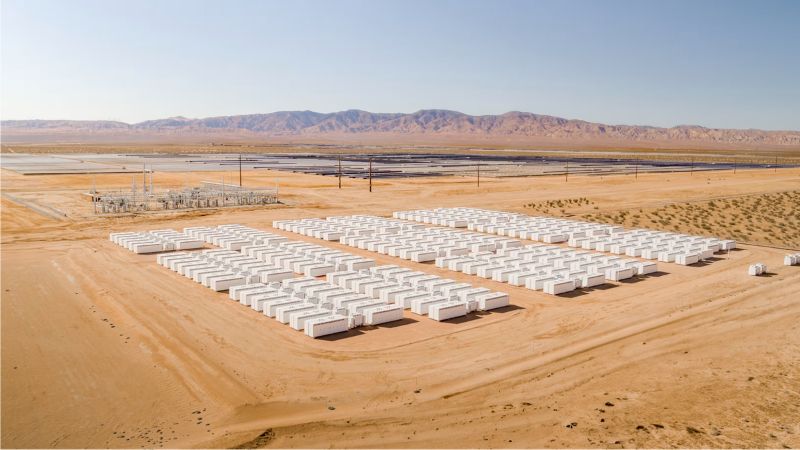
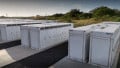
Concept of grid-scale storage using MegaPacks. Image used courtesy of Tesla
Tesla’s most significant impact on grid operations is its electric vehicles. The timing of electric vehicle charging can cause unexpected load spikes on local grids. However, the company is also heavily invested in battery energy storage systems, from the 13.5 kWh Powerwall 3 to the grid-scale MegaPack 3 (5 MWh) and the MegaBlock (20 MWh).
The other major partner, Carrier, is a major manufacturer of heating, cooling, and refrigeration systems for both residential and industrial users. They emphasize digital, “smart” systems that can automatically adjust settings to save energy usage. Heating and cooling account for about 35% of all energy consumption in the U.S., according to the Department of Energy.
Other members include:
- Renew Home, specializing in virtual power plants and residential energy optimization
- Sparkfund, an energy-as-a-service company that also offers building electrification financing
- SPAN, a company dealing in smart electrical panels and home energy management
- Verrus, a designer of next-generation data centers and grid integration
Utilize states that the group is bipartisan and seeking additional members.