Facebook
 Google
 GitHub
 Linkedin
Smart Buildings Could Reinvent the Power Grid
Managed efficiently using advanced data-driven platforms, smart buildings could participate in the energy ecosystem and make the grid more resilient than ever.
Renewable energy sources have led a transition toward decentralized power systems, creating new operational challenges. Maintaining stability and ensuring efficiency in energy production, storage, and distribution becomes more complex with variable energy generation sources like solar and wind.
Microgrids, which integrate local power generation sources with energy management systems, are becoming a promising solution to some of these challenges. While they have some drawbacks, their benefits can shape the future of the power grid.
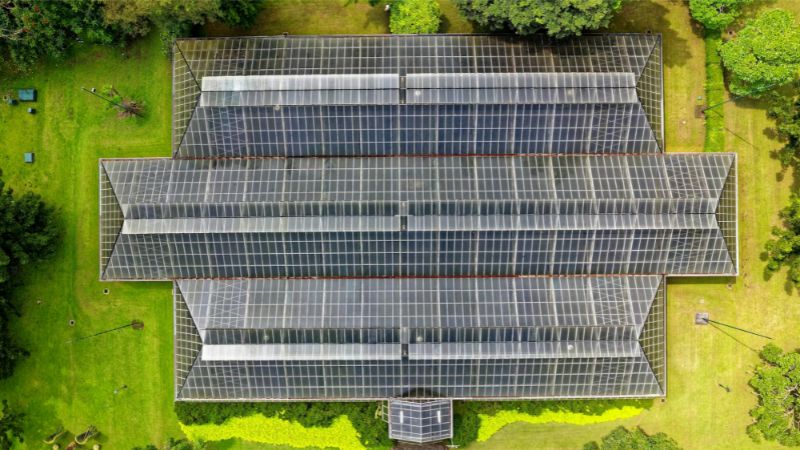
Rooftop solar panels. Image used courtesy of Pexels
Microgrids and Challenges
Smart energy solutions enhance efficiency and sustainability in building environments.
Smart buildings are equipped with interconnected sensors, devices, and software that gather and analyze data to optimize operations, improve occupant comfort, and increase energy efficiency. These data-driven advanced platforms surpass traditional building management systems (BMS) by integrating Internet of Things (IoT) technology, artificial intelligence, and comprehensive data analytics. Together, these tools enhance existing BMS by adding intelligence, adaptability, and interactivity for a more connected and responsive environment.
As renewable energy sources surge, each building functions as a self-contained microgrid.
Traditionally, integrating microgrids within the main power grid has resulted in operational challenges such as voltage stability. Voltage stability refers to maintaining bus and feeder voltages within acceptable limits during normal and contingency conditions. Voltage instability often originates locally due to reactive power imbalances. Primary causes include sudden load changes from the intermittent nature of renewable energy sources and abrupt shifts in load flow, such as transmission line trips.
This challenge is particularly notable in microgrids, which integrate renewable sources into power grids via power electronic inverters. Because of these inverter-based generators, microgrid voltage profiles are highly responsive to dynamic fluctuations and require advanced control mechanisms. Effective voltage support and swift reactive power management are essential to stabilizing these systems in the face of varying load and generation conditions.
Smart Building Platforms
Smart building platforms integrate renewables into existing power grids to enhance energy efficiency and grid stability. These systems are engineered to manage various renewables, such as photovoltaic arrays and wind turbines, by converting their outputs through power electronic inverters to ensure compatibility with grid specifications. To further bolster performance, these systems can include features like predictive analytics that forecast energy usage patterns.
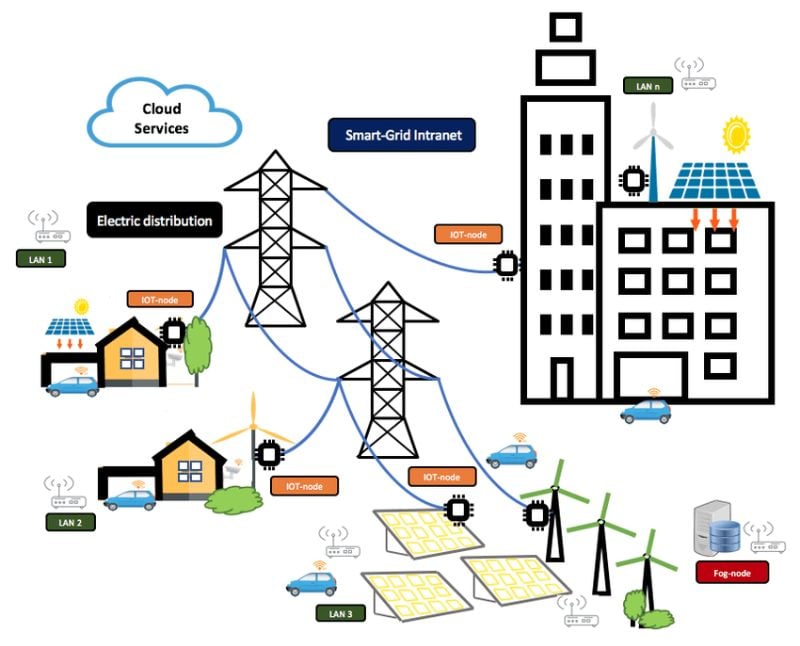
Smart building platform portrayed. Image used courtesy of Ferrandez et al.
Smart building platforms can dynamically adjust to fluctuations in energy supply and demand, maintaining voltage levels within a ±5% range of nominal value and achieving a power factor correction up to 0.98.
Additionally, smart building platforms can support bidirectional energy flow to allow buildings to consume and supply energy to the grid. Bidirectional requires facilitated a robust communication protocol that confirms real-time synchronization between the building's energy management system and the main grid operator.
Despite the many advantages of smart building platforms, the initial capital cost is its main obstacle toward adoption.
Final Thoughts
Integrating smart building platforms into power grids opens pathways for more granular energy management. Where distributed energy sources are increasingly becoming the norm, the combined impact of widespread smart building adoption could be a necessary step toward achieving broad grid resilience.