Facebook
 Google
 GitHub
 Linkedin
Smart Substations and Digitalization—Part 2: IoT Devices and Sensors
Learn how smart substations use synchronized IoT devices compliant with key standards for high-fidelity data, enabling real-time protection and asset health monitoring via edge analytics.
Digitalization is reshaping substations from collections of electromechanical assets into time-synchronized, sensor-rich systems that deliver high-fidelity data for protection, control, and lifecycle management. The shift from copper circuits to Ethernet process buses, combined with pervasive sensing and edge analytics, allows protection and automation schemes to react in milliseconds while continuously assessing equipment health and power quality.
Standards such as IEC 61850, IEC 61869, IEEE 1588, and synchrophasor specifications provide the foundation for these implementations so that multi-vendor solutions can interoperate with deterministic performance.
Integration of IoT Devices and Sensors
Sensor Types and Measured Parameters
Electrical measurements—Non-conventional instrument transformers (NCITs) and low‑power instrument transformers (LPITs) provide digitized current and voltage directly to the process bus. The IEC 61869 series defines performance for LPITs and the digital interface, including sample rates and conformance classes, while IEC 61869‑9 standardizes multicast Sampled Values (SV) publication and PTP‑based time alignment for protection and metering. Typical SV profiles include 4 kHz or 4.8 kHz for protection and 12.8 kHz or 15.36 kHz for power‑quality applications.
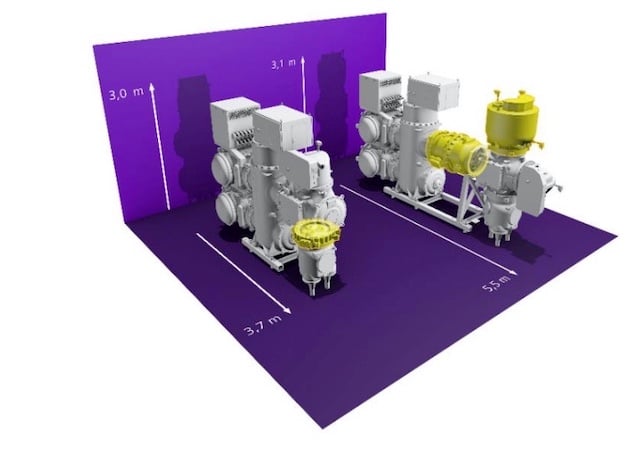
Figure 1. A Low‑power instrument transformer (LPIT). Image used courtesy of Siemens Energy.
Power quality instrumentation—implemented in IEDs or dedicated meters—follows IEC 61000‑4‑30, which specifies Class A/S measurement methods for parameters such as frequency, voltage magnitude, flicker, dips/sags, swells, unbalance, harmonics, and interharmonics. These methods are designed for repeatability and comparability across devices.
Synchrophasor measurements complement raw SV by providing time-stamped phasors, frequency, and ROCOF for wide-area monitoring and controls. Measurement definitions are set by IEC 60255‑118‑1, while the newly updated IEEE C37.118.2‑2024 defines data transfer between PMUs and PDCs.
Asset condition sensors—Transformers benefit from embedded temperature and moisture probes and online dissolved gas analysis (DGA). Diagnostic interpretation is guided by IEC 60599 and IEEE C57.104, which provide methods for relating gas concentrations and ratios to fault types and recommended actions. These references form the basis of modern DGA monitors and analytics used for condition-based maintenance.
Circuit breaker monitoring typically covers operating time, travel profiles, coil current signatures, contact wear, and the density and humidity of insulating gases. For SF₆- or alternative‑gas‑insulated equipment, smart gas density transmitters (wired or wireless) provide compensated density, pressure, temperature, and often humidity to detect leaks and prevent insulation margin loss.
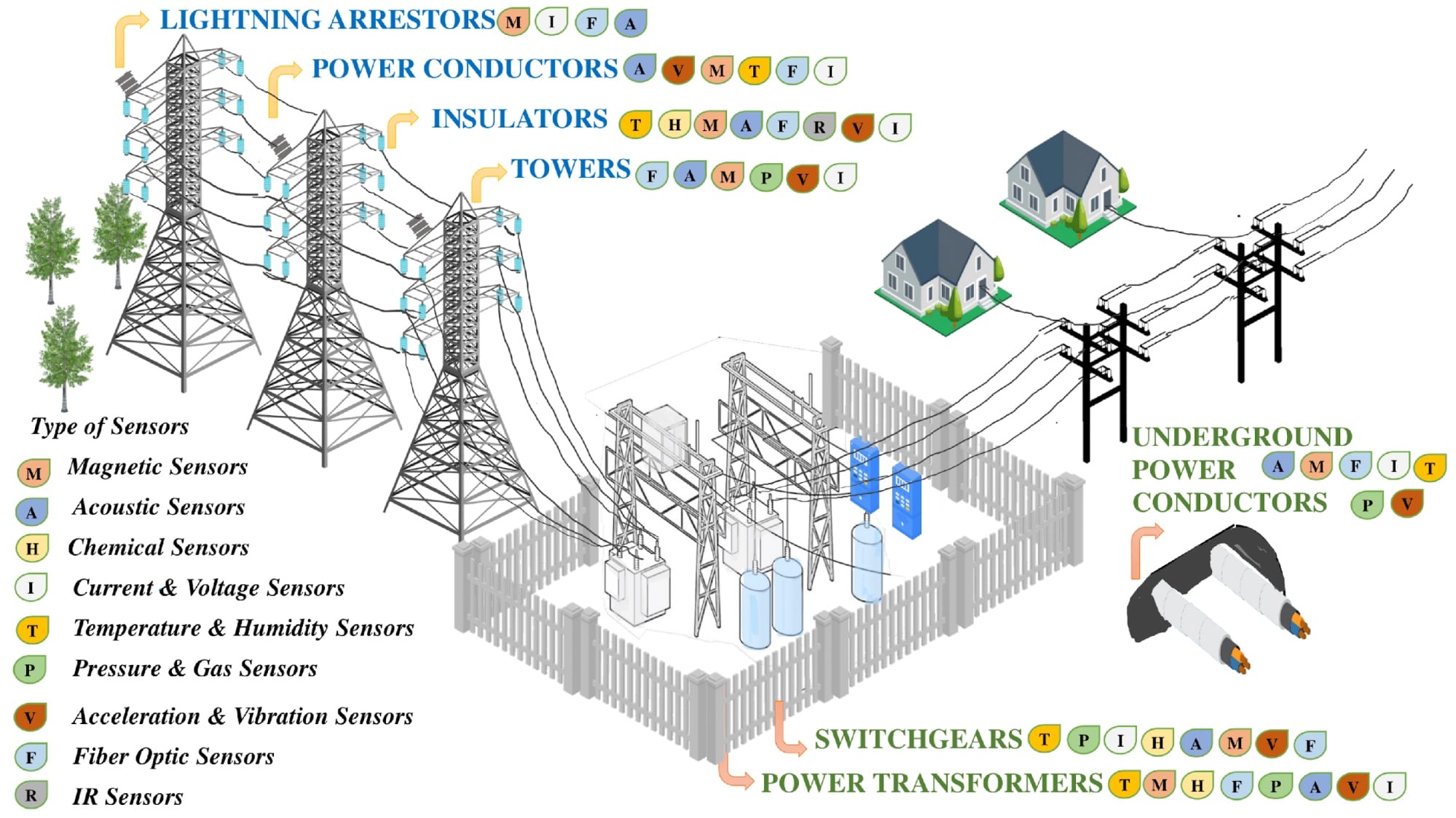
Figure 2. Sensing areas in transmission and distribution systems. Image used courtesy of MDPI. (Click on image to enlarge).
Partial Discharge (PD) Sensors
For GIS, power transformers, and cable systems, PD sensing spans UHF probes (GIS cavities), acoustic sensors, and high-frequency current transformers (HFCT) on cable screens. Conventional charge‑based PD measurement methods are defined in IEC 60270, while high‑frequency electromagnetic and acoustic techniques are covered by IEC TS 62478, which also addresses calibration and localization.
Environmental and Security Sensors
Ambient temperature, humidity, vibration, and intrusion sensors provide context for asset health and physical security. While often outside a single standard, these data streams are routinely integrated alongside electrical and condition data to correlate events (such as deviations in breaker operating time during ambient cold starts).
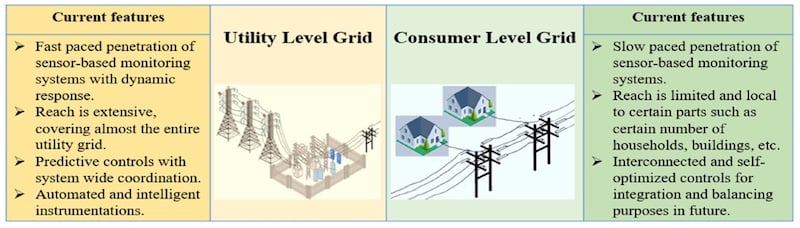
Figure 3. Key features of the sensor technology in the utility level grid and consumer level grid. Image used courtesy of MDPI.
Sensor Deployment Strategies
Embedded Sensors vs. Retrofit Clamp‑On Devices
Embedded sensors—such as LPIT Rogowski coils, capacitive voltage dividers, or fiber‑optic CTs—offer wide bandwidth, excellent linearity, and stable metrology, with definitions and accuracy considerations in IEC 61869‑6. Retrofitted clamp‑on sensors (for example, split‑core CTs or bolt‑on vibration probes) enable upgrades without outages but may trade bandwidth, calibration certainty, or environmental robustness. Selecting between embedded and retrofit approaches typically balances accuracy needs, outage windows, and long‑term maintenance.
Wired vs. Wireless Sensor Networks
For deterministic protection and interlocking, IEC 61850 GOOSE and SV over fiber/Ethernet remain the default. Standards and experimental studies cite end‑to‑end transfer time targets on the order of 3–4 ms for Type 1A (trip) messages under performance classes P2/P3, achieved with VLAN/priority tagging and engineered process‑bus networks. This timing includes retransmission behavior and supervision via timeAllowedToLive to maintain fail‑safe operation.
Non-critical telemetry, low‑rate asset health, and environmental monitoring can ride industrial Wi‑Fi, public or private LTE/5G, or LPWAN. 5G introduces URLLC capabilities with radio‑interface user‑plane latencies as low as 0.5 ms and reliability targets on the order of 10⁻⁵ for 32‑byte packets; in practice, end‑to‑end latency depends on transport and application stacks. These features enable wireless backhaul for certain automation and mobile workforce scenarios, though hard real‑time protection generally remains on fiber.
LPWAN technologies such as LoRaWAN (Long-Range Wide Area Network) extend battery‑powered sensing over kilometers with kilobit‑per‑second data rates and second‑level latencies, making them suitable for periodic gas density, ambient, or perimeter sensors where power and coverage dominate over immediacy. Typical LoRaWAN networks achieve ranges on the order of ~5 km in urban environments and up to ~20 km in rural settings, with uplink latencies on the order of seconds.
Data Acquisition and Edge Processing
Role of Merging Units and Intelligent Sensors
Merging units digitize analog currents and voltages from instrument transformers and publish multicast SV on the process bus per IEC 61869‑9. Modern units support redundant Ethernet, holdover timing, and configurable datasets for general protection or high‑bandwidth power quality. By locating digitization at the primary equipment boundary, copper runs and wiring errors are reduced while enabling multi‑IED subscription to the same precise measurements.
Edge Computing for Filtering, Compression, and Event Detection
Substations generate substantial data volumes, especially when recording harmonics and interharmonics with Class A methods. Guidance in IEC 61000‑4‑30 explicitly acknowledges the burden and encourages reduction through local statistics, threshold‑based triggers, and exception capture—practices often implemented in bay controllers or IEDs. Edge analytics further perform data quality checks, trend extraction, and model‑based anomaly detection (for example, DGA trend thresholds or breaker timing drift), minimizing backhaul while preserving the fidelity needed for diagnostics.
Latency‑Sensitive vs. Non‑Critical Data Streams
Protection and interlocking require deterministic transport: GOOSE and SV are engineered for sub‑cycle transfer with VLAN/QoS and fail‑safe supervision. By contrast, condition monitoring, PMU streams, and SCADA/historian updates tolerate higher latencies and variable bandwidth. PMU data, transported via IEEE C37.118.2, and non‑critical telemetry can be aggregated in edge gateways for periodic upload, while alarms/events preemptively bubble up. This partitioning ensures that protection traffic is never contended by bulk monitoring traffic on shared networks.
Real-Time and Long-Term Benefits
Smart substations integrate a diverse sensor infrastructure into a synchronized, standards‑based architecture that enhances both real‑time protection and long‑term asset performance. Electrical measurements flow from LPITs and merging units as deterministic Sampled Values; power quality is measured with reproducible methods; synchrophasors add time‑coherent system context.
Condition sensors—DGA, temperature, moisture, breaker timing, and gas density—provide early warnings for incipient failures, while PD sensing extends coverage to GIS, transformers, and cables. Network design distinguishes deterministic fiber‑based process buses for trips and interlocks from flexible wireless overlays for low‑rate monitoring.
PTP time synchronization and defined sampling profiles keep everything coherent, and edge analytics curb data volumes while surfacing actionable events. Together, these practices deliver measurable gains in safety, reliability, maintainability, and situational awareness—core outcomes of digitalization in modern substations.