Facebook
 Google
 GitHub
 Linkedin
Google Backs Co-Located Generation and VPPs for Data Centers
As Google develops new data centers, it will focus on powering them with both new generation and grid-flexibility programs.
Google's latest energy initiatives highlight two increasingly popular approaches to supporting data center growth: building computing infrastructure alongside new generation assets and extracting additional capacity from existing grid resources through virtual power plants (VPPs), which aggregate distributed energy assets such as batteries, smart thermostats, and flexible electrical loads.
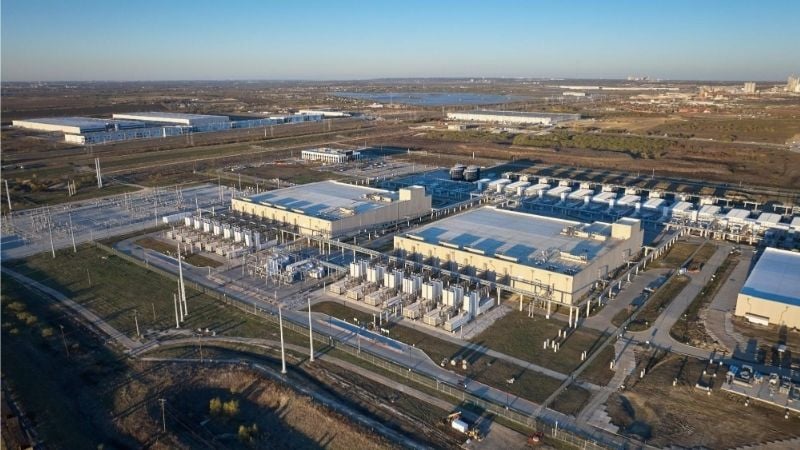
A Google data center in Ellis County, Texas. The tech giant is expanding its footprint in the state, adding a new data center alongside energy generation in Gray and Roberts counties. Image used courtesy of Google
Google Pairs AI Infrastructure With Dedicated Power Generation
Google and Intersect have unveiled plans for the Meitner Energy Center in Texas. This project pairs a hyperscale data center with more than 1 GW of co-located wind, solar, and battery storage capacity.
The development aligns with the trend toward co-locating compute infrastructure with new generation assets, reducing operators' dependence on incremental grid-supplied capacity. Rather than adding generation capacity after a data center is built, the project is bringing power and computing infrastructure online concurrently.
Most of the Texas site's electricity is expected to come from renewable resources, while on-site natural gas generation will provide firm capacity to support reliability during periods of low renewable output.
With AI data centers requiring ever-larger amounts of power, developers are increasingly looking for ways to reduce their impact on local grids and water resources. Unlike conventional evaporative cooling systems, which can consume millions of gallons of water per day at many large data centers, Google's facility will use air-cooling technology. According to the company, water consumption will be restricted to domestic uses such as restrooms and other small-scale needs.
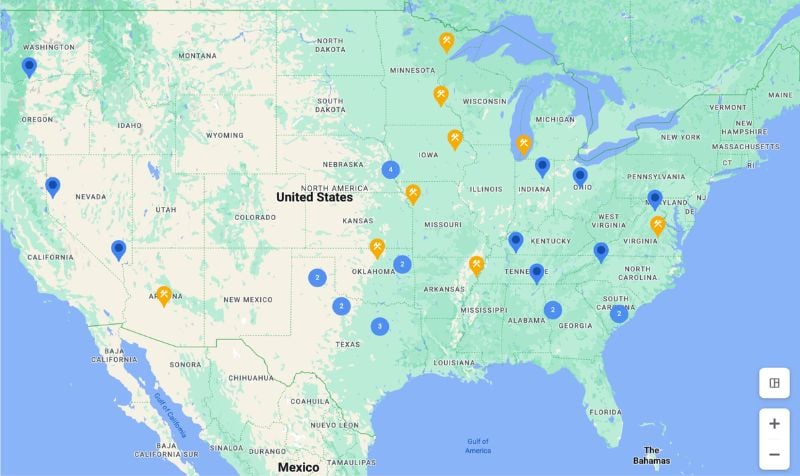
Google's U.S. data center footprint. Image used courtesy of Google
A similar Google-backed development is planned for Haskell County, Texas, where a data center is being paired with 640 MW of solar generation and 1.3 GWh of battery storage. Google acquired Intersect last December, the developer behind the energy infrastructure for both projects and a company focused on pairing large computing loads with dedicated renewable, storage, and gas generation assets.
Google Turns to Virtual Power Plants in PJM
Google and VPP operator Voltus have signed a three-year agreement that will use distributed energy resources across the PJM Interconnection, the regional grid operator serving more than 67 million people across parts of the Mid-Atlantic and Midwest, to deliver up to 100 MW of accredited capacity. These are resources PJM can count on to be available during peak demand.
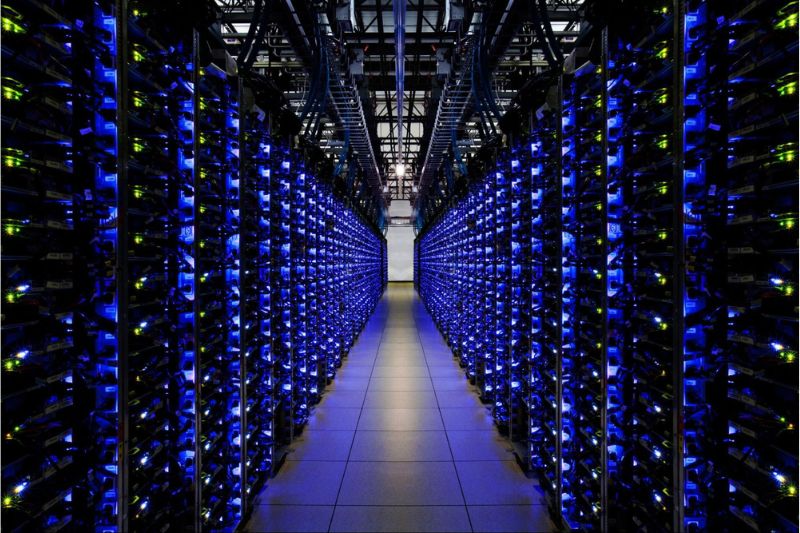
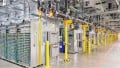
Servers at a Google data center in Georgia. Image used courtesy of Google
Rather than relying solely on power plants or transmission upgrades, the arrangement aggregates customer-owned assets—including batteries, smart thermostats, and controllable electrical loads—into a software-coordinated VPP that can participate in wholesale capacity markets. The model is gaining attention as utilities look for ways to meet growing demand without waiting years for new power plants or transmission upgrades to come online.
Traditional infrastructure is typically sized to meet a limited number of annual peak-demand hours, leaving much of the system underutilized for the rest of the year. VPPs address this inefficiency by coordinating thousands of distributed devices to reduce demand or, in some cases, export stored energy back to the grid when conditions become constrained.
Google explains how demand response can keep the grid going. Video used courtesy of Google Sustainability
Under the model, Google effectively funds the procurement of capacity from distributed resources, while Voltus enrolls and manages participating residential and commercial customers. Those customers receive compensation for making flexible assets available to the grid, creating a mechanism that converts large-scale data center demand into direct payments for local users.
The Voltus-Google agreement will test whether distributed energy resources can be deployed at sufficient scale to provide accredited capacity for large new loads such as data centers. The partnership builds on Google's broader efforts to use demand-side resources to support grid reliability. Earlier this year, the company announced that agreements with utilities would make up to 1 GW of data center demand-response capacity available to U.S. power systems.