 Facebook
 Google
 GitHub
 Linkedin
GM Bets on LMR Batteries for its Streamlined 4th Gen EV Platform
The LMR battery pack, simplified drive unit, upgraded electrical architecture, and aerodynamic features could help extend driving range.
While other electric vehicle makers are transitioning to lithium iron phosphate (LFP) batteries, GM has decided on a different route with its fourth-generation EV platform: lithium manganese rich (LMR) batteries. With 33% higher energy density than LFP batteries, LMR cells will enable lighter, more compact battery packs and could help increase driving range.
The EV platform also simplifies drive units with 40% fewer parts, a centralized computing architecture with 30% less wiring, and enhanced aerodynamics. According to GM, the result will be a faster, more efficient, and less expensive manufacturing process.
The platform is still in prototype and testing stages, but GM expects to roll out the finished product by 2028.
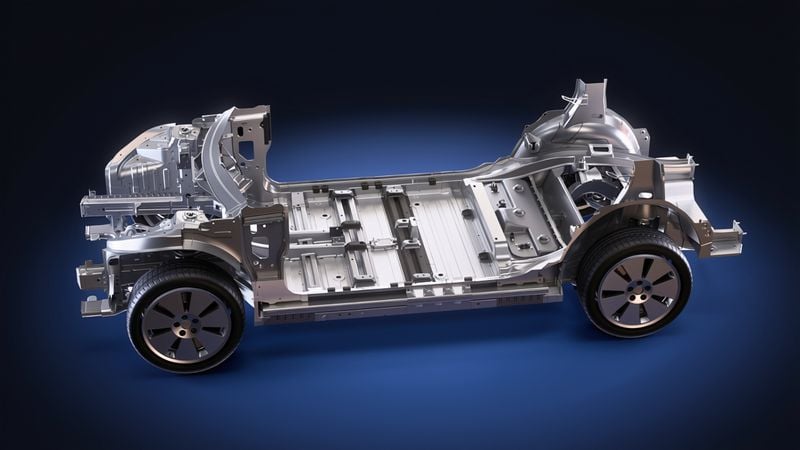
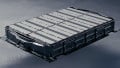
Rendering of GM’s EV platform. Image used courtesy of GM
The LMR Batteries
Most EV makers, such as Ford, Tesla, and Stellantis, are still using nickel-cobalt-manganese-aluminum (NCMA) batteries. However, many are switching to LFP batteries to cut costs, reduce supply chain risks, and produce longer-lasting vehicles.
China refines the majority of the world’s lithium, cobalt, and nickel, and over 90% of battery-grade graphite. In fact, about 95% of LFP battery cathode production takes place in China, led by giants CATL and BYD. Many automakers want to reduce dependence due to supply chain risks and increasing pressure for domestic production.
LMR batteries offer a way to break China’s dominance by using manganese in place of cobalt and reducing the amount of nickel needed. However, at present, China still processes more high-purity battery-grade manganese sulfate than any other country.
Another reason for selecting LMR batteries over LFPs is that LMR batteries provide about 30% to 33% higher energy density at comparable costs. This could allow longer driving range without adding weight. LMRs also enable a simpler battery management system and perform better in cold weather.
For its fourth-generation EV platform, GM chose the exact battery chemistry of its LMRs after computer modeling tested more than 300,000 battery designs. The team then developed the physical prototype, which was approved in just one month.
Ultium Cells, a joint venture between GM and LG Energy Solution, will manufacture the cells at its Spring Hill, Tennessee, facility. Factory expansion will begin later in 2026, with expected completion in 2028.

The battery prototyping process at GM’s Battery Cell Innovation Center. Image used courtesy of GM
The Platform Upgrades
The fourth-generation platform is the first major upgrade to GM’s EV platform, Ultium, which the company used as a foundation for vehicles ranging from the Chevy Blazer to the Cadillac Lyriq.
Overall, the 4th gen platform uses 40% fewer parts, which GM says will result in lighter, more compact drive assemblies that are cheaper to manufacture. The redesigned drive units, improved aerodynamics, and the LMR battery packs could add up to 20% more range per kWh.
The electrical architecture and Central Compute Unit cut wiring by 30% and boast 40 times more processing power to support the growing use of AI features, such as smart energy management, updates, and digital displays and voice controls.
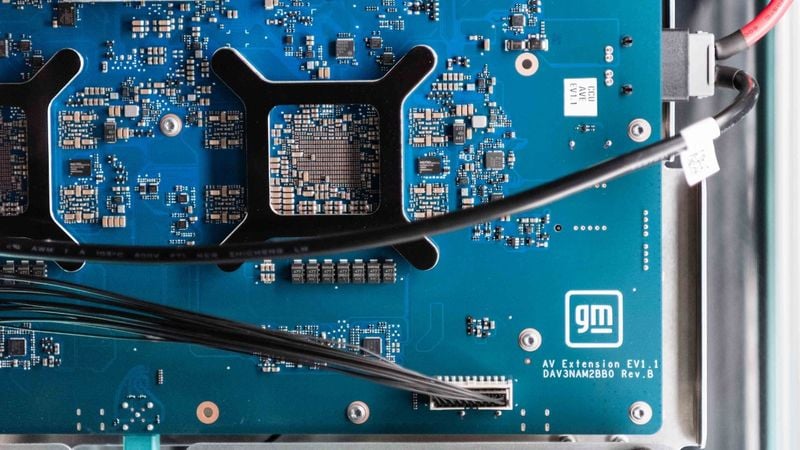
The Central Compute Unit. Image used courtesy of GM
The assembly process is engineered to get vehicles off the line faster. Teams can use digital models to test production steps and check placement and safety concerns before physical assembly. GM’s PlantBrAIn factory intelligence system assists with manufacturing operations and battery pack assembly. The architecture continuously self-tests electrical connections on the assembly line, which may eliminate the need for post-build validation checks.
Timeline
The fourth-generation platform’s pre-production is expected to continue through 2027. The Ultium Cell factory will undergo retooling in preparation for full commercial deployment sometime in 2028. However, individual components, such as the Central Compute Unit, may be available earlier. GM plans to debut the platform on the Cadillac Escalade IQ.