
 Facebook
 Google
 GitHub
 Linkedin
EV Battery Makers Push for LFP and Solid-State Batteries
New battery technologies include expanded U.S. production for LFP batteries and a squishy solid-state battery design.
Electric vehicles and other e-mobility experience high voltages and frequent charging cycles, creating a need for more efficient and long-lasting batteries. Researchers and manufacturers are reaching for new materials and advanced technologies to improve battery performance.
However, many obstacles remain, such as the supply chain of the rare metals needed for batteries and the technology needed for safety and stability. Nevertheless, battery makers and scientists are making steady progress. The latest developments include an increase in U.S. battery production, new applications for lithium-iron-phosphate batteries, and an innovative technology for a solid-state battery.
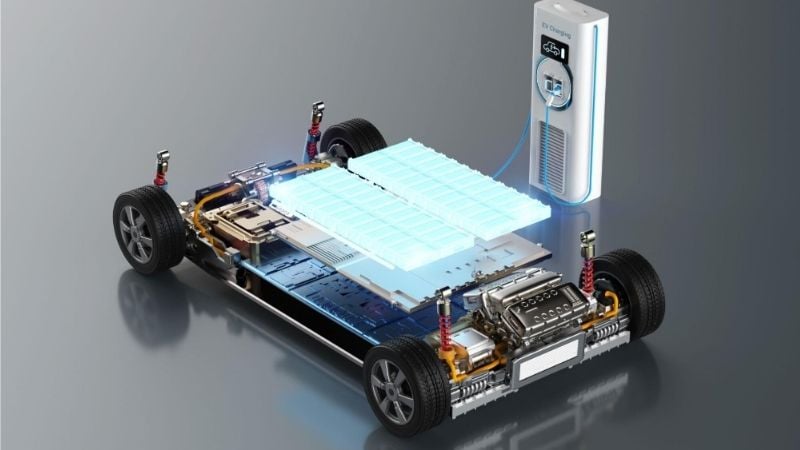
Electric vehicle battery pack. Image used courtesy of Adobe Stock
Battery Materials
Electric vehicles require high energy densities from their batteries to either improve range with the same weight vehicle or reduce vehicle mass with the same distance traveled on a full charge. Improving battery performance often involves new materials and chemistries. The raw materials for battery technology must be readily available and meet stringent cost targets to make EVs more affordable.
Battery chemistries focused initially on nickel-manganese-cobalt (NMC) and nickel-cobalt-aluminum (NCA) cathode materials. Nickel-based batteries have high energy density, with modern NMC batteries reaching 230-250 Wh/kg and NCA batteries reaching 200-260 Wh/kg. Higher nickel content boosts energy density but reduces stability, requiring added cobalt to create safe and stable batteries. Nickel and cobalt are relatively expensive materials, but nickel-based lithium-ion batteries can be used to produce EVs with high performance and long range.
Lithium-iron-phosphate (LFP) batteries were developed in the 1990s, but their energy density (90-160 Wh/kg) was lower than nickel-based batteries, so their adoption was relatively slow. However, using abundant iron and phosphate instead of expensive cobalt and nickel reduced raw material expenses by 20 to 30 percent per kWh.
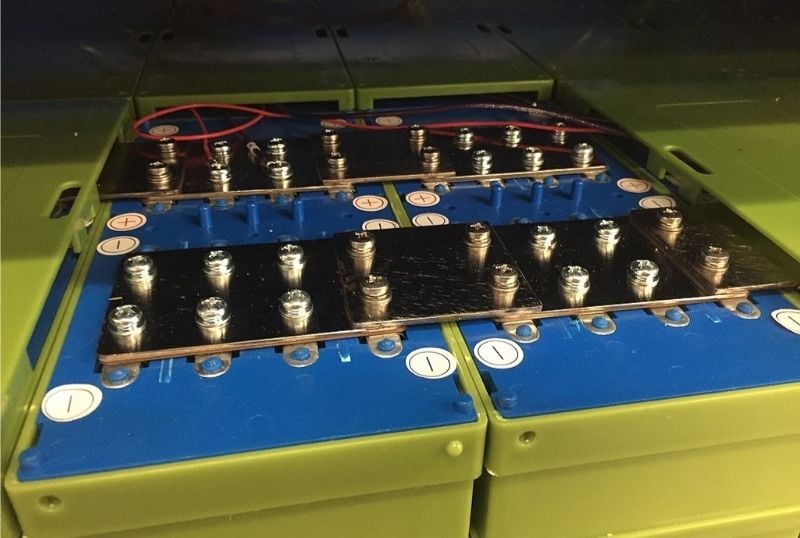
LFP batteries. Image used courtesy of Wikimedia Commons
LFP batteries are gaining market share over nickel-based batteries, driven by their cost and safety advantages. Innovations such as Contemporary Amperex Technology Co., Limited (CATL) Cell-to-Pack technology and BYD’s Blade battery have improved energy density and pack efficiency, making LFP more competitive for EVs. Tesla has begun using LFP battery chemistry as standard across all global Model 3 and Model Y models.
Mitra Chem: Domestic Cathode Production
All materials used to make LFP batteries come from outside the U.S., with the vast majority coming from China. Mitra Future Technologies, also known as Mitra Chem, is seeking to establish a battery material manufacturing facility in Muskegon, Michigan, that will be the first mass production facility for LFP cathodes in North America.
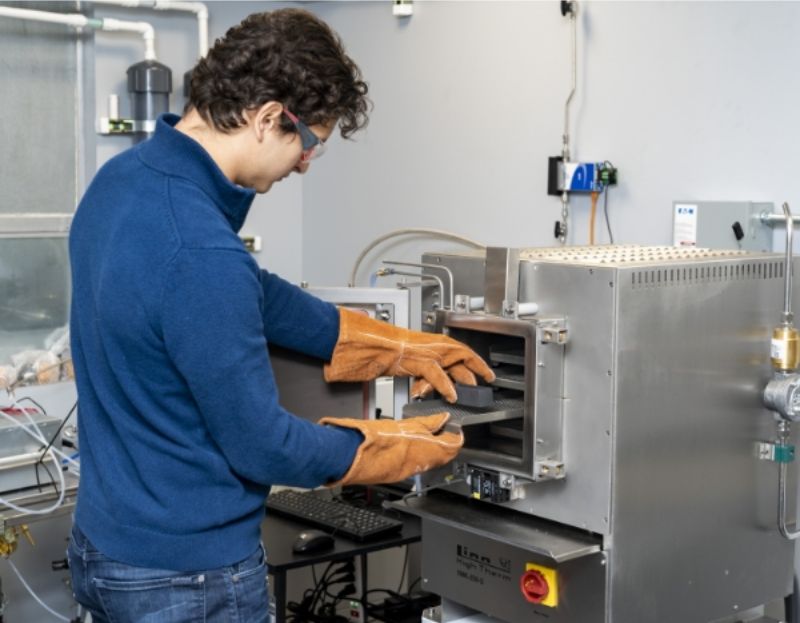
Mitra Chem battery facility. Image used courtesy of Mitra Chem
The company has raised $15.6 million of a planned $50 million, according to a regulatory filing. Previously, the U.S. Department of Energy's Office of Manufacturing and Energy Supply Chains and the state of Michigan's Competitiveness Fund awarded Mitra Chem up to $125 million. Mitra Chem is also building a laboratory in Mountain View, California, capable of producing pre-pilot production LFP product.
Trojan Battery: Safety in Mobility
Because of its lower cost and improved safety over nickel-based batteries, LFP battery chemistry is also finding its way into various other applications. Trojan Battery Company has expanded its Trojan Lithium OnePack family by introducing the OnePack High Performance (HP). This LFP battery is purpose-built for the 10- to 12-passenger golf carts frequently used on universities, amusement parks, and similar campuses.
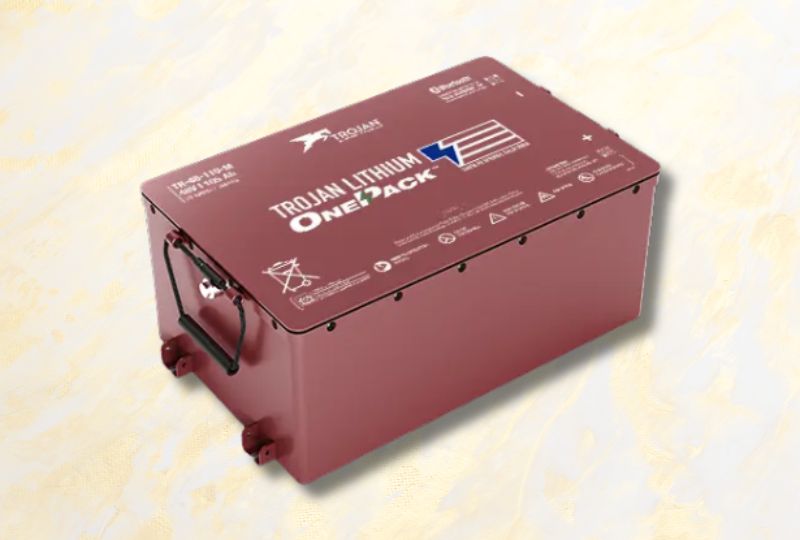
OnePack 48 V battery. Image courtesy of Trojan Battery Company
The OnePack HP has a maximum continuous draw of 300 amps and a maximum instantaneous draw of 1000 amps, allowing its 48-volt system to provide impressive performance while delivering up to 75 miles per charge. OnePack HP includes a self-protecting battery management system.
Trojan Battery is based in Santa Fe Springs, California, and has manufacturing facilities in Sandersville, Lithonia, Georgia, Reynosa, Mexico, and Shanghai, China.
Georgia Tech: Squishy Solid State?
The hunt for higher lithium battery energy density has led to the development of prototype batteries with solid-state electrolytes. In a conventional lithium-ion battery, a liquid electrolyte transports electrons between the electrodes during charging and discharging. This liquid electrolyte is typically made from a highly flammable organic compound, which presents a fire hazard if the battery is over- or undercharged, damaged, or mistreated. Replacing the liquid with a solid polymer or ceramic material promises to largely eliminate the fire danger while at the same time permitting the use of lithium metal as the cathode, dramatically increasing the energy density to between 375 Wh/kg to 500 Wh/kg or higher.
When a solid-state lithium battery is charged and discharged, however, the lithium metal in the battery changes its shape. This can cause gaps that could cause lithium to lose contact with the solid electrolyte, degrading performance. The usual solution is to apply high pressure to the sides of the battery to force the metal against the solid electrolyte to maintain acceptable contact.
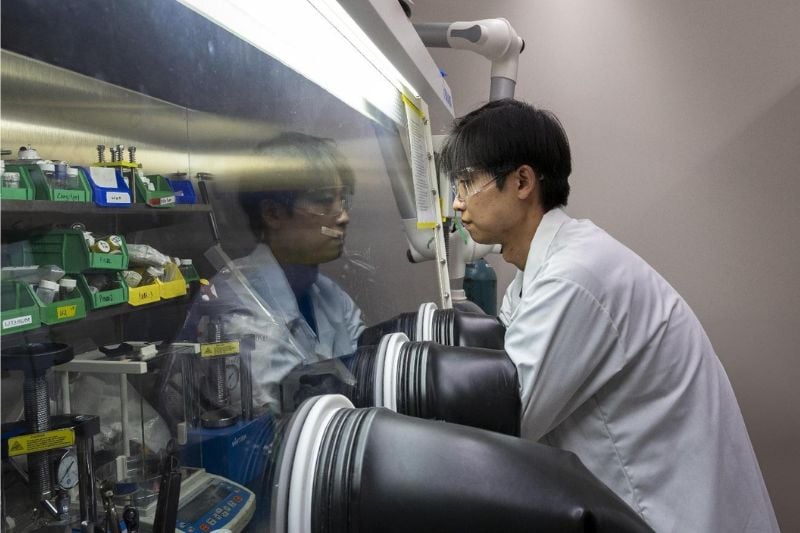
Solid-state battery research. Image used courtesy of Georgia Tech/Christopher McKenney
Georgia Tech has developed a solution. By combining the lithium metal with ultra-soft sodium metal, the electrode becomes a deformable structure that can maintain contact with the solid electrolyte without applying large amounts of pressure. While the sodium does not have a role in the electrochemical reactions, its physical properties are used to improve the overall solid-state battery performance. Although some pressure is still required to maintain contact with the electrolyte, the level is much lower when sodium metal is included. The researchers at Georgia Tech presented their findings in Science.







This is a fascinating, especially the potential to boost energy density while reducing fire hazards from flammable liquid electrolytes. However, it’s worth noting that while lithium metal is already challenging to manage due to dendrite formation and volume changes, sodium metal poses even greater safety risks.
Sodium is highly reactive, especially with moisture and oxygen. It can ignite spontaneously in air and reacts violently with water, producing heat and flammable hydrogen gas.
Because of this, I would like to know what safety measurements are being considered as part of this development.