Facebook
 Google
 GitHub
 Linkedin
Putting Solid-State EV Batteries on Trial
Stellantis joins with Factorial to demonstrate electric vehicles with solid-state batteries
As electric vehicles gain popularity, battery technology's performance, safety, and efficiency have become central to determining their viability. Despite widespread use, conventional lithium-ion batteries face significant challenges, including limited energy density, safety risks due to flammable liquid electrolytes, and thermal sensitivity restricting operational ranges.
These limitations have spurred intensive research into advanced alternatives, with solid-state batteries (SSB) emerging as a promising solution. SSBs offer improved energy density, enhanced safety, and broader material compatibility, making them an attractive option for next-generation EVs.
To demonstrate SSB’s viability, Stellantis and Factorial, an SSB manufacturer, will partner to implement SSBs in the Dodge Charger Daytona SRT. The project will use Stellantis’ STLA large platform.
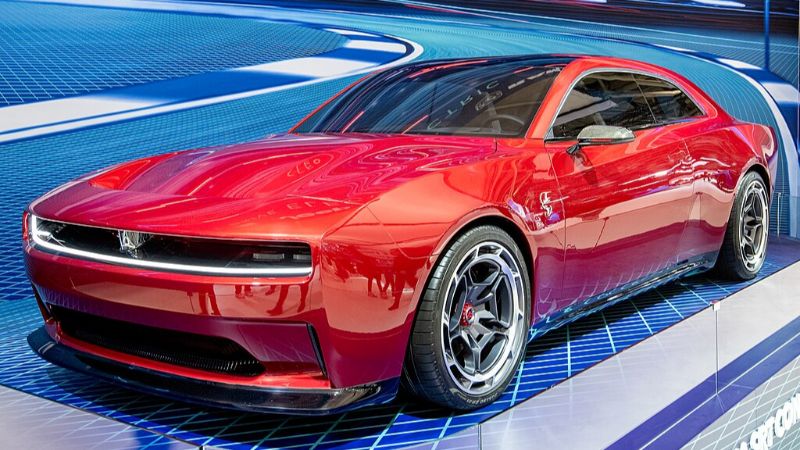
Dodge Charger SRT concept EV. Image used courtesy of Wikimedia Commons
The Need for Change in Batteries
Conventional lithium-ion batteries use liquid electrolytes, which enable high ion conductivity but trigger side reactions that degrade electrode materials. Their organic nature, flammability, and leakage risk demand strict safety measures. Meanwhile, the temperature-sensitive separator, required to prevent short circuits, limits the operational range.
Researchers have been working on SSBs to replace conventional lithium-ion batteries in EVs.
Solid-state refers to the electrolyte, which exists as a solid, either crystalline, like garnets, or amorphous, like sulfide glasses. Solid electrolytes offer greater chemical stability than liquid electrolytes by minimizing side reactions and reducing material degradation. In SSBs, cathodes typically use lithium-based oxides, phosphates, or sulfides, while anodes often feature lithium metal, thus achieving significantly higher energy density.
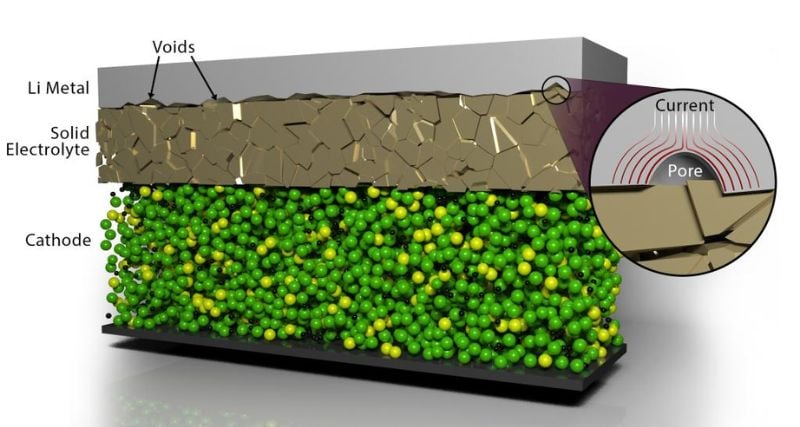
Solid electrolyte. Image used courtesy of Oak Ridge National Laboratory
Additionally, SSBs eliminate the leakage risk and serve as an electrolyte and a separator, preventing contact between the cathode and anode. This design allows operation at higher temperatures and broadens the range of usable electrode materials, enabling compact, high-capacity, high-voltage batteries.
Moreover, SSBs outperform liquid-based counterparts in prominent metrics like ionic conductivity, energy density, voltage tolerance, thermal stability, and cycle life.
Stellantis and Factorial’s Solid-State EV Batteries
Stellantis integrated Factorial's solid-state batteries into a demonstration fleet of Dodge Charger Daytona vehicles built on the STLA Large platform.
The new EV architecture replaces liquid electrolytes with Factorial’s proprietary solid-state alternative, FEST. The SSB offers an energy density exceeding 390 Wh/kg, significantly reduces fire risks, and enhances structural safety. The solid electrolyte also functions as a separator, effectively minimizing material degradation and allowing for higher thermal stability and operation in a broader temperature range.
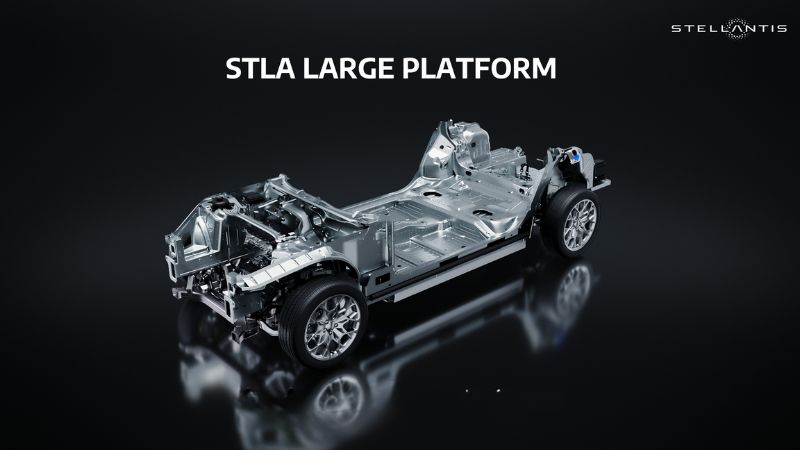
Stellantis STLA large platform. Image used courtesy of Stellantis
According to the companies, the batteries are engineered to operate with high-voltage cathode materials and lithium metal anodes. When integrated into Stellantis’ STLA large platform, which can support up to two million vehicles globally, the companies believe this technology has a clear path toward commercial viability.
Redefining the Future
As manufacturers prioritize safety, energy efficiency, and sustainability, advancements like SSBs provide a pathway for meeting growing demands for cleaner transportation. This partnership expands on Stellantis’ $75 million investment in Factorial in 2021 and supports the demand for battery technology to reshape the EV industry. In early 2026, Stellantis plans to debut a demonstration fleet of Dodge Charger Daytona vehicles powered by Factorial’s SSBs.