Facebook
 Google
 GitHub
 Linkedin
Substation & Switchyard Design Considerations: Size, Load, Cost
This article examines the factors crucial in determining the size, load, and cost of substations and switchyards.
When working as a plant operator or maintenance engineer in the O&M setup of a power generation plant or transmission and distribution facility, a solid understanding of switchyard switching schemes and substation equipment like transformers, circuit breakers, disconnectors, and busbars is important for safe operation when locating and identifying faults.
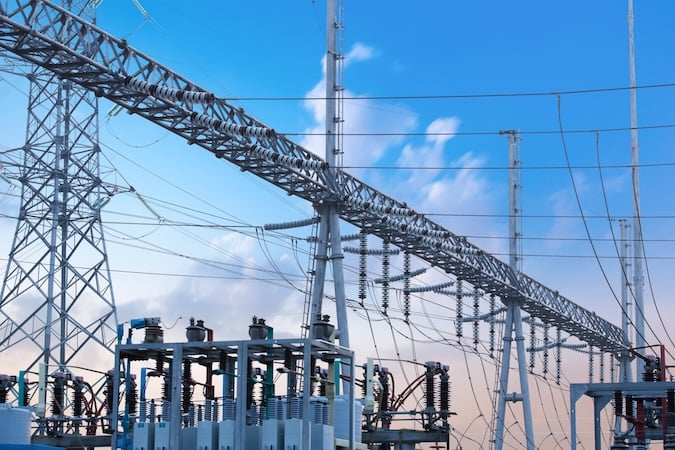
Image used courtesy of Adobe Stock
Switchgear and substations, comprised of disconnectors, circuit breakers, busbars, and earth switches, are crucial in dispatching electric power from the power generation source to the consumer. There are many variations in busbar switching schemes, along with a bus sectionalizer that divides the busbar into sections, giving flexibility to any piece of equipment needing removal for maintenance. The grounding rods and metal plates are made up of certain materials used for the safety of the switchyard and substation. The switchyard equipment is generally waterproof and robust and requires less maintenance.
Substations and Switchgear
Hydropower generation plants are usually far from big cities, and electrical power is dispatched through transmission lines over a great distance and transformed into different voltage levels. A substation is a collection of equipment for purposes other than generation or consumption through which electrical energy is passed for the purposes of switching before distribution or modifying its characteristics like AC to DC and transforms from high to low voltage or vice-versa.
The switchyard generally consists of disconnectors, earthing, circuit breakers, busbars, and auto-transformers accompanied by a protection system that receives power from the power plant generators and dispatches it through transmission lines (e.g., 220 kV/500 kV).
The term substation is generally applied to the type of equipment used to receive power from one or more transmission lines and distribute it, generally at a lower voltage to the distribution circuit. When electricity demand is high and frequency is depressed, the substations shed load.
The following types of components are installed in the switchyard:
- Power and autotransformers
- Current/voltage transformers (CT/PT) for metering purposes and protection input to relays
- Busbars
- Isolators or disconnectors that isolate a particular part for maintenance purposes
- Circuit breakers interrupt and break (e.g., short circuit) currents occurring in the circuit under normal and abnormal conditions, respectively
- Wave or line traps block high-frequency signals and, in practical applications, are used for communication (voice and data) between two substations through a transmission line
- Relays are deployed to protect the generators, transformers, and busbars
- Earthing switches for earthing and short-circuiting circuits
Switching Arrangments
Switching arrangements that give the greatest flexibility are generally the most costly because more equipment must be maintained for any piece of equipment to be removed for maintenance or overhauling purposes. Consider the following factors to make a final determination:
- The purpose is to provide an uninterrupted power supply smoothly
- The size and number of incoming lines and generators
- The initial investment and later the plan of operation and maintenance requirements
- Physical space for future expansion to accommodate new lines and generating units
- The number of feeders and the character of a load.
- The normal weather conditions.
Single Busbar
As in Figure 1, the single-bus scheme has one advantage: it is inexpensive and easy to implement and operate. The generators and feeders all connect to a common bus. A failure of any breaker will put one generating unit or feeder out of service, but a bus failure will shut down the whole plant. The scheme is used only where small amounts of power are involved, and there is no redundancy, so for maintenance, the complete busbar has to be de-energized.

Figure 1. Single-Busbar scheme with three generators and three feeders, each with disconnector and circuit breaker. Image used courtesy of Munir Ahmad
Spare Busbar
A spare bus and one additional circuit breaker are added. The advantage of this scheme is that it is possible to remove any breaker for maintenance and repair purposes without shutting down a generator or feeder. Maintenance on the main busbar still requires a complete shutdown, or operating on the spare bus without protection is needed. The spare busbar scheme 2 is slightly more costly than the single busbar.
Double Busbar, Single Breaker
As in Figure 2, the double busbar, single breaker is the cheapest because it allows bus maintenance without outage. The circuit breaker failure still requires a feeder or generator to be taken out of service.

Figure 2. Double-Bus-Single Breaker scheme. Image used courtesy of Munir Ahmad
Double Busbar, Double Breaker
The double busbar, double breaker scheme mentioned in Figure 3 requires two breakers for each generator or feeder. Any bus or breaker can be removed from service for repairs or overhauling without losing a generator or bypassing any protection.

Figure 3. The Double-Bus-Double-Breaker scheme involves an Auxliaxy Bus and a Main Bus. Image used courtesy of Munir Ahmad
One-and-a-Half Busbar
The three breakers are required for two feeders; hence, each feeder has one and a half breakers. This type of arrangement becomes expensive due to the third breaker and also takes extra space in the substation. The three breakers, each with two isolators, are connected between two busbars.

Figure 4. One-and-a-Half Busbar scheme. Image used courtesy of Munir Ahmad
Bus Sectionalizer
A bus sectionalizer divides the busbars into sections so they can be easily isolated from each other. It is an important part of switching arrangements that can be utilized with any of the arrangements above where more than one power source and several feeders are involved. The main purpose of bus sectionalization is to limit the current that would flow through the breakers or busses during short circuits or overload faults. It also enables the parts of the switchyard to be de-energized for maintenance while the rest of the yard is in service.
Switching arrangements can vary from inexpensive, where each piece of equipment must remain in operation to maintain service, to expensive, where each piece of essential equipment has a duplicate standby.

Figure 5. Straight-Bus Sectionalizer. Image used courtesy of Munir Ahmad
Structure Location and Large Outdoor Structures
The switchyard equipment is located out of doors due to its size and the voltages involved. Substation equipment can be located either indoors or outdoors. It is often more economical to have a substation located indoors near the load center. The busses and switches are usually attached to the walls, ceiling, pipe framework, or maybe the part of a unit substation that comprises all necessary equipment for indoor and outdoor like transformers, relays, metering, and switches.
The heavy equipment in the smaller outdoor substations and switchyards, like the transformers and oil circuit breakers placed on the concrete foundations, and the lighter equipment, such as busses and lighter equipment mounted on structures made of pipe and structural steel, which are easily adaptable to changes and another advantage is that steel forms are stronger and somewhat cheaper. The structures for large outdoor substations and switchyards can be classified as unit, truss, and ground. The heavier equipment, in all three types, is mounted on the concentre structure.
In unit type, lighter equipment is mounted on steel frames, and additions, modifications, and changes can be made easily. The unit type scheme is comparatively inexpensive when real estate costs are low.
The truss-type structure combines vertical and horizontal beams. Isolators and other lighter equipment may be mounted on the truss work. Strain insulators or tubes can support the buses. This type of structure is more expensive than the unit type, but it is compact and requires less ground space. As shown in Figure 6, in ground-type structures, practically all equipment is mounted on concrete pedestals with rigid buses supported by a pedestal insulator.

Figure 6. Ground Type Switchyard Layout. Image used courtesy of Munir Ahmad
Grounding System for Switchyard
Proper grounding is necessary to increase the reliability, stability, and availability of the electrical system and ensure the safety of people and equipment. The grounding system is a prerequisite for the safety of the switchyard and substation, and all non-current-carrying metal parts, such as fences, cables, control systems, and metallic structures, must be grounded.
The conductor size matters because it provides a low resistance path to the conducting part of the earth during the fault conditions. Usually, grounding rods and plates are used, and the grounding plates are metal plates to which grounding conductors are attached and placed below the groundwater level.
The most common are grounding and earth rods like galvanized pipes, stainless steel, copper clad, or solid copper rods. These rods must be pushed down to the conducting part of the earth. When the rod or plates can be installed below the permanent moisture level or if the ground is loose, dry, or sandy, its resistance is apt to be high, and the soil should be treated. The methodology is to dig a trench about 18 inches deep and fill it with rock salt, copper sulfate, or magnesium sulfate. The number of rods depends on the size and capacity of the switchyard and the connected equipment.
The large stations have a great number of rods. The best and most expensive system consists of grid work of conductors under the structure with ground rods at the end of each conductor and each intersection, and each piece of equipment is then attached to the grid work at the nearest point. The lighting arrester should also be connected to the grounds by the shortest route, which is used to limit the voltage caused by lighting stokes.
Maintenance and Operation
The equipment in the switchyard is designed and manufactured in such a way that they are characteristically rugged and weatherproof and requires less maintenance than powerhouse equipment usually does. The batteries, oil circuit breakers, and power and autos transformers should receive the same testing and inspection as equipment in a powerhouse. A more frequent cleaning plan is needed in a smoking and dusty atmosphere. If dust is allowed to collect during a long dry spell, first rain and fog can cause flashovers. Apart from the maintenance schedule, the operator should observe the equipment for unusual conditions whenever they enter a switchyard or substation.