Facebook
 Google
 GitHub
 Linkedin
Smart Substations and Digitalization—Part 1
Digitalization replaces conventional substations with smart, standards-based systems to address modern grid demands through interoperability, deterministic Ethernet messaging, and time synchronization.
Modern transmission and distribution systems must accommodate older assets, increasingly dynamic networks, and workforces that are more constrained than in previous decades.
Substations, the nodes where protection, control, and operations converge, are at the center of this transition. Digitalization is reshaping how substations are engineered, commissioned, and operated, replacing hardwired analog paths with interoperable, Ethernet-based systems built on international standards.
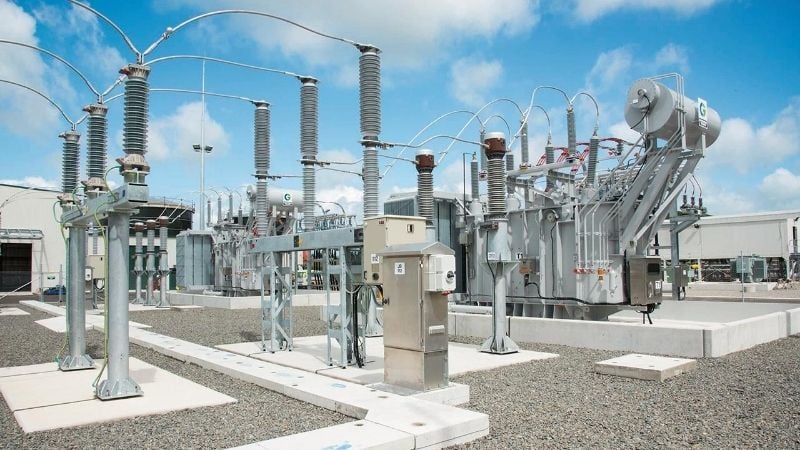
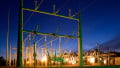
A digital substation. Image used courtesy of ABB
From Conventional to Smart Substations
Conventional substations were optimized for an era of largely synchronous generation and relatively stable power flows. Their secondary systems depend on extensive copper wiring between current/voltage transformers in the yard and panels in the control house, with binary interlocks and analog measurements routed point-to-point.
This architecture drives labor-intensive installation, manual inspection, and periodic maintenance cycles, and it complicates changes or expansions because each additional function often requires new hardwiring and marshalling. Utilities that have trialed digital secondary systems report significant reductions in the amount of copper required for installation and maintenance when moving away from long analog runs, even in retrofit settings.
Drivers for Digitalization
Three broad drivers are accelerating the shift to digital.
First, the resource mix is changing fast. Inverter-based resources (IBRs) like solar, wind, and batteries now comprise a major part of the bulk electric system, and their behavior during disturbances has prompted new reliability standards and operating practices. Enabling, observing, and coordinating these resources places greater demands on measurement, protection, and control. Data-rich, time-synchronized substation platforms better meet these demands.
Second, reliability expectations are rising as assets age. Disturbance analyses over the last several years show that misconfigured or underperforming IBR controls can amplify events, intensifying the need for more precise protection, disturbance visibility, and faster coordination across substations. Digital substations, with synchronized measurements and high-speed messaging, provide the instrumentation and determinism required for these scenarios.
Third, workforce constraints are real. Industry surveys and trade analyses highlight a wave of retirements, non-retirement turnover, and a skills mix shifting toward digital competencies. Digitalization can help by standardizing data models, automating routine checks, and enabling remote testing and analytics that scale scarce expertise across substation portfolios.
Smart Substation in Utility Practice
In utility practice, a smart substation continuously monitors primary and secondary equipment, executes protection and control autonomously via Intelligent Electronic Devices (IEDs), and exchanges data deterministically over Ethernet. This data is used, locally and centrally, for diagnostics, asset health, and operational decision-making.
Interoperability is foundational, and IEC 61850 is the prevailing framework for modeling functions and transporting messages within this environment.
Digital Architecture of Smart Substations
Smart substations are typically organized into three coordinated layers.
Process level: The process interface sits closest to the high‑voltage yard. Conventional or low-power instrument transformers (LPITs) acquire current and voltage, and Merging Units (MUs) digitize them.
Switchgear status and commands also interface here. The MUs and switchgear interfaces publish these time-stamped measurements and signals on the process bus for subscription by protection and control IEDs.
Bay level: Protection and control IEDs implement feeder, transformer, bus, and line functions. They subscribe to sampled measurements, publish trips and interlocks, and coordinate within and between bays using fast peer‑to‑peer messaging.
Station level: Gateways, SCADA servers/HMIs, engineering workstations, and analytics platforms supervise the bay layer, manage reporting and archiving, and provide interfaces to the control center. Time distribution, cybersecurity services, and network management also reside here.
This layered view aligns with IEC 61850’s reference architecture, which was designed to enable vertical (station-bay-process) and horizontal (peer‑to‑peer) communications over standardized data models.
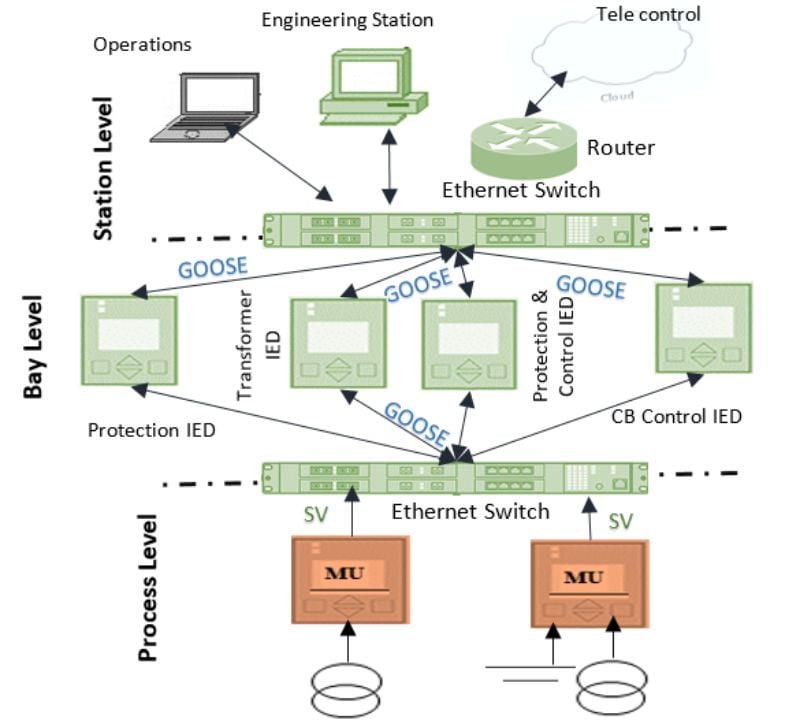
Figure 1. Substation system hierarchy in three levels. Image used courtesy of IEEE
IEC 61850: Data Models and Services
IEC 61850 standardizes how substation functions are represented and how devices communicate. Logical Nodes encapsulate protection and control functions and measurements in a common, object‑oriented data model, while services specify how that data is exchanged.
Client/server exchanges map to MMS for supervisory control, reporting, and file transfer; high‑speed peer‑to‑peer services include GOOSE for events/commands and Sampled Values (SV) for waveform streams. Engineering information is captured in the Substation (System) Configuration Language (SCL), which enables multi‑vendor engineering and consistent subscription/publication across the system.
For measurement interfaces, IEC 61869‑9 specifies the digital interface for instrument transformers, building on the IEC 61850 model and formalizing profiles that superseded the early 61850-9‑2 “LE” guideline. In practice, deployments commonly use 80 or 256 samples per cycle for protection, with higher rates for power quality. What matters is that the streams are synchronized and engineered deterministically across the process network.
Precise time synchronization is fundamental to differential protections, high‑speed busbar schemes, and event correlation. IEC 61850-9-3 defines a substation-grade Precision Time Protocol (PTP) profile based on IEEE 1588 (IEC 61588), targeting microsecond-level accuracy across multiple hops, with provisions for redundant grandmasters and parallel networks.
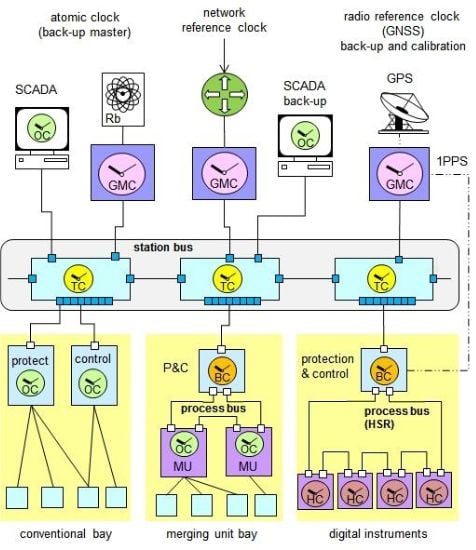
Figure 2. Hierarchy of PTP Clocks in a substation. Image used courtesy of Wikimedia Commons
Station and Process Buses over Ethernet
Two logical Ethernet buses carry most IEC 61850 traffic.
Station bus: MMS client/server exchanges handle operator commands, settings management, reports, and files. GOOSE is often used at the station layer for fast interlocks between bays or for breaker failure schemes that must operate across IEDs.
Process bus: SV streams carry digitized currents and voltages from MUs. GOOSE transports trips, interlocks, and status between IEDs and switchgear. Because SV is continuous and bandwidth‑intensive, process bus networks demand careful engineering of VLANs, priorities, multicast filtering, and time synchronization. IEC TR 61850‑90‑4 provides network design guidance specific to these requirements.
High availability is achieved with seamless Ethernet redundancy. IEC 62439‑3 defines two protocols widely used in digital substations: PRP, which attaches devices to two independent LANs for bumpless failover, and HSR, which provides ring/mesh redundancy without switches by forwarding frames at line rate. Hybrid designs often use HSR at the process level and PRP at the station level, interconnected by RedBoxes, to balance determinism, scalability, and cost.
Putting it Together for Renewable-Era Operations
A layered, standards‑based digital substation directly supports the grid now forming at the interface with high IBR penetration. Precise time alignment makes feeder, line, transformer, and bus protections resilient to rapidly changing source impedances.
High‑speed peer‑to‑peer messaging coordinates interlocks and remedial action schemes across bays without relying on hardwired signal fan‑outs. Structured data models and SCL files streamline multi‑vendor integration, allowing utilities to incorporate specialized functions or sensor packages as needs evolve. These capabilities address not only present reliability concerns identified by regulators and reliability organizations but also the velocity of change as new resources interconnect.
Conclusion
Digitalization is not simply a substitution of copper with fiber; it is an architectural shift that brings protection, control, and monitoring into a cohesive, modeled system. Conventional substations, built for a different grid, are constrained by manual processes, point‑to‑point wiring, and siloed data. Smart substations, grounded in IEC 61850 and related standards, deliver interoperable data models, deterministic Ethernet messaging, precise time synchronization, and security controls that scale.
The practical outcomes are measurable, including less material and civil work, shorter construction and outage windows, improved safety, and better visibility for both steady‑state and disturbance conditions. Those outcomes matter as assets age, the workforce changes, and renewable integration raises the bar for reliability and agility.