Facebook
 Google
 GitHub
 Linkedin
Smart Substations and Digitalization—Part 4: Data Analytics and ML
Learn how smart substations can leverage IEC 61850 and CIM for data flow. Advanced analytics and machine learning (ML) can turn high-res data into asset and operational insights.
Modern substations are evolving from islands of protection and control to data-rich nodes that feed enterprise decision-making. This transformation is enabled by standard-based communications in the yard and control house, robust data management across the enterprise, and advanced analytics that turn high‑frequency measurements into operational and asset insights.
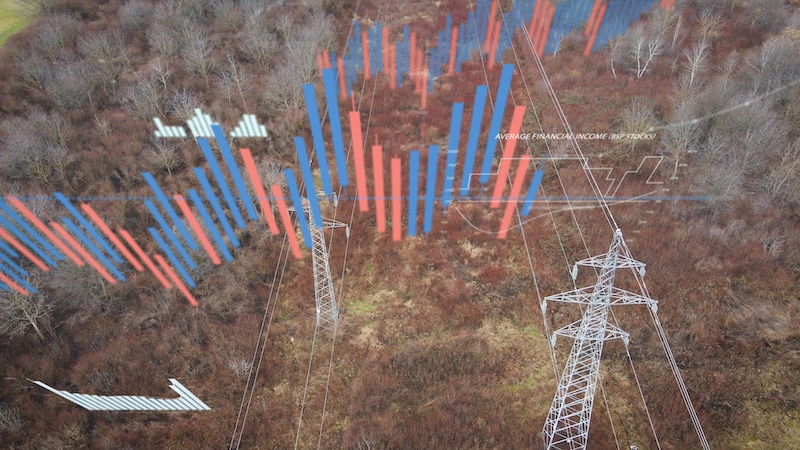
Figure 1. Today smart substations should leverage the vast benefits of data analytics. Image used courtesy of Adobe Stock (licensed).
Together, these elements define the digital substation: a platform that supports reliability, safety, cost control, and integration of new grid resources. Foundational standards such as IEC 61850 for substation automation and the Common Information Model (CIM) families IEC 61970/61968 form the foundation of this interoperability journey and remain central in smart grid frameworks.
Data Analytics and Machine Learning in Substations
Analytics in substations map cleanly to a four‑tier taxonomy that guides use cases and tool selection:
Descriptive analytics summarizes what happened, for example trending breaker operations, temperature, or dissolved gas to characterize historical behavior.
Diagnostic analytics explains why it happened, correlating events such as tap‑changer counts, load cycles, and ambient temperature to identify root causes.
Predictive analytics estimates what will happen, such as forecasting bushing insulation degradation or predicting relay misoperations from disturbance patterns.
Prescriptive analytics recommends what action to take, such as rescheduling a maintenance crew, derating a transformer, or revising protection settings.
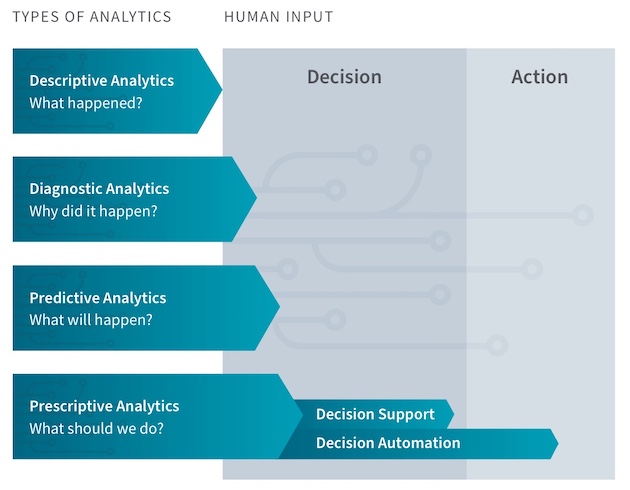
Figure 2. Types of data analytics. Image used courtesy of QlikTech International.
Statistical Models Vs. Machine Learning
Selecting statistical models versus machine learning depends on data characteristics, required transparency, and deployment constraints. Classical statistical methods (such as threshold rules, regression, state‑space models) are powerful when physics is well understood, data are limited, or the explanation for a decision must be explicit—for instance, thermal models that estimate transformer hot‑spot temperature or rules that flag breaker mechanism wear from coil current profiles.
Machine learning becomes attractive when patterns are complex or non‑linear, such as classifying disturbance waveforms, fusing SCADA, PMU, and asset sensor data, or spotting subtle precursors to failure in noisy signals. Hybrid approaches—physics‑informed ML or rules augmented with anomaly detection—are increasingly common in power system analytics. Surveys across the discipline document both the breadth of ML use cases and the need to balance accuracy with interpretability and operational constraints.
Training Data Requirements
Training data in utility environments present distinct challenges. Labels for failure modes are scarce because high‑impact events are rare, creating class imbalance that biases models toward “healthy” predictions. Event logs can be noisy or misaligned with measurements, and PMU or IED data streams may contain gaps, time synchronization errors, or outliers from communications and firmware issues.
Robust pipelines therefore emphasize data quality management (DQ), including timestamp validation, gap filling, filtering, and rigorous event alignment before feature engineering and model training. Field experience and studies show that addressing these issues—through preprocessing, fine‑grained event extraction, and domain‑aware features—materially improves classifier performance on real‑world PMU data. Industry and research organizations continue to highlight DQ as a limiting factor for advanced applications.
False Positives, Confidence Levels, and Explainability Concerns
False positives and confidence management are more than academic concerns in substations; nuisance alarms trigger costly truck rolls and erode trust. Production‑grade models typically expose calibrated probabilities or confidence intervals and apply cost‑aware thresholds that reflect operational risk (such as tighter thresholds on protection anomalies than on condition monitoring hints).
Explainability techniques help engineers validate whether a model is “seeing” physically plausible signals: SHAP (SHapley Additive exPlanations) and LIME (Local Interpretable Model-agnostic Explanations) can attribute an anomaly score to features such as harmonic content, negative‑sequence current, or tap‑changer count, providing a justifiable rationale for action. Power‑engineering research cautions that explanations themselves have limits—sensitivity to model choice and feature collinearity—so explanation artifacts should be interpreted alongside domain knowledge and physics.
When analytics transition from pilots to fleet operations, governance is essential. Versioned models, drift monitoring, and periodic retraining handle non‑stationarity as assets age or protection settings change. Validation against hold‑out substations reduces overfitting to site‑specific characteristics. Finally, model outputs should be encoded with severity, confidence, and recommended next steps to be consumable by downstream systems—work management, outage management, or planning—where actions occur. These integration patterns tie directly into the enterprise architecture of modern utilities.
Integration with Utility Systems
A smart substation’s value compounds when data flow beyond SCADA into enterprise platforms where decisions are executed.
Asset management: Integration allows analytics to open, annotate, and prioritize work orders based on risk and criticality, closing the loop from detection to action. EAM (Enterprise Asset Management) suites such as IBM Maximo illustrate how asset histories, inspections, and prescriptive maintenance recommendations can be unified with field execution.
Historian databases: High‑resolution time series from IEDs, PMUs, and sensors land first in historians that provide fast retrieval, asset modeling, and contextualization. Utilities have demonstrated direct connectors from IEC 61850 sources to enterprise historians, bypassing control‑center SCADA for non‑operational data and enabling analytics and data lake ingestion without jeopardizing control traffic. Utility deployments highlight how historian connectors expose previously siloed substation data and reveal maintenance opportunities.
Enterprise analytics platforms: To scale, substation data need common semantics. CIM standards (IEC 61970 for EMS domains and IEC 61968 for DMS/enterprise exchanges) define shared models so applications—planning, operations, outage management, and APM (Asset Performance Management)—can consume the same asset and network context. NIST identifies these IEC families, along with IEC 61850 and related cybersecurity standards, as foundational to smart grid interoperability—reinforcing their role in enterprise data architectures.
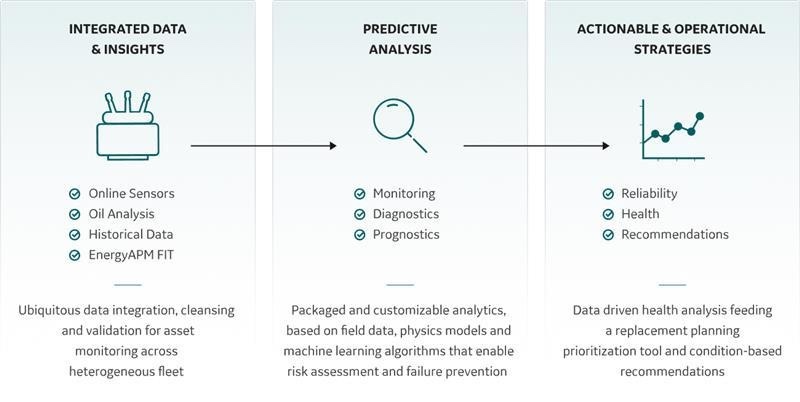
Figure 3. Asset Performance Management (APM). Image used courtesy of GE Vernova.
Role of Digital Twins for Substations and Major Assets
Digital twins add a powerful organizing construct for integrating models, data, and decisions. In the substation context, a twin synchronizes with real‑time telemetry and maintenance records, mirrors configuration (single‑line, protection settings, topology), and supports “what‑if” analysis—from switching operations to thermal behavior under contingencies. Authoritative definitions emphasize continuous data synchronization and lifecycle use, not only static 3D models.
Applied research in the energy sector describes twins that combine sensor streams, simulations, and analytics to predict behavior and prescribe operating or maintenance actions. Technical studies across power generation and distribution report a rapid expansion of twin use cases but also note integration and scaling challenges, emphasizing the importance of standards and robust data pipelines.
Practically, twin granularity varies. A transformer twin might fuse dissolved‑gas analysis, load/temperature history, and online partial‑discharge readings with physics‑based models to estimate paper aging and failure risk. A substation twin aggregates equipment twins and topology, enabling operational scenario testing (such as feeder reconfiguration) and maintenance simulations (such as outage windows with least customer impact). For effectiveness, twins need a bidirectional thread to enterprise systems: alerts that escalate into work orders in EAM, settings recommendations that feed back into protection engineering, and KPI dashboards that expose risk and cost.
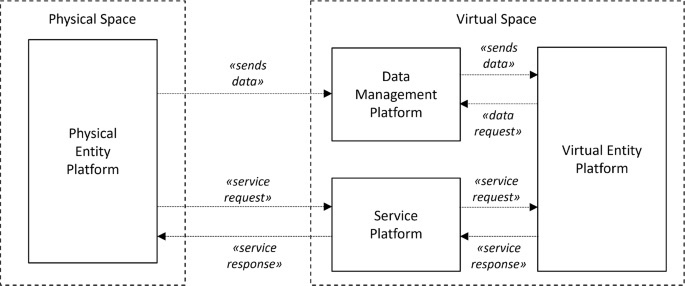
Figure 4. Example of digital twin architecture. Image used courtesy of Springer Nature.
Fleet-Level Insights vs. Single-Asset Optimization
Single-asset models can optimize maintenance or extend the life of an individual transformer or breaker, but limited budgets, spare equipment, and crew availability require utilities to prioritize decisions at a fleet level. Fleet analytics provide consistent health indices, risk‑of‑failure estimates, and consequence modeling across hundreds or thousands of units, enabling risk‑based prioritization of replacements and maintenance.
Commercial APM platforms illustrate this fleet‑to‑asset drill‑down: users identify outliers at a fleet level, then inspect the underlying measurements and diagnostics to plan interventions. The largest returns often come from standardizing this prioritization process and integrating it with work management and capital planning, rather than from marginal accuracy gains on a single classifier.
Finally, all integrations exist within a broader modernization agenda. DOE’s Grid Modernization Initiative and Grid Architecture efforts emphasize interoperability, security, and flexibility, aligning well with substation digitalization patterns. Testing and certification programs for standards such as IEC 61850 continue to improve multi‑vendor interoperability—vital as utilities combine legacy fleets with new, digital‑native equipment.
All About the Data
Smart substations are no longer only about replacing copper with fiber. Their business value emerges when measurements, events, and asset states flow reliably from the yard into historians, analytics, and enterprise systems where work is planned and capital is allocated. A clear analytics framework helps focus efforts—from descriptive views of operations to prescriptive recommendations that trigger action—while a thoughtful mix of statistical and machine‑learning methods respects both physics and data realities.
Data quality and explainability practices reinforce trust, reducing false positives and easing adoption in regulated, safety‑critical environments. Standards—IEC 61850 at the substation and CIM across the enterprise—provide the common language that allows digital twins and fleet analytics to scale beyond pilots. With these building blocks, utilities can move from isolated insights to closed‑loop decisions that enhance reliability, resilience, and affordability across the grid.