Facebook
 Google
 GitHub
 Linkedin
Increasing Power Electronics Reliability With Solder Preform Technology
This article examines an alternative to conventional thermal interface materials: solder preforms as a package-attach thermal interface in high-stress conditions in EV applications.
This article is published by EEPower as part of an exclusive digital content partnership with Bodo’s Power Systems.
As the power electronics landscape evolves to enable electrification initiatives, efficient thermal management and reliable long-term performance becomes increasingly critical. Conventional thermal interface materials fall short in terms of thermal performance and stability under high-stress conditions in EV applications, creating a need for advanced materials and techniques, such as using solder preforms as a package-attach thermal interface solution to enhance thermal performance and reliability. With SAC-In, there is a promising alloy for this application.

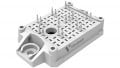
Figure 1. A SiC module in solder preform technology. Image used courtesy of Bodo’s Power Systems [PDF]
Introduction to Package-Attach in Power Electronics
In power electronics, the package-attach process is pivotal in ensuring efficient thermal management and sustained reliability. As power modules become more compact and sophisticated, innovations in materials and techniques are essential to meet performance and durability demands. This is particularly evident in electric vehicle applications, where size, weight, and performance trade-offs are balanced to achieve extended range and longer service life. Thermal interface materials (TIM) play a crucial role in dissipating heat from the power module to the heat sink, a process vital for maintaining optimal operating temperatures and preventing failure. Conventional thermal interface materials fall short in terms of thermal performance and stability under high-stress conditions in EV applications. This requires advanced materials and techniques, such as using solder preforms as a package-attach thermal interface solution, to enhance thermal performance and reliability.
Traditional Thermal Interface Materials
Traditional TIMs like organic compounds, silicone, and carbon-based materials are widely used in power electronics. However, these materials frequently exhibit limitations that hamper their performance in high-demand applications. Organic and silicone TIMs, for instance, often struggle with low thermal conductivity, especially in the z-axis. Carbon-based TIMs, while somewhat better in thermal performance, face issues with long-term stability under the harsh conditions typical of power electronics environments.
These deficiencies can lead to suboptimal heat dissipation, increased thermal resistance, and, ultimately, reduced reliability and lifespan of the inverter system. Furthermore, the mechanical fastening required for traditional TIMs can introduce complexities and inefficiencies in manufacturing processes.
Solder as a Thermal Interface Material
Solder is emerging as a compelling alternative to traditional TIMs in these applications, offering a more direct and efficient thermal path from the power module to the heat sink. By utilizing solder preforms, the interface between the module heat sink and cooler can achieve superior thermal conductivity and mechanical stability.
Solder as a TIM is a proven method. However, when considering power module package-cooler-attach applications, conventional soldering alloys like SnSb (tin-antimony) necessitate high peak soldering temperatures, often exceeding 240 °C. Such high temperatures can exceed the glass transition temperature (Tg) of mold epoxies in the SiC power module packaging commonly used in the industry, leading to delamination and increased thermomechanical stress and necessitating the development of a low-temperature soldering solution that can maintain performance without compromising the integrity of the package.
SAC-In Alloy Technology
A SAC-In alloy is a breakthrough in solder preform technology. This Pb-free alloy (SAC stands for Sn-Ag-Cu), primarily composed of tin, silver, and indium, has a melting range between 190 °C and 205 °C. This significantly lower peak temperature mitigates the risk of exceeding the Tg of mold epoxies, thereby preventing delamination and ensuring the mechanical integrity of the package.
The SAC-In alloy offers several key advantages:
- Solderability: It adheres well to various surface finishes.
- Reliability: Exhibits high mechanical strength and durability under thermal shock conditions.
- Thermal Conductivity: Provides efficient heat dissipation, crucial for high-performance power modules.
- Cost-Effectiveness: Offers an economical alternative compared to high-performance sintering solutions.
Experimental Methods and Results
To validate the performance of the SAC-In alloy, the researchers conducted reliability testing and failure analysis, including thermal shock testing. The material was evaluated in a representative package-attach assembly with DBC substrate and Ni-Cu baseplate, intended to simulate the materials typically used in this application. The experimental setup involved soldering test samples using a Vacuum/Formic Acid batch reflow system, followed by inspection to evaluate the integrity of the solder interface (Figure 2).
Thermal Shock Testing
Conducted over 1,000 cycles ranging from -40 °C to +125 °C, this test aimed to simulate extreme operational conditions and evaluate the alloy’s durability (Figure 3). The SAC-In alloy demonstrated robust performance, comparable to industry-standard SAC305 and SnSb alloys, with no significant degradation or delamination.
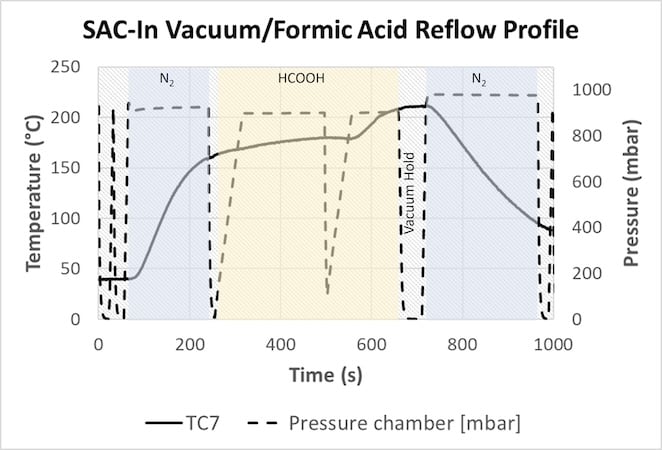
Figure 2. Vacuum/Formic Acid Reflow Profile. Image used courtesy of Bodo’s Power Systems [PDF]
Acoustic Microscopy and Cross-Section Imaging
Using a scanning acoustic microscope, the researchers imaged solder joints before and after thermal shock testing. The SAC-In alloy exhibited minimal voiding and no delamination, starkly contrasting the significant cracking observed in SnAgIn joints. Post-testing cross-section imaging further corroborated the acoustic microscopy findings, revealing well-maintained solder bonds and structural integrity in SAC-In samples.
Practical Implications and Future Work
The introduction of the SAC-In alloy technology holds profound implications for the power electronics industry. By enabling lower processing temperatures, this alloy reduces the risk of package delamination and enhances overall reliability. This advancement is particularly relevant for automotive and e-mobility applications, where efficient thermal management and long-term durability are paramount. Moreover, the SAC-In alloy facilitates using existing soldering techniques and equipment, offering a cost-effective transition for manufacturers. The promising results from the initial tests pave the way for broader adoption and further exploration.
The future research plan is to extend the evaluation of the SAC-In alloy across different assembly metallization sets and reflow environments, including flux-assisted formic acid and conventional reflow processes. Additionally, characterizing the alloy’s performance in a representative power cycling use case will provide deeper insights into its long-term reliability and application potential.
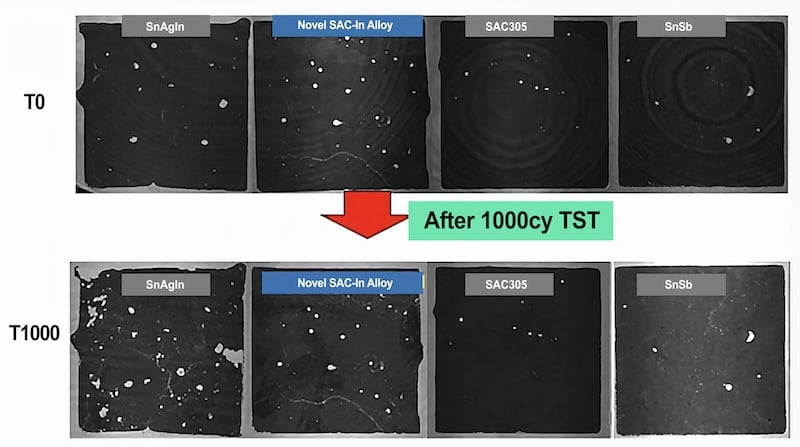
Figure 3. SAM images of each alloy tested before and after 1000 cycles of -40 °C to 125 °C thermal shock. Image used courtesy of Bodo’s Power Systems [PDF]
Takeaways
The novel SAC-In solder alloy technology represents a significant advancement in the field of power electronics, offering a practical and effective solution to the challenges of thermal management and mechanical reliability. By addressing the limitations of traditional TIMs and high-temperature soldering alloys, the SAC-In alloy enhances performance and durability in demanding applications.
It not only improves thermal conductivity and reduces delamination risks but also offers a cost-effective alternative for manufacturers. As further research and development continue, the SAC-In alloy is poised to play a crucial role in the future of power electronics, particularly in high-stress environments like automotive and e-mobility systems.
The insights and findings underscore the importance of continued exploration and innovation in this vital field, paving the way for more efficient and reliable electronic systems.
This article originally appeared in Bodo’s Power Systems [PDF] magazine.