Facebook
 Google
 GitHub
 Linkedin
0.2% High-Accuracy Open-Loop Hall Current Sensor With ASIL D Functional Safety
This article focuses on comparing the performance of Innosense’s Dhips+ Hall current sensor before and after error compensation, elaborating on the detailed architecture of functional safety, and introducing its product series.
This article is published by EEPower as part of an exclusive digital content partnership with Bodo’s Power Systems.
With the rapid development of power electronics technology today, as a core sensing component, the accuracy, reliability, and cost control of current sensors directly affect the performance and market competitiveness of end products.
Although traditional Hall current sensors are widely used in industrial control, new energy vehicles, power systems, and other fields due to their non-contact measurement, cost advantages, and other characteristics, the pain point of insufficient accuracy has always restricted the breakthrough in high-end application scenarios.
The new generation of 0.2% highaccuracy Hall current sensor Dhips+ series product launched by Innosense breaks the industry curse of “high accuracy must mean high cost” through core algorithm innovation, magnetic core technology optimization, and full-link performance improvement, reshaping the value curve of Hall current sensors, and bringing a revolutionary technical solution to the power electronics industry.
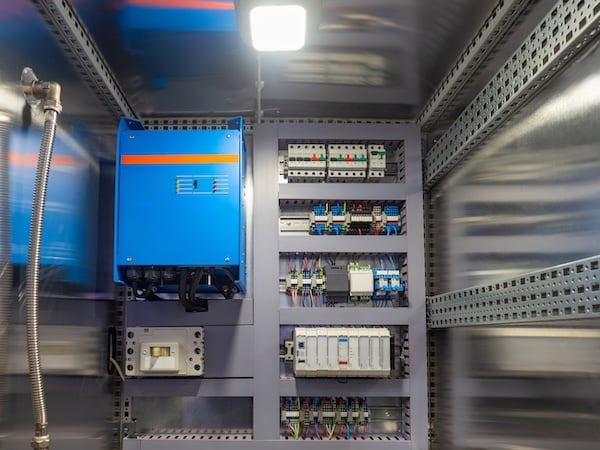
Image used courtesy of Adobe Stock
Industry Status: Value Dilemma and Technical Bottlenecks of Hall Current Sensors
The development of current detection technology has always centered around four core dimensions: “accuracy, cost, volume, and reliability”. As one of the most widely used technical routes, Hall current sensors have long faced the challenge of balancing performance and cost. Open-loop Hall current sensors realize current measurement by detecting the magnetic field generated by current-carrying conductors based on the Hall effect principle.
Their non-contact measurement method avoids interference with the main circuit, and their small size and fast response characteristics make them occupy an important position in various electronic devices. The mature supply chain system also gives them a significant cost advantage. However, the accuracy of traditional open-loop Hall current sensors has always been unsatisfactory, especially in small current detection scenarios.\
Errors caused by hysteresis effect, temperature drift, external interference, and other factors make it difficult to meet the application requirements of high-end industrial control, new energy vehicle battery management systems (BMS), and other fields that have strict requirements for detection accuracy.
A comparison of the performance of current sensors based on different principles further highlights the industry’s choice dilemma. Although closed-loop Hall current sensors have high accuracy, the complex feedback circuit design leads to a significant increase in cost, as well as large volume and high power consumption in large current scenarios.
The shunt resistor scheme has a relatively low cost, but there is a prominent problem of heat generation in contact measurement, which brings potential safety hazards to the customer’s system; fluxgate sensors have excellent accuracy, but they also face the shortcomings of high cost and poor anti-interference ability. In core application fields such as new energy vehicles, photovoltaic inverters, and accurate industrial control, the market is urgently in need of a current sensor solution that can balance high accuracy, low cost, small size, and high reliability.
This demand has become the core driving force for promoting the technological innovation of Hall current sensors. Based on the above market demand for current sensors, Innosense has launched the high-accuracy Dhips+ series current sensors, which originate from the in-depth deconstruction of the Hall detection principle and full-chain technological innovation.
Through multi-dimensional technological breakthroughs such as hysteresis compensation algorithm, temperature stress compensation technology, and optimized magnetic core design, it has achieved a leapfrog improvement in accuracy performance while retaining the core advantages of traditional open-loop Hall sensors.
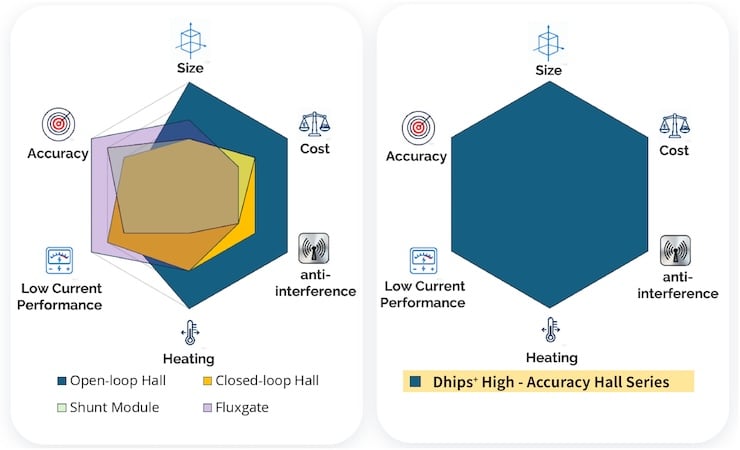
Figure 1. Innosense Dhips+ & Other Principles Comparison. Image used courtesy of Bodo’s Power Systems [PDF]
Technological Breakthrough: Core Innovation Path of High-Accuracy Hall Sensors
Multi-Dimensional Error Compensation Algorithm
The error compensation algorithm is the core support for the Dhips+ series to achieve 0.2% high accuracy. Innosense has built a full-scenario algorithm system covering hysteresis compensation, temperature stress compensation, and dynamic compensation. The hysteresis effect is a key factor affecting the accuracy of Hall sensors.
The hysteresis loops existing in different magnetic core materials during the magnetic field change process will lead to detection errors, which are more obvious in the small current range. The Dhips+ series simulates the hysteresis characteristics of different magnetic core materials and structures, tests to obtain accurate hysteresis curves, refers to classic models such as JilesAtherton, and constructs static and dynamic hysteresis compensation models combined with actual application scenarios.
Through a large number of experimental verifications and detailed optimizations, it achieves accurate cancellation of hysteresis errors. The offset error data before and after compensation shows that the error value before compensation is generally between 1~2A, and after compensation, the error is controlled within ±100mA, and in some working conditions, the error is even lower than ±20mA, with a significant compensation effect.
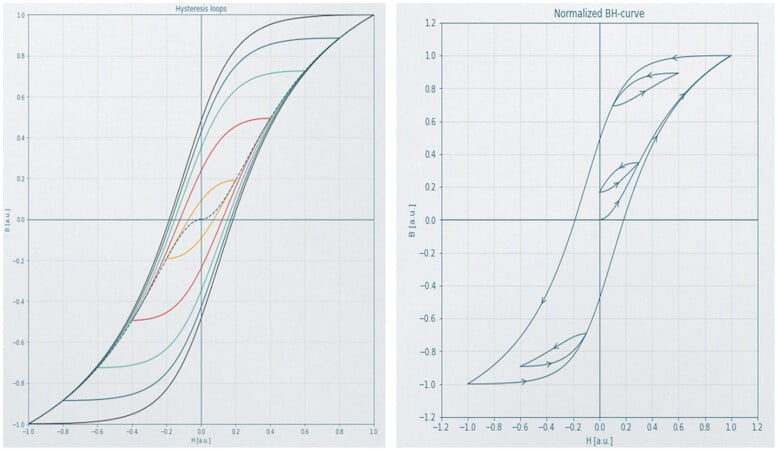
Figure 2. Hysteresis Loop Under Magnetic Field Interference. Image used courtesy of Bodo’s Power Systems [PDF]
Temperature Stress Compensation Algorithm
The application of the temperature stress compensation algorithm solves the problem of accuracy drift in extreme environments. The output characteristics of Hall elements are significantly affected by temperature. The accuracy error of traditional sensors will increase sharply in the wide temperature range of -40°C to 125°C, while the Dhips+ series achieves stable control of accuracy in the full temperature range through the coupled temperature stress compensation algorithm.
Test data shows that in the normal temperature environment of 25°C, the error of the Dhips+ series is controlled within ±0.2% in the full range of -1500A to 1500A; in the wide temperature range of -40°C to 125°C, the error can still be maintained within ±0.5%, meeting the application requirements of extreme environments.
Dynamic Offline Compensation Algorithm
In addition, the 100% offline dynamic compensation and segmented calibration functions further improve the consistency of the product. By performing offline dynamic calibration on each product, it automatically corrects individual differences to ensure the accuracy and consistency of mass production.
The segmented calibration function divides the measurement range into three segments for precise calibration, especially improving the resolution in the small current range, so that the Dhips+ series can still maintain excellent performance in small current scenarios. This is of great significance for battery current detection in new energy vehicle sentinel mode, micro-current monitoring in industrial control systems, and other scenarios.
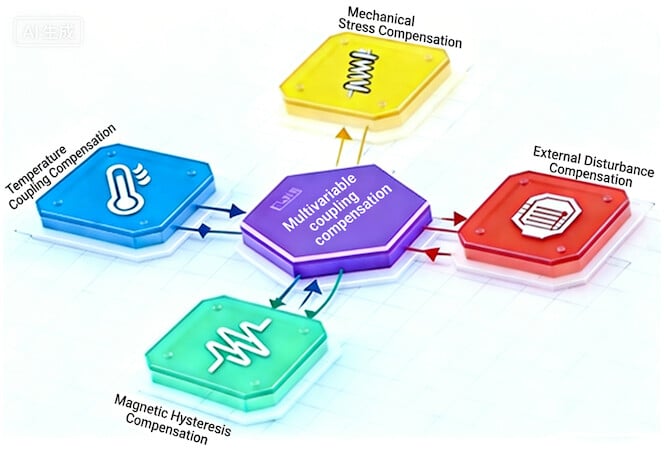
Figure 3. Innosense Dhips+ Product Compensation Algorithm. Image used courtesy of Bodo’s Power Systems [PDF]
Product Performance: Redefining the Standard of High-Accuracy Hall Sensors
The performance of the Dhips+ series high-accuracy Hall current sensors has been fully verified through comprehensive test data and has reached the industry-leading level in key indicators such as accuracy, temperature adaptability, and consistency.
Accuracy Performance: Full-Range High-Accuracy Coverage
The core advantage of the Dhips+ series lies in its high-accuracy performance within the full range. This consistent high-accuracy performance across the full range breaks the problem of reduced accuracy of traditional sensors at small current or large current extreme points and meets the requirements of wide-range applications. The breakthrough in small current accuracy is particularly noteworthy.
The accuracy of traditional open-loop Hall sensors often drops significantly in the small current range, while the Dhips+ series can still maintain excellent accuracy in small current scenarios through algorithm optimization and hardware improvement. This is of great value for small current detection of battery charging and discharging in new energy vehicle BMS and energy storage systems, and can significantly improve the control accuracy and energy efficiency performance of end products.
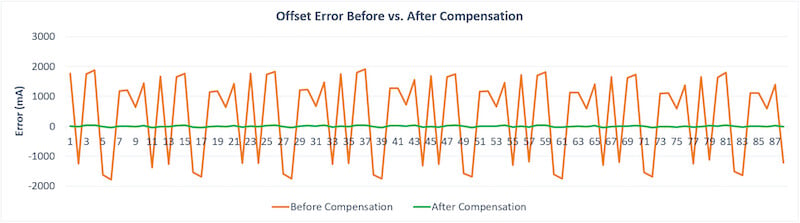
Figure 4. Offset Error Before and After Hysteresis Compensation. Image used courtesy of Bodo’s Power Systems [PDF]
Environmental Adaptability: Stable Operation in a Wide Temperature Range
In extreme temperature environment tests, the Dhips+ series showed excellent stability. In the low-temperature environment of -40°C, the output linearity of the sensor remains good, and the error does not drift significantly; in the high-temperature environment of 125°C, the performance of the Hall element is stable, and the accuracy error is still controlled within ±0.5% through the action of the temperature compensation algorithm. This wide temperature range adaptability enables the Dhips+ series products to be applied to harsh application scenarios such as northern frigid regions, new energy vehicles, and super-fast charging.
Consistency and Reliability: Meeting the Requirements of Mass Application
The application of 100% offline dynamic compensation technology ensures the batch consistency of the Dhips+ series. Sampling tests on mass-produced products show that the accuracy error difference of the same model product under the same working conditions is less than ±0.05%, which is crucial for batch application scenarios such as industrial production lines and new energy vehicle manufacturing that require a large number of deployed sensors.
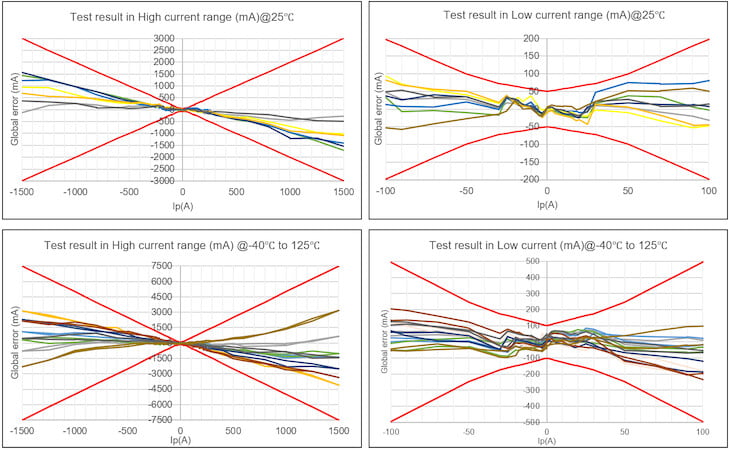
Figure 5. Full Temperature Accuracy of Dhips+ Series Products. Image used courtesy of Bodo’s Power Systems [PDF]
It can reduce the difficulty of system debugging and improve the stability of the overall system.
Dhips+ Product Functional Safety: Safety Line for BMS Current Monitoring
As a core function of BMS, current monitoring accuracy and reliability are the keys to preventing battery overcurrent thermal runaway. The Dhips+ product launched by Innosense takes ASIL D-level safety design as the core and builds a full-link functional safety guarantee system, providing a highly reliable solution for electric vehicle BMS current monitoring.
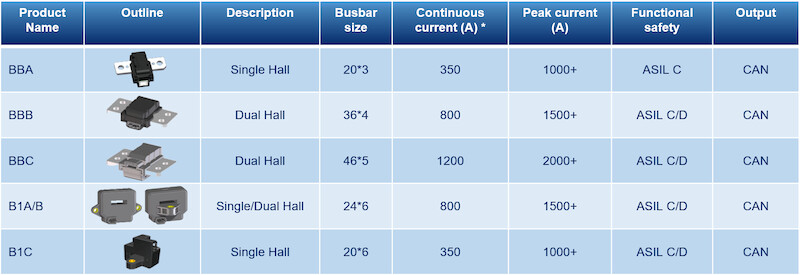
Figure 6. Parameters of Dhips+ Series Products. Image used courtesy of Bodo’s Power Systems [PDF]
Core Objectives of Functional Safety
The functional safety design of the Dhips+ product takes solving the thermal runaway risk caused by battery overcurrent as the core objective. To this end, Dhips+ has established clear safety goals: preventing thermal runaway caused by overcurrent of the power battery system, with a Safety Integrity Level ASIL D level.
The product strictly complies with the “Fault Tolerant Time Interval (FTTI)” requirement in the standard. At the same time, the product design is fully aligned with the ISO 26262 standard and certified by the authoritative SGS organization to ensure full-process compliance in functional safety management, hardware design, software development, etc.
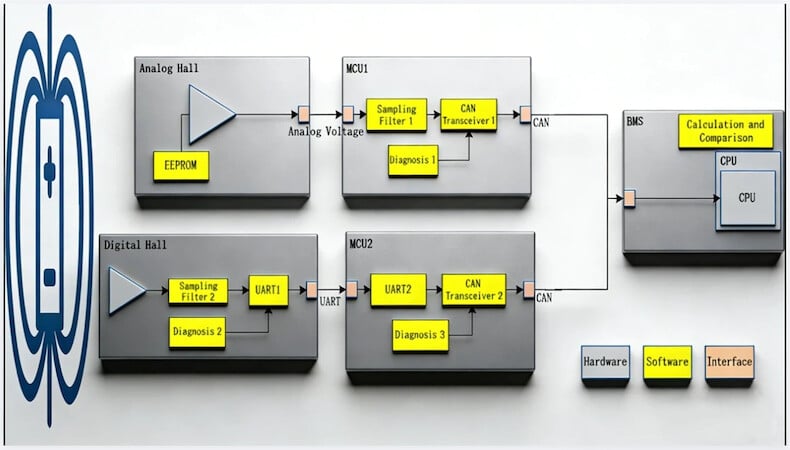
Figure 7. ASIL D SF Architecture of Dhips+ Series Products. Image used courtesy of Bodo’s Power Systems [PDF]
Functional Safety Hardware Architecture
The Dhips+ product adopts a modular hardware architecture and provides a functional safety level ASIL D configuration scheme. Through hardware redundancy and fault-tolerant design, it maximizes the reduction of random hardware failure risks. In the ASIL D hardware architecture, the Dhips+ product is equipped with a fully redundant architecture of “dual sensing channels + dual MCU processing + dual communication links”.
Through the hardware heterogeneous design of “analog Hall + digital Hall” and software collaborative diagnosis, it builds a current monitoring safety barrier that meets ASIL D level requirements, perfectly adapting to the harsh requirements for safety redundancy in complex application scenarios such as 800V high-voltage platforms and fast charging.
Enterprise Strength: Innosense’s Technical Accumulation and Innovation Philosophy
The successful launch of the Dhips+ series is inseparable from Innosense’s long-term technical accumulation and continuous innovation spirit in the field of Hall sensors. As an enterprise focusing on the R&D and production of high-accuracy sensors, Innosense takes “reshaping the value curve” as its core philosophy and is committed to breaking the inherent industry balance through technological innovation and providing customers with higher-value product solutions.
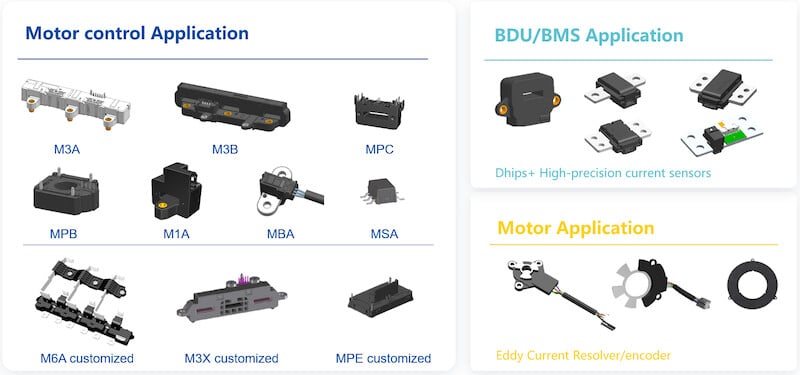
Figure 8. Partial Product Applications of Innosense. Image used courtesy of Bodo’s Power Systems [PDF]
The company’s global product team has profound industry experience and technical strength, and a number of core technical reserves in system applications, algorithm development, and other fields. Through in-depth cooperation with end customers, Innosense accurately grasps the pain points of market demand, conducts targeted technological R&D, ensures that products can effectively solve practical problems in applications, and reflects product value.
Every link of the Dhips+ series products, from initial product design to the development of compensation algorithms, to the polishing of mass production processes, has undergone strict testing and verification to ensure the performance reliability and batch consistency of the products.
Conclusion: Outlook of High-Accuracy Sensing Technology
As the “eyes” of power electronic systems, the accuracy and reliability of current sensors directly determine the upper limit of system performance. The launch of Innosense’s Dhips+ series high-accuracy Hall current sensors not only solves the technical pain points of traditional products but also reshapes the industry’s value curve, providing a cost-effective solution for high-accuracy current detection and promoting the technological upgrading of new energy vehicles, industrial control, new energy power generation, and other fields.
This article originally appeared in Bodo’s Power Systems [PDF] magazine.