Facebook
 Google
 GitHub
 Linkedin
Commercializing Nuclear Fusion
The U.S. and governments worldwide are allocating massive funds to develop nuclear fusion energy. Will their efforts pay off?
What if we could produce nearly carbon-free energy using hydrogen isotope fuels derived from seawater without producing harmful long-term radioactive wastes? That’s the promise of nuclear fusion, a process by which two atomic nuclei of hydrogen isotopes of deuterium and tritium are combined to form an atom of helium, releasing massive amounts of energy. It’s the same process that powers all of the stars in the universe, including the Sun.
On Earth, nuclear fusion has been studied for more than 70 years. The challenge has always been how to contain and control hydrogen plasma at immense pressures and temperatures higher than 100 million degrees to allow the hydrogen nuclear fusion reaction to occur. For nuclear fusion to work, it must produce more energy than required to create and control the fusion plasma—breakeven.
Researchers at Lawrence Livermore National Laboratory’s National Ignition Facility in California reached breakeven in 2022 with a laser-powered fusion reaction. Yet, scientists still have a long road ahead to make fusion energy commercially viable. Public-private partnerships, government funding, and huge budgets will be necessary to move nuclear fusion to the next step.
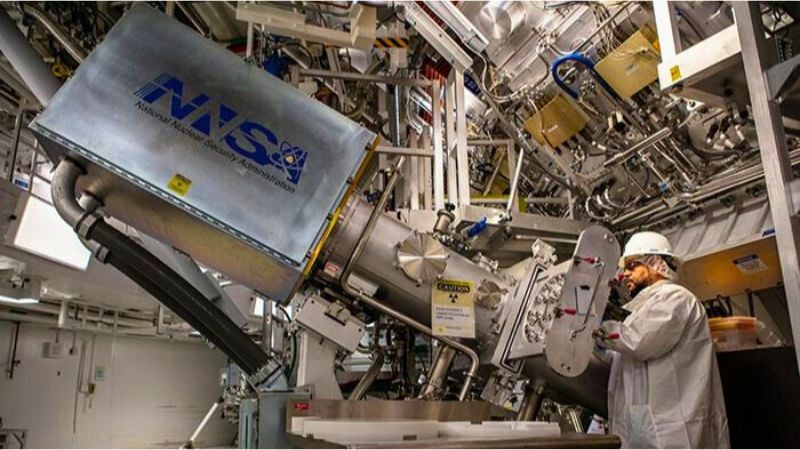
Fusion diagnostic technology. Image used courtesy of the National Ignition Facility/Jason Laurea
The Incentive for Fusion
According to the International Atomic Energy Agency, the energy per kilogram of fuel produced by nuclear fusion is up to four times the energy produced in a normal uranium fission nuclear reactor and almost four million times the energy created by burning fossil fuels.
Fusion does not produce harmful greenhouse gases or the high-level nuclear waste from fission nuclear reactors. Unlike fission reactors using uranium or plutonium for fuel, the by-products from fusion reactions cannot be used to produce nuclear weapons.
Investing in the Future
Government funding and public-private partnerships have driven nuclear fusion research forward because of the technical challenges of creating and containing the temperatures and pressures required to create a hydrogen plasma. According to the Fusion Industry Association 2024 Global Fusion Industry Report, total industry investment in fusion energy is more than $7.1 billion, with more than $900 million invested this year. Total government funding worldwide has increased 57 percent in the past year, rising to $426 million.
Private investments across 45 fusion companies included $100 million for Xcimer, $90 million for SHINE Technologies, and $65 million for Helion Energy. The U.S. leads the fusion energy industry with 25 companies in the survey, followed by the U.K., Germany, Japan, and China, all with three. Switzerland now has two fusion companies, while Australia, Canada, France, Israel, New Zealand, and Sweden each have one.
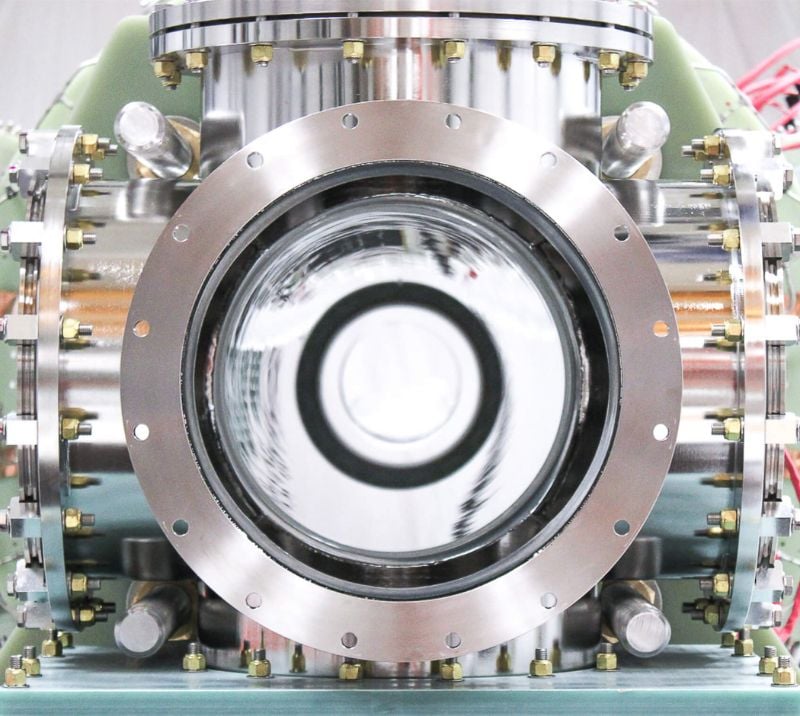
Polaris fusion machine. Image used courtesy of Helion
In June 2024, the U.S. Department of Energy (DOE) signed contracts with eight companies, allocating $46 million for the companies to participate in the Milestone-Based Fusion Development Program to deliver pilot plant designs. The U.S. has spent $790 million for the DOE’s Office of Fusion Energy Sciences and another $690 million to support laser inertial fusion research at the National Ignition Facility allocated through the National Nuclear Security Administration.
The World Economic Forum China will spend between $1 billion to $1.5 billion annually on fusion research—nearly double the amount allocated by the U.S. government for fusion research in 2024.
The Chinese government has made substantial investments in fusion projects, including the Experimental Advanced Superconducting Tokamak at the Hefei Institute of Physical Science, which received nearly $900 million in 2019 for construction and operation and an additional $900 million more recently to continue its research efforts. EAST achieved a world record by maintaining a plasma temperature at 120 million degrees Celsius for 101 seconds and at 160 million Celsius for 20 seconds.
The China Fusion Engineering Test Reactor is planned for construction later this decade, with an initial power output of 200 MW and, eventually, over 1 GW, demonstrating China's commitment to large-scale fusion power generation.
Private companies in China are also making significant investments in fusion research. The ENN Group, a large private Chinese energy company, claims to have invested over $100 million in their fusion program with an additional long-term budget of $150 million per year.
The International Thermonuclear Experimental Reactor (ITER), being built in southern France, is a collaborative effort involving 35 nations, including the U.S., China, India, Japan, Korea, Russia, and the European Union. ITER uses a tokamak design with magnetic fields to confine and heat plasma created from the fusion reaction involving the hydrogen isotopes deuterium and tritium. The reactor will produce 500 MW of fusion power from 50 MW of input heating power.
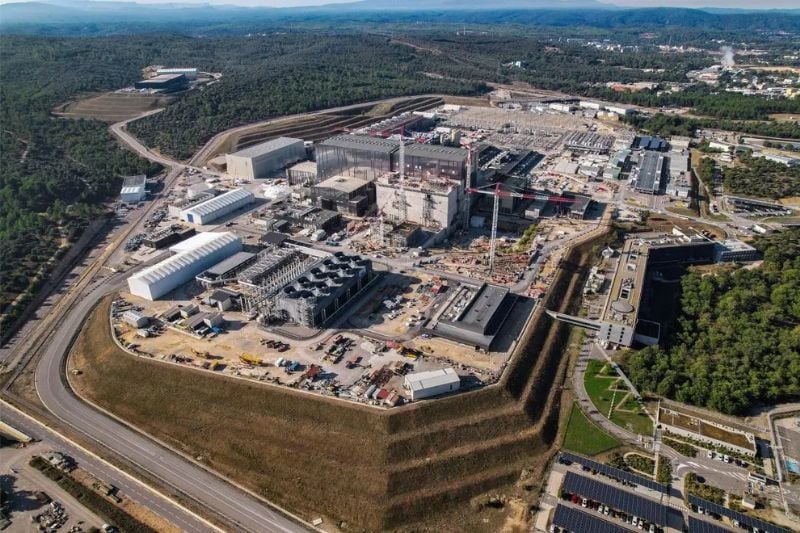
ITER facility in France. Image used courtesy of ITER
Construction began in 2013. ITER’s first plasma experiments are expected in December 2025, with full operation in 2039. ITER funding is set at $6.8 billion between 2021 and 2027.
When Will We See Fusion?
The likelihood of large-scale commercial nuclear fusion electricity production in the next 10-20 years (before 2035) is low, but some limited demonstrations may occur. The mid-term (2040-2060) sees a better chance for the first grid-connected fusion power plants. These will likely be full-scale prototypes for evaluating technologies, eventually leading to follow-up commercial-scale power systems.
Beyond 2060, commercial nuclear fusion will become more likely, but only if significant technical challenges concerning controlling the plasma and extracting energy efficiently can they be solved. This will be contingent on continued funding on a massive scale, and arguments are made that these funds would be better spent on existing zero-emission wind and solar.
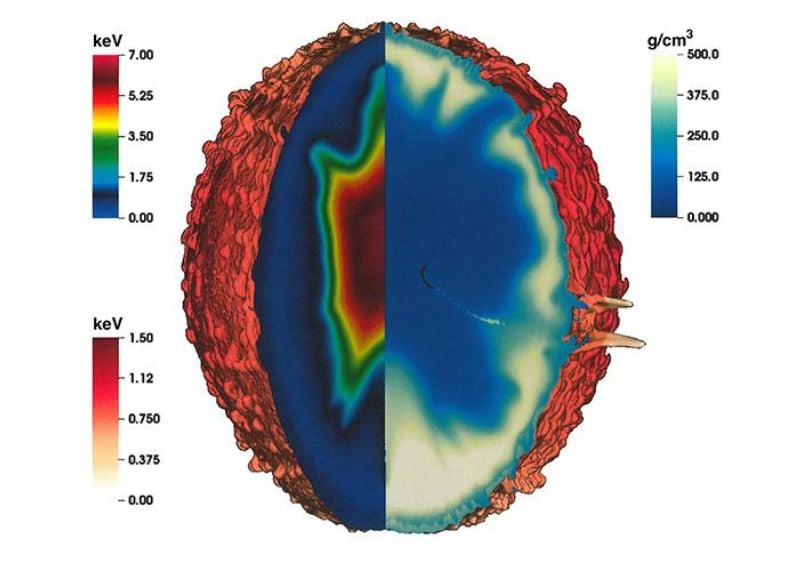
Fusion ignition simulation. Image used courtesy of National Ignition Facility/Marty Marinak
While nuclear fusion holds great promise as a clean and abundant energy source, it is unlikely to contribute significantly to electricity production in the next few decades. However, the mid-21st century could see the first commercial fusion power plants emerging, with more widespread adoption possible in the latter half of the century. Much will depend on overcoming significant scientific, engineering, and economic challenges.