Facebook
 Google
 GitHub
 Linkedin
Ignition Lab Uses Amazon AI To Troubleshoot Nuclear Fusion
Amazon Web Services will integrate its generative AI at Livermore’s National Ignition Facility to detect anomalies in fusion technology.
When a tiny misalignment can derail a billion-dollar experiment, precision is more than a luxury; it’s a necessity. At the National Ignition Facility in California, where scientists attempt to replicate the reactions that power the sun by creating fusion, the stakes couldn’t be higher. Every laser shot demands perfection, yet a single missed cue can bring down a mission aimed at unlocking clean, carbon-free energy.
Amazon Web Services (AWS) is stepping in with its powerful generative AI tools to address these hair-trigger challenges. In partnership with Lawrence Livermore National Laboratory, AWS aims to embed advanced artificial intelligence throughout the National Ignition Facility’s (NIF) operations. This move will enable engineers and scientists to identify anomalies in real-time, respond more quickly to unexpected issues, and move closer to the elusive dream of controlled fusion energy.

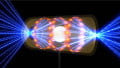
AI analysis of fusion. Image used courtesy of Lawrence Livermore National Laboratory
NIF, Fusion, and AWS
NIF has long been a symbol of human ambition, built to deliver unimaginable bursts of energy to a target smaller than a pencil eraser. It can generate more than 2 million joules of ultraviolet energy and a peak power of 500 trillion watts, creating temperatures hotter than the sun's core and pressures exceeding 100 billion times Earth’s atmospheric pressure. These conditions briefly force hydrogen atoms to fuse, releasing energy. However, the fusion process remains stubbornly difficult to repeat consistently, and even minor technical failures can ruin an entire experiment.
Through its collaboration, AWS will apply intelligent search capabilities, large language model-based chat tools, and retrieval-augmented data systems to help keep experiments on track. The artificial intelligence system will tap into over 22 years of NIF’s operational records, acting almost like a highly trained digital advisor that can coach technicians through troubleshooting at any hour.
Fusion experiments at NIF create conditions almost beyond imagination: 180 million °F and a hundred billion times Earth’s atmospheric pressure. While these extremes enable the fusion of hydrogen atoms, they also place enormous stress on delicate equipment, increasing the likelihood of mechanical issues or data errors. Amazon’s generative AI tools will essentially act as a backup system, helping scientists find answers and fixes when problems strike. In a way, they’re building a digital safety net that never sleeps.
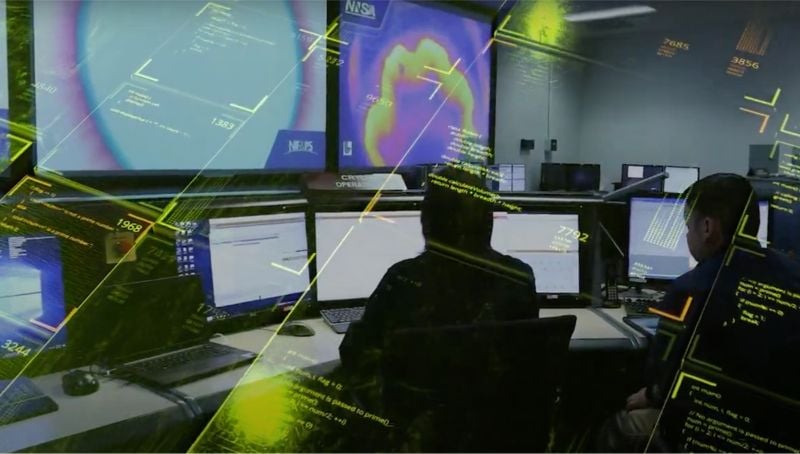
Scientists at the NIF using AI to study fusion data. Lawrence Livermore National Laboratory
If scientists can one day commercialize nuclear fusion, humanity could access an endless source of carbon-free electricity. Unlike today’s fission-based nuclear plants, which split uranium atoms, fusion would fuse lighter hydrogen atoms, mimicking what happens inside stars. That could transform the world’s energy picture, complementing solar, wind, and fission to deliver a high-capacity, steady, clean power supply. But commercial fusion is still a long way off, and every bit of operational reliability helps push the field forward.
AWS’s involvement reflects a larger trend in high-tech energy research, where AI is increasingly seen as essential for scaling breakthroughs. The company has supported other fusion-focused organizations and partnered with international agencies to offer cloud-computing credits to startups exploring the same frontier. AI’s appetite for power and its promise to expand grid capabilities are creating a feedback loop of challenges and opportunities for the global energy sector.
Harnessing Star Power
While no one expects a chatbot to produce clean fusion energy on its own, the AWS-NIF collaboration could give researchers a powerful tool. At a facility where so much can go wrong in a fraction of a second, that matters. By introducing generative AI into Livermore’s National Ignition Facility, AWS and its partners aim to address challenges, giving scientists a clearer path to harnessing the power of the stars on Earth.