Facebook
 Google
 GitHub
 Linkedin
BYD Launches Faster-Charging 2nd Gen Blade Battery
BYD has introduced the second-generation Blade Battery for electric vehicles, featuring faster charging and improved cold-weather performance.
BYD has launched its second-generation Blade Battery and Flash Charging technology for electric vehicles to boost charging speeds, even at low temperatures. By combining new battery technologies with a high-power charging-station network, the company claims it has created an EV charging experience that finally matches the refueling experience of internal combustion vehicles.
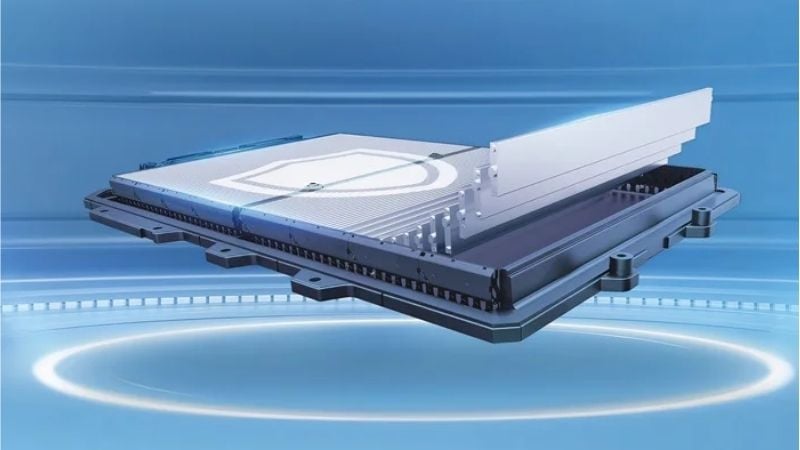
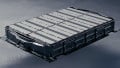
Blade battery. Image used courtesy of BYD
Blade Battery 2.0
BYD engineers designed the second-generation Blade Battery to charge from 10% to 70% in 5 minutes and to reach 97% in 9 minutes under optimal conditions.
The company attributes these gains over the first-generation model to the “FlashPass” ion transport system, which includes improvements in cathode architecture, electrolyte optimization, and enhanced intercalcation at the anode. As a result, the system experiences lower internal resistance and lower heat during charging, enabling higher power and faster charging times without risking battery health or safety.
BYD also boosted the Blade’s energy density. While the first-generation Blade Battery already had 50% higher energy density than competitors, the second-generation cell increased it by an additional 5%. In real-world applications, the battery reportedly enabled the Denza Z9GT to travel 1,036 km on a full charge, according to the CLTC test cycle.
In addition, BYD improved the Blade Battery’s reliability in extreme climates with the new "Full-Spectrum Intelligent Thermal Management System." At temperatures as low as -30°C, the system allows the battery to charge from 20% to 97% in 12 minutes, just 3 minutes longer than at room temperature.
Improving Lithium-Ion Migration For EV Charging
An EV’s charging speed depends on the rate of lithium-ion migration between the cathode and the anode in its battery.
The Blade is a lithium-iron phosphate (LFP) battery. In LFP batteries, during charging migration, lithium ions deintercalate from the cathode material, move through the electrolyte and separator, and finally intercalate into the anode structure.
However, every battery has some internal resistance, which is the total physical and chemical resistance the battery’s lithium ions encounter during migration. If a battery’s resistance is high, it will heat up during charging, forcing the battery management system to throttle the charging current to prevent thermal degradation or safety risks.
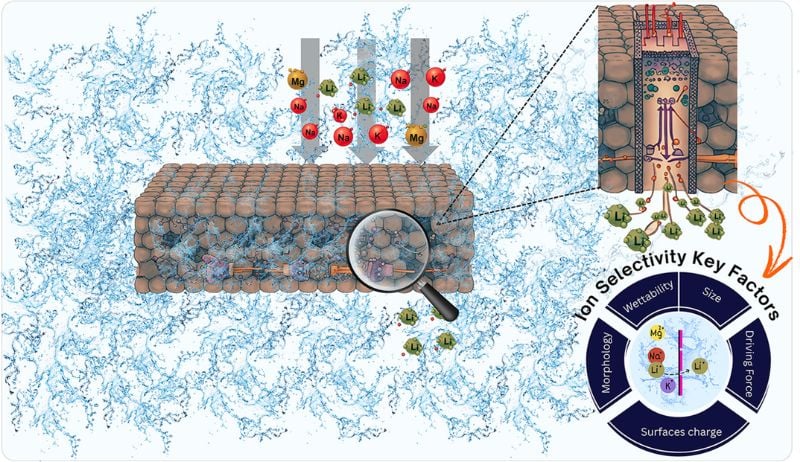
Chemical mechanisms for improving lithium-ion migration. Image used courtesy of Abrishami et al.
To speed up LFP lithium-ion migration, battery engineers must improve the porosity and conductivity of the electrode materials. If the ion pathway is restricted or the electrolyte viscosity is too high, lithium ions can become trapped at the anode surface rather than passing through it. This phenomenon, known as lithium plating, damages the battery and reduces its lifespan.
To solve this, BYD developed high-speed channels within the electrodes using nano-structured materials or specialized additives in the electrolyte to facilitate faster ion migration. The result is a battery that can handle higher currents without a proportional increase in temperature, maintaining efficiency and safety even at low temperatures or high-power charging events.
Global Charging Infrastructure and Availability
By widely deploying its latest 1500 kW Flash Charging stations, BYD aims to redefine everyday people’s expectations for long-distance EV travel.
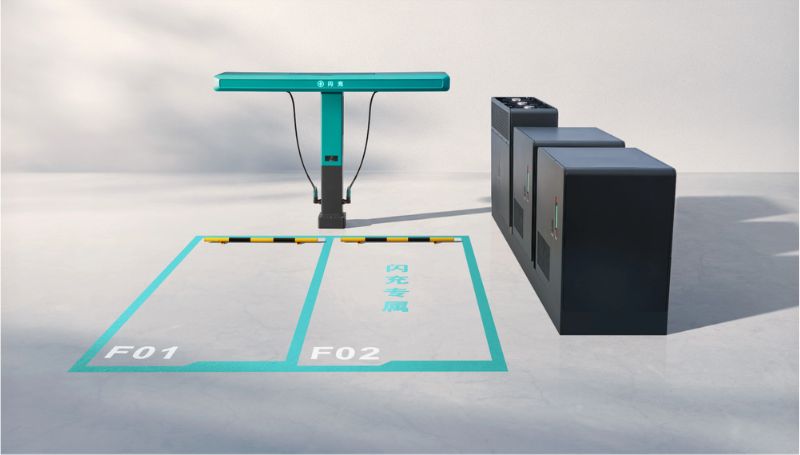
The Flash charger. Image used courtesy of BYD
With a T-shaped pulley system and “Zero-Gravity" connector design, BYD designed its charging stations to be easier and more convenient for drivers. The stations also have built-in energy storage systems to bypass local grid limitations, enabling them to operate even in areas with limited electrical capacity.
BYD plans to construct 20,000 FLASH Charging Stations in China by the end of 2026, before distributing them globally. Meanwhile, the company has begun general production of the Blade Battery 2.0.