Facebook
 Google
 GitHub
 Linkedin
Next-Gen Testing for PV-Storage-Charging Systems
There are a lot of advantages to integrating solar power, energy storage, and EV charging. Learn the technologies available to implement and test such combined systems.
As carbon neutrality and peak carbon emission goals are implemented worldwide, the energy storage market is witnessing explosive trillion-level growth. Amid the imbalance between the rapid development of electric vehicles and charging infrastructure, the integration of solar power generation, battery energy storage and EV charging—referred to as “PV + Storage + Charging” (PSC)—is emerging as an innovative solution for building greener, safer, and more efficient EV charging stations.
In the public sector (FIgure 1), PSC systems use rooftop solar installations to generate electricity, store it in batteries, and supply it for daily EV charging needs.
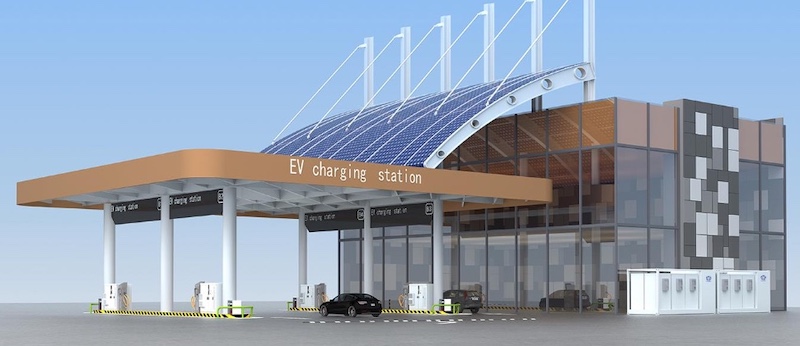
Figure 1. Public PV + Storage + Charging” (PSC) integrated system
In the residential sector (Figure 2), PSC takes the form of a home-based microgrid, where rooftop solar panels, household energy storage batteries, and EV battery packs work together to meet the electricity demands of the household.
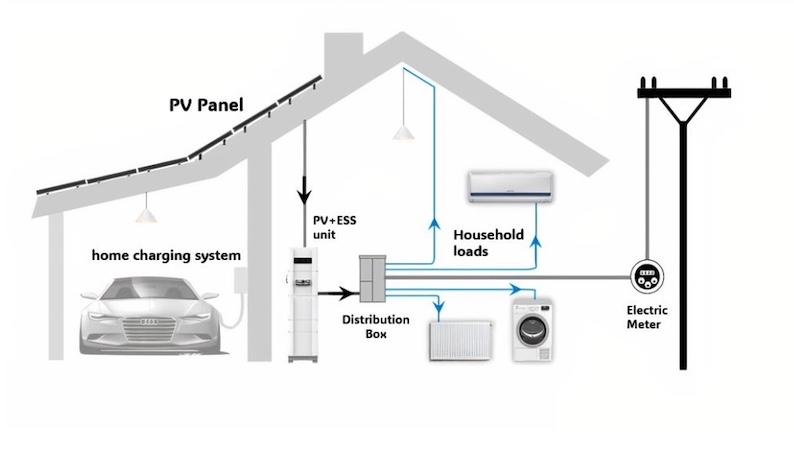
Figure 2. A residential PSC integrated system
Architecture of the PV + Storage + Charging System
The integrated PV + Energy Storage + Charging (PSC) system represents a highly flexible and intelligent energy architecture that combines solar photovoltaic generation, battery-based energy storage, and electric vehicle (EV) charging infrastructure into a unified platform.
As the transition toward decentralized and renewable energy accelerates, this triad-based model enables energy self-sufficiency, peak shaving, and real-time power flow management within microgrid or semi-autonomous energy ecosystems.
1. Photovoltaic Power Generation System (PV)
At the heart of this system lies the photovoltaic (PV) subsystem, responsible for converting solar radiation into direct current (DC) electrical energy. However, the energy output from PV arrays is inherently variable due to its dependence on dynamic environmental factors such as irradiance, temperature, and shading.
This variability requires the implementation of robust Maximum Power Point Tracking (MPPT) algorithms to dynamically optimize energy extraction under rapidly changing conditions. The design and validation of MPPT control strategies, particularly in scenarios involving partial shading or fluctuating weather, pose significant technical challenges.
Ensuring high tracking accuracy and convergence speed under transient irradiance remains a critical performance benchmark. In parallel, large-scale PV deployments often involve multiple strings operating in parallel, introducing mismatch losses caused by inconsistent panel aging or uneven exposure.
Furthermore, startup behavior under low-light or low-temperature conditions is often poorly characterized. This makes it difficult to ensure safe and reliable system initialization. These challenges are compounded when the PV system is interfaced with power hardware simulators or test benches that lack the high dynamic response and model accuracy required to emulate real-world I-V characteristics.
Current Technical Challenges:
- MPPT algorithm validation under dynamic irradiance
- Mismatch losses in parallel PV strings
- Cold start and low-light behavior modeling
2. Energy Storage System (ESS)
Adjacent to the PV subsystem is the energy storage unit, serving as a buffer between energy generation and consumption. The storage system must be capable of bi-directional power flow with precise current, voltage, and power control across diverse operating conditions.
Modern energy storage relies heavily on sophisticated Battery Management Systems (BMS) that monitor State of Charge (SOC), State of Health (SOH), temperature, and internal resistance, and coordinate charging and discharging processes through constant current (CC), constant voltage (CV), or constant power (CP) modes.
High-rate charge/discharge testing is one of the most demanding aspects of storage validation, requiring real-time adjustment of control parameters to maintain thermal stability and protect against overcurrent or short-circuit events.
Another pressing concern is the reliable communication between the BMS and the Energy Management System (EMS), especially when data is transmitted over protocols like CAN or Modbus that may suffer from latency or packet loss.
Current Technical Challenges:
- High-rate charging/discharging validation
- BMS-EMS communication consistency
- Voltage balancing across modules
- Battery emulation and V2X control complexity
3. EV Charging System
The EV charging subsystem forms the final sector in the PSC chain, delivering energy to electric vehicles through either AC or DC interfaces.
A particular challenge here lies in ensuring seamless control during the transition from constant current to constant voltage charging modes, as poorly managed transitions can result in overshoots that may trigger protection mechanisms on the vehicle side.
Furthermore, real-world charging conditions often involve events such as voltage sags or surges caused by unstable connections or cable heating, which must be simulated and tested thoroughly. High-voltage operation also brings challenges in terms of electromagnetic compatibility (EMC) and thermal management, both of which are critical to ensuring safe and stable long-term operation.
Moreover, with growing diversity in EV models and charging protocols, interoperability testing becomes essential, requiring emulators that can accurately simulate a wide range of vehicle-side load profiles and communication behaviors.
Current Technical Challenges:
- Transient behavior at charging mode transitions
- Voltage sag and surge event handling
- Protocol compatibility testing
- EMC and thermal management at high power
Bridging Testing Complexity a Bi-Directional DC Power Supply
As detailed above, the PSC system’s core subsystems—photovoltaic generation, storage, and EV charging system—each bring a set of demanding technical challenges. An example of a solution that meets these challenges is ITECH’s IT6600C bidirectional DC power supply (Figure 3).
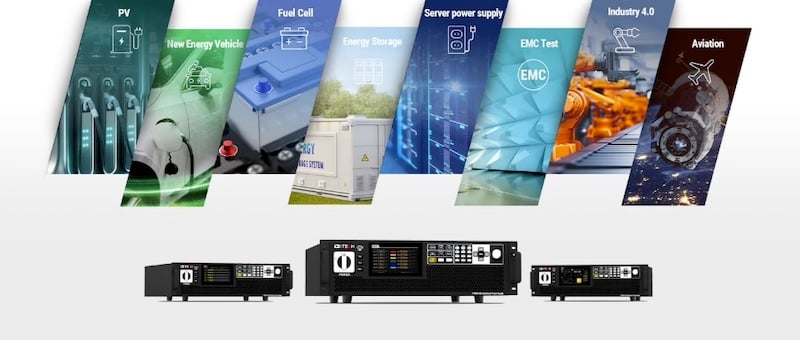
Figure 3. ITECH IT6600C bidirectional DC power supply
In the compact size of 3U, the device achieves a high-power density with dual 21 kW channels. These two independent channels can be connected in series or parallel, enabling output power up to 42 kW. It is well suited for a wide range of high-voltage and high-current test applications.
In traditional testing setups, two separate power supplies are needed to fulfill these functions. However, with the IT6600C, a single unit is sufficient to handle both tasks with the dual channels. Channels are fully isolated and independently controllable, enabling simultaneous testing of both PV and battery energy storage systems (Figure 4).
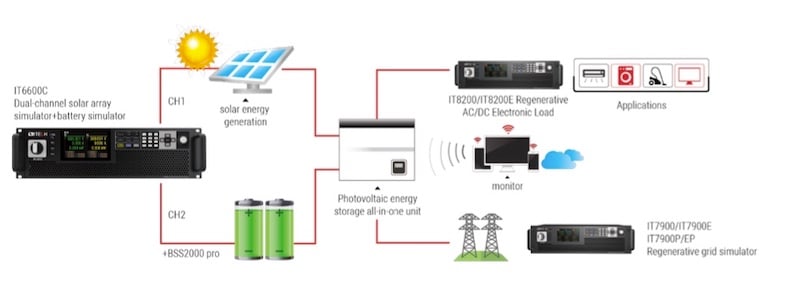
Figure 4. The photovoltaic energy storage all-in-one technology marries solar power generation with battery energy storage technology.
Combined with professional testing software-SAS1000 Solar Array Simulation Software, it can accurately simulate the I-V curves of solar cells. It features high precision, excellent stability, and fast response time.
The IT6600C is also equipped with BSS2000 Battery Simulator Software (Figure 5), which simulates battery types, battery characteristic curves and supports user-defined curve creation.
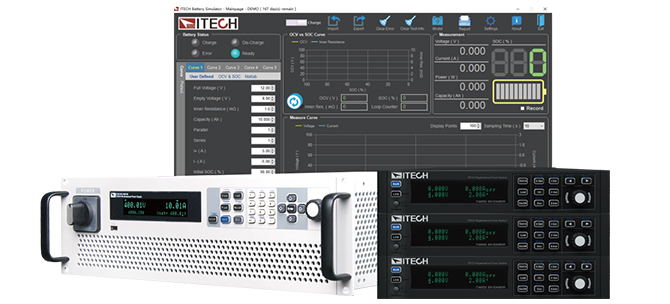
Figure 5. BSS2000 Battery Simulator Software
As a user-friendly and energy-efficient bidirectional DC power supply, IT6600C offers a comprehensive testing solution for high-power and complex applications in automotive, energy storage, and green energy sectors. It provides strong support throughout all stages of product development, validation and production. For more information, check out the IT6600C product page.
All images used courtesy of ITECH.