Facebook
 Google
 GitHub
 Linkedin
Battery Makers Scale Up
Battery manufacturers expand capacity to support electric vehicles, energy storage, and industrial applications.
Batteries are in high demand globally. The market is experiencing unprecedented electric vehicle adoption and energy storage deployments. EV battery demand grew 40% last year to 750 GWh, according to the International Energy Agency.
Utility-scale battery storage installations are also a significant driver, especially in the U.S. Operators added 5 GW to the nation’s power grid in the first seven months of 2024. Two producers recently expanded their production lines in Sweden and Japan, while the U.S. government will invest $3 billion in domestic manufacturing.
Battery manufacturers worldwide are expanding production and improving battery technology and materials. Here’s the latest.
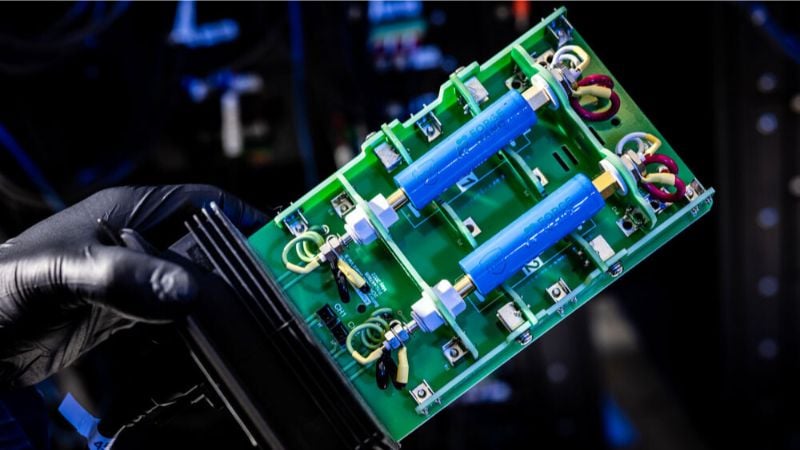
Forge Battery will expand its gigafactory in North Carolina. Image used courtesy of Forge Battery
First Zinc-Ion Battery Megafactory
Swedish startup Enerpoly, a maker of battery modules and packs for stationary energy storage systems, has opened the world’s first-of-its-kind megafactory for zinc-ion battery cells.
Production will begin next year at the 70,000-square-foot plant in Stockholm, allowing Enerpoly to run large-scale pilots with utilities, battery integrators, and other customers. The company targets 100 MWh of annual capacity by 2026.
Enerpoly’s zinc-ion batteries serve large-scale backup power and storage applications. The product provides two- to 10-hour durations for short- to medium-term storage needs, from grid-scale systems to residential behind-the-meter devices to remote microgrids.
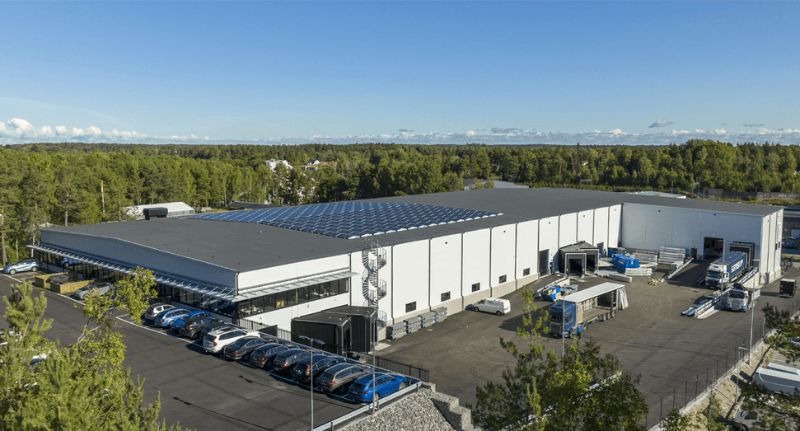
Enerpoly’s new 100 MWh-scale zinc-ion battery factory in Sweden. Image used courtesy of Enerpoly
Enerpoly acquired dry electrode manufacturing equipment from Nilar, a former producer of nickel-metal hydride batteries that went insolvent last year because its battery chemistry relied on raw materials subject to volatile commodity prices. Enerpoly’s alternative solution uses abundant materials like manganese dioxide for the cathode and zinc for the anode, combined with a water-based electrolyte.
With Nilar’s dry electrode manufacturing process, Enerpoly can scale production from individual cells to multi-cell modules. This technique is more efficient than conventional slurry-based processes and eliminates the need for solvents.
Panasonic Expands High-Capacity 4680 Automotive Batteries
Battery giant Panasonic Energy is scaling up production for its 4680 cylindrical lithium-ion EV batteries. The company will add 400 staff to its existing battery manufacturing hub in western Japan by March 2025, supporting next-gen development.
Panasonic has been a longtime battery supplier for Tesla, serving the automaker’s North American production. The company also has supply agreements with Mazda and Lucid Motors, and it’s working with Subaru in a joint partnership to establish a 20 GWh battery plant in Japan.
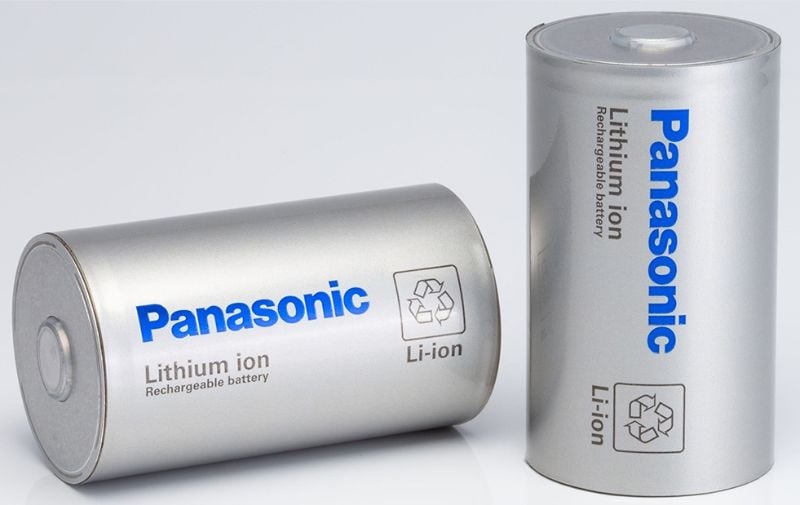
Panasonic’s lithium-ion battery cells. Image used courtesy of Panasonic
Panasonic’s latest-generation 4680 cylindrical cells offer a fivefold increase in capacity compared to its previous 2170 cells. This capability unlocks a longer driving range for EVs, addressing one of the primary barriers to EV adoption.
In addition to its high-capacity 4680 automotive technology, Panasonic is also developing secondary batteries for energy storage systems and power equipment.
DOE Commits $3B for Battery Production
The U.S. Department of Energy is investing $3 billion to retrofit, expand, and construct 25 battery manufacturing projects. The Bipartisan Infrastructure Law-funded program targets battery cathodes, anodes, electrolyte salts and solvents, and small-scale cell manufacturing for specialized markets. The funding also supports facilities to extract lithium, graphite, and manganese for recycling as future cathode and anode materials, electrolytes, and battery precursors.
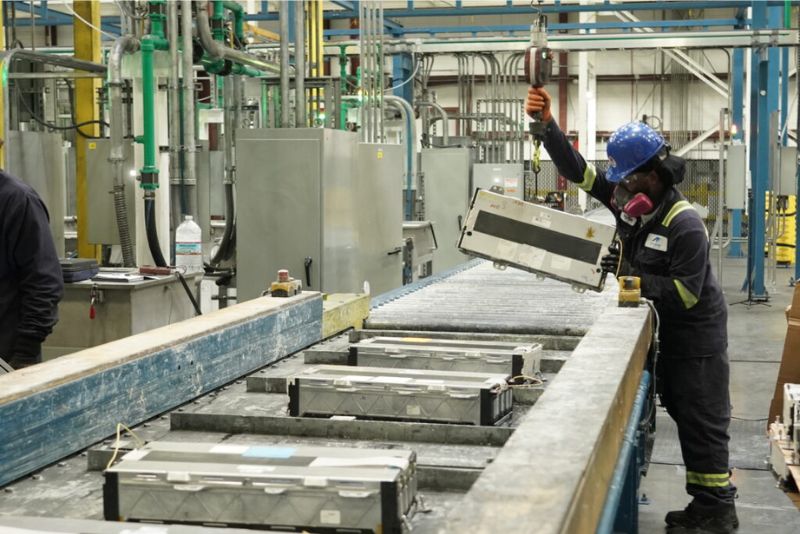
An EV battery shredding line at Ascend Elements’ graphite recycling facility in Georgia. Image used courtesy of Ascend Elements
Selectees include Form Energy, which is scaling up production for its 100-hour iron-air batteries, and Honeywell, which plans to add an electrolyte salt production facility in Louisiana. Other projects will advance raw material processing, like Ascend Elements’ battery precursor recovery plant, currently under construction in Kentucky. SWA Lithium and TerraVolta Resources will also deploy direct extraction technologies to recover lithium from brines in Arkansas and Texarkana.
The federal government is expanding its incentives to shore up a domestic supply chain for battery materials. The U.S. accounts for only a tiny share of critical mineral extraction and processing, while China dominates global processing for graphite, cobalt, nickel, and lithium.