Facebook
 Google
 GitHub
 Linkedin
AI’s Promise for a Smart Grid Future
Smart grids have widely adopted artificial intelligence platforms and equipment. What is AI’s promise for a smart grid future?
While artificial intelligence and machine learning are major energy consumers, these same technologies can solve grid problems when integrated into grid equipment and systems. More and more, manufacturers of grid systems are using AI-enhanced technologies for monitoring, predictive maintenance, and other smart grid operations.
Energy professionals believe that trend will accelerate this year as power engineers seek ways to expand grid capacity and strengthen efficiency in all areas. Reports by Avnet and Deloitte show more power engineers than ever are using or considering AI in grid systems or planning.
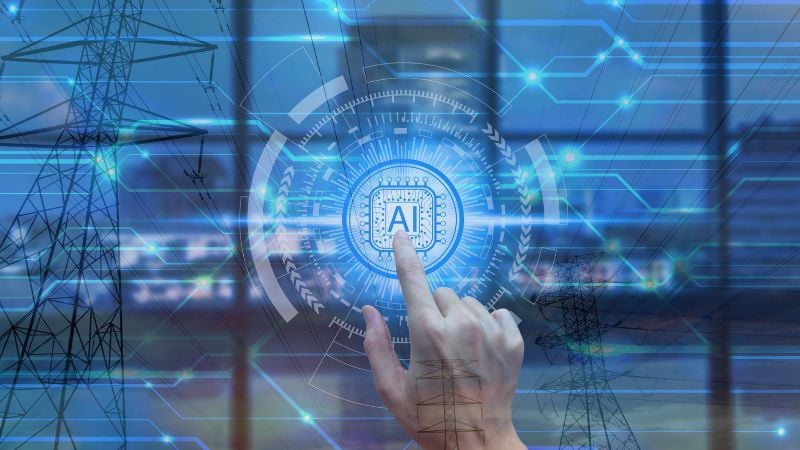
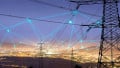
What role will AI play in the power grid? Adapted from images used courtesy of Canva
Avnet: AI Use Is ‘Tip of the Iceberg’
In a white paper, Avnet stated that electrical engineers believe that present-day AI use is only “the tip of the iceberg.” In a survey of more than 1,200 engineers, about 80% said they are either integrating AI into their designs or using AI-enhanced products.
Although not all respondents worked in the energy industry, several grid-related uses were cited, including process automation (42%), predictive maintenance (28%), and fault or anomaly detection (27%).
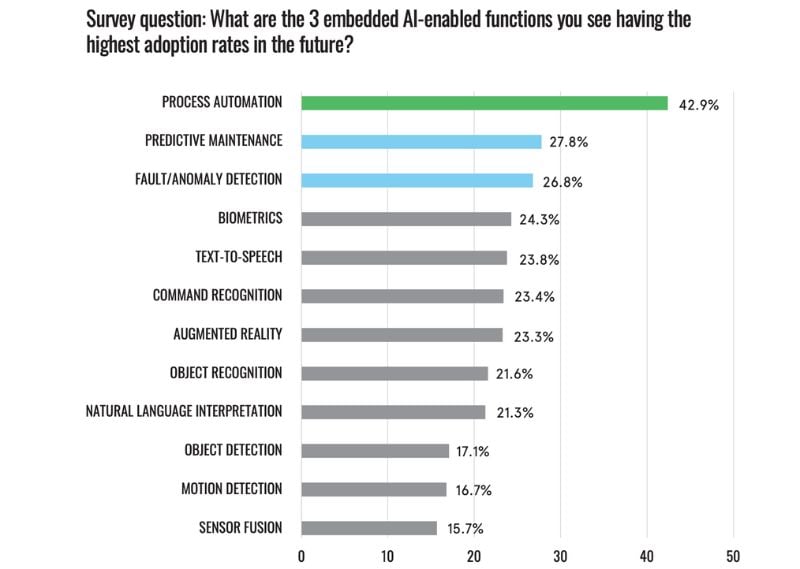
Avent survey responses. Image used courtesy of Avnet
Respondents also indicated they use AI in design and planning, especially in creating and interpreting models and data. Simulations are becoming increasingly important in planning for renewable energy projects and grid integrations. Grid operations platforms are also integrating AI to monitor power transmission and assist with load balancing and maintenance.
The engineers also identified challenges in security and data quality. Cybersecurity is a growing issue as smart grids integrate more decentralized generation and distributed energy resources.
Interestingly, only 12% of engineers surveyed named power requirements as a top concern in AI use.
AI: A Double-Edged Sword?
In contrast, Deloitte’s 2025 Power and Utilities Industry Outlook names AI’s power consumption as a major challenge. It predicts that electricity demand from AI data centers will increase by 15% to 17% annually by 2030, reaching a peak of 515 to 720 TWh.
AI use will lead to record capital spending as utilities scramble to upgrade transmission and distribution systems to handle the demand. Deloitte estimates spending was as high as $174 billion in 2024.
Yet, AI can also boost grid efficiency, especially as they become more complex. The National Renewable Energy Laboratory states that using AI in systems operations can assist with proactive decision-making and improve reliability and resilience. AI can enhance the “operational brain” to balance energy supply and demand. AI can quickly analyze real-time data and suggest actions to increase efficiency.
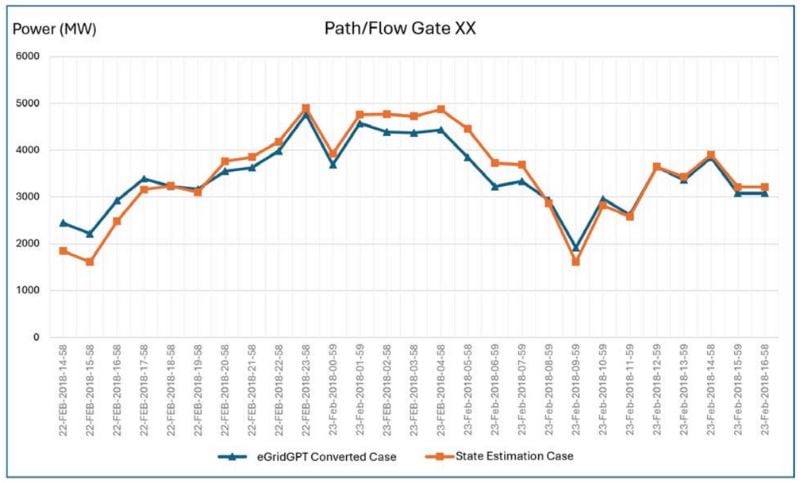
An eGridGPT simulation of power flow. Image used courtesy of NREL
NREL’s eGridGPT, a large language model for assisting systems operators, can also simulate scenarios using digital twins. Operators can model various grid conditions to optimize energy flow. This strategy can reduce outages in extreme weather or natural disasters.
In addition, although AI can pose cybersecurity risks, it can also protect the grid from attack. At Georgia Tech, researchers are working on Phorensics, an AI cybersecurity tool. Phorensics uses data about past cyber attacks to analyze grid systems, identify weaknesses, and suggest fortifications. The research is funded by a $4.6 million Department of Energy grant.
Renewables and AI
In its 2025 Renewable Energy Industry Outlook, Deloitte indicates that AI will become essential in renewable energy use and integration.
Data center owners, led by tech giants like Google, Microsoft, and Amazon, are investing in renewable energy projects to generate power for their AI and cloud services. As renewable projects develop, planners are using AI to select optimal sites and place wind turbines and solar panels for maximum efficiency.
At an AES Corporation solar project in Arizona, Maximo, an AI robot from AES Corporation, lifted heavy solar panels and placed them in precise rows. The placement and angle of solar panels can greatly impact how much solar energy can be harvested.
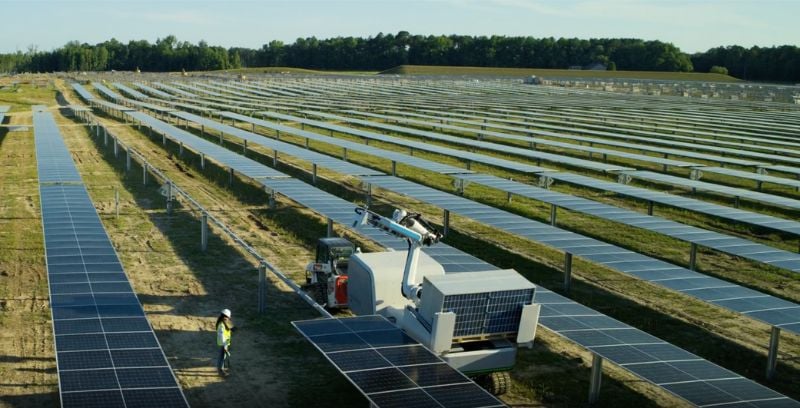
AI robot placing solar panels. Image used courtesy of AES Corporation
Grid operators are also implementing AI planning tools to anticipate the increased power load and ensure grid stability for these fluctuating power sources. AI-enhanced virtual power plants can analyze data and facilitate communication among renewables and other distributed energy sources.
AI’s Grid Future
The power grid must modernize to accommodate renewable energy, electric vehicles, data centers, and other changes in generation and power use. While AI presents some challenges, it also offers strategies for using and maintaining existing grid infrastructure more effectively. In 2025 and beyond, AI will continue to transform power management and operations.