Facebook
 Google
 GitHub
 Linkedin
Deloitte, Utilidata Team Up With AI for Smarter Grids
Deloitte Consulting and Utilidata will jointly develop real-time, data-driven artificial intelligence tools enabled by NVIDIA processors to help modernize the grid.
Deloitte Consulting and Utilidatata will collaborate to develop data-driven, artificial intelligence-based tools to help customers manage an increasingly distributed grid more intelligently.
Energy demand continues to grow, with grid planners recently raising their five-year load forecast from flat to nearly 5% growth. Deloitte research indicates that residential distributed energy resource (DER) capacity could grow to more than 1,500 GW over the next decade, potentially exceeding peak demand requirements.
Managing the distributed grid is far more complex than traditional centralized configurations. To address these challenges, the two companies will combine Deloitte’s data science and energy industry expertise with Utilidata’s Karman platform to deliver actionable insights to grid operators wrestling with the grid’s challenges.
The joint effort will leverage accelerated computing and AI software tools from industry-leading semiconductor manufacturer NVIDIA.
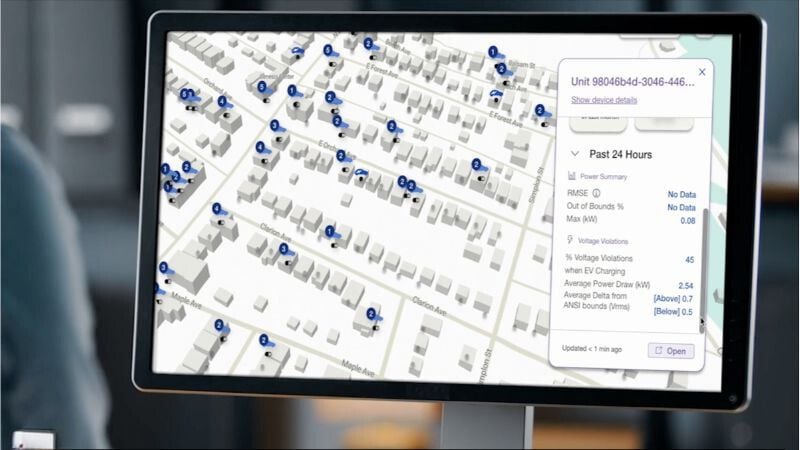
Karman AI platform. Image used courtesy of Utilidata
Decentralized Energy Generation
As distributed energy resources, such as renewable microgrids and vehicle-to-grid chargers, continue to grow, the modern grid is no longer exclusively centralized around a few large power sources. The result is a grid that is far more complex to operate.
According to Khalid Behairy, a managing director at Deloitte Consulting, the balancing act for the modern grid (and the future grid) is meeting the combined goals of reliability, resilience, and sustainability.
By moving toward a distributed grid with larger numbers of smaller power sources, grid operators can more reliably meet energy demands by balancing energy supplies with consumers in the form of virtual batteries.
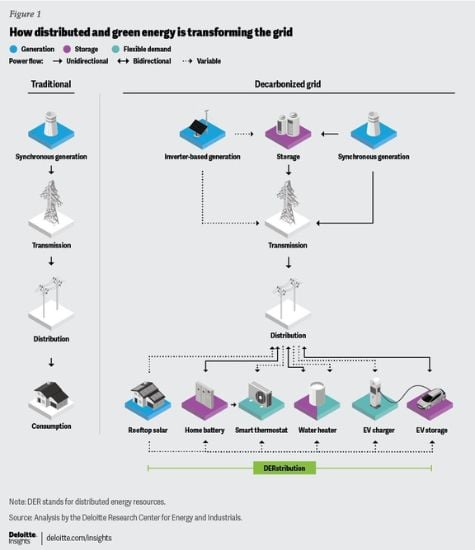
The modern distributed grid. Image used courtesy of Deloitte
Decentralized systems are also inherently more resilient since individual power sources and the associated infrastructure are less important to the system's operations.
Lastly, microgrids using renewable energy generation and storage technologies offer a supply of carbon-free, sustainable energy. Microgrids can operate locally at a much smaller scale, down to individual homes, so the modern grid needs to be able to tap into and effectively manage this distributed source of clean energy.
While the opportunities for a decentralized grid are significant, they are not without challenges. Managing a much larger number of distributed energy sources is far more complex than managing a few centralized ones, and renewable energy production is intermittent by nature. Modern grid management demands thoughtful consideration regarding production, storage, and distribution.
Grid Management at the Edge
Utilidata’s mission is to “redefine the grid from the edge” using the latest IoT and processor technologies to capture accurate, high-quality data directly from end-user utility meters. For the edge processing components in the Karman platform, Utilidata has partnered with NVIDIA to bring the latest AI-enabled data management and communication capabilities to bear.
Karman is an IoT, cloud-based data management platform that receives AI-processed data from a custom NVIDIA module attached to or embedded directly in a customer’s utility meter. NVIDIA’s Jetson Edge AI platform powers the custom module.
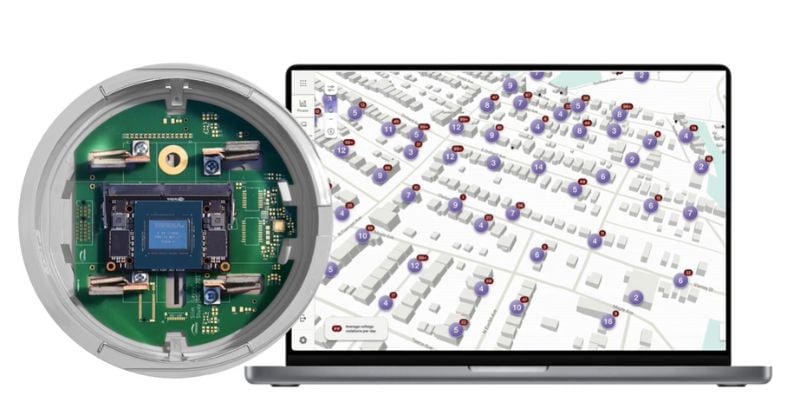
The embedded NVIDIA module sends meter data to the cloud. Image used courtesy of Utilidata
With real-time access to end-user data and powerful predictive analytics, the Karman platform helps utility operations make more informed decisions to improve their grid operations’ resilience. Integrated EV charging features help analyze and improve visibility into distributed charging infrastructure operations, while the platform’s communication gateway facilitates connection and smart DER management.
According to Marc Spieler, Senior Director of Energy at NVIDIA, leveraging Deloitte’s industry expertise will enable the partnership to better engage with utility customers to improve distributed grid operations and achieve their larger decarbonization, reliability, and resilience goals.