Facebook
 Google
 GitHub
 Linkedin
Transforming PCB Design With Artificial Intelligence
AI-assisted PCB design offers a transformative approach that combines the power of automation, optimization, and decision support to streamline the design process, enhance design outcomes, and drive innovation in the field of electronic design.
This article is published by EEPower as part of an exclusive digital content partnership with Bodo’s Power Systems.
Despite artificial intelligence’s undeniable potential in PCB design, engineers naturally have concerns about its implications. Questions about job security and accountability often arise: Will AI take my job away? Will I be blamed if AI makes a mistake?
However, rather than being a threat, an AI assistant can be a dependable partner, explaining its decisions and providing valuable insights. Its ability to justify choices fosters a collaborative environment where less-experienced engineers can learn and grow without feeling intimidated. Moreover, AI’s capacity for continual learning means it evolves alongside its users, constantly improving and adapting to new challenges.

Image used courtesy of Bodo’s Power Systems [PDF]
What Artificial Intelligence Can and Can’t Do
Software platforms such as CELUS take a block diagram and find suitable solutions for circuit designers to evaluate and generate the schematic, BoM (bill of materials), floorplan proposal, and footprints in a choice of different electronic design automation (EDA) formats compatible with popular PCB layout software like Altium Designer, Autodesk Eagle, and KiCad. Once in the chosen native EDA format, the user can further modify the solution to optimize the design, such as changing the component placement, adding polygons or copper pour to fill in the planes, setting component groups, changing the stack up, etc. These are the common design options with which the layout is familiar. They allow the user to take advantage of the head start given by the platform-generated prototype to make a fast time-to-market solution using their own custom design rules and preferences rather than default settings. This handover process also optimizes the abilities of the different software platforms—AI is great for quickly turning an idea into a design, but the many specialized and advanced EDA platforms are ideal for generating the Gerber files containing the required CAM physical data, such as copper layers, solder masks, NC drill data, etc.
The boundary between the AI-assisted design and the layout software is not fixed. As the machine learning algorithm's power increases, more preparatory work can be done before handover. For example, when laying out a power electronics PCB, online calculators often need to be used to check the current capacity limits of tracks and vias. Existing EDA programs often have modules that can generate useful current density maps but can only automatically change the layout if the voltage levels and component power demands are known. Thus, this part of the design process remains manual and relies heavily on the skill and experience of the designer to choose appropriate track widths and aspect ratios. However, if this power consumption information could be made available to the artificial intelligence design assistant, this data could be synchronized with the layout software, so machine-to-machine communication could be used to optimize the layout design automatically. Although such capabilities are not yet realized, ongoing advancements suggest they could soon become standard features.
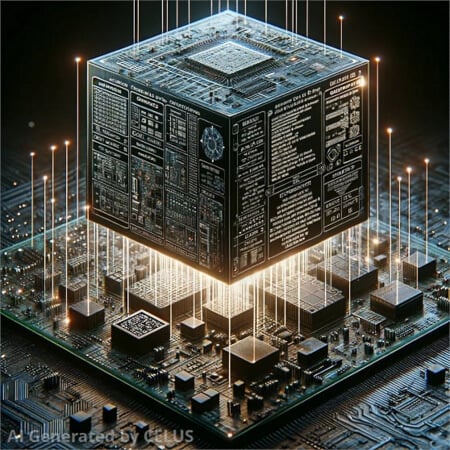
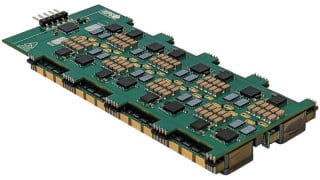
Figure 1. Concept of a CUBO Data module (AI-generated image). Image used courtesy of Bodo’s Power Systems [PDF]
Although a great deal of data can already be included in a cloud-based component database (for example, Celus uses an enriched data block format called CUBO to contain relevant information about a component application, such as signal mapping pin functionality, power supply requirements, etc. as well as any associated required components such as pull-up resistors, decoupling capacitors, crystals, etc., for full functionality), more data is often available in the individual component datasheet. Hence, the current focus is AI-assisted data mining to extract relevant data from text and graphical information in the datasheets. However, this process is not easy. Different manufacturers place equivalent information on other pages of their datasheets, so a data miner would need to work its way through all the text and graphs and recognize that, say, an efficiency figure given on page 1 of Manufacturer A’s datasheet is the same as the one shown on the graph two on page 3 of Manufacturer B’s datasheet. Sometimes, the information is simply missing; often, the information is comparable but not directly equivalent.
For example, Manufacturer A might give an isolation withstand voltage of 3 kVDC for one second, while Manufacturer B might specify 1 kVAC for one minute. Which is better? The answer often depends on the application and project definition. The task is extracting useful and valid data from datasheets, requiring expert knowledge of artificial intelligence algorithms capable of handling inconsistent data. However, as AI algorithms improve, so does the ability to extract and interpret data accurately, paving the way for comprehensive datasheet data mining functionality in the coming years. This evolving landscape underscores the transformative potential of AI in PCB design, promising continued innovation and efficiency gains for the industry as a whole.
AI-Assisted PCB Design Advantages
AI-assisted PCB design offers several significant advantages over traditional methods:
- Speed and Efficiency: AI-powered design platforms streamline the design process by automating schematic generation, layout optimization, and component selection tasks. This automation significantly reduces the time required to bring a product to market, enabling faster turnaround times and greater efficiency in design iterations.
- Optimization and Performance: AI algorithms can analyze vast amounts of data to optimize designs for performance, reliability, and cost-effectiveness. By considering factors such as component specifications, signal integrity, and manufacturing constraints, AI-assisted designs can achieve higher performance and reliability levels than manually crafted designs.
- Enhanced Decision-Making: AI algorithms can assist engineers in making informed design decisions by providing real-time feedback and suggestions. This helps engineers identify potential issues early in the design process and explore alternative options more efficiently, leading to better overall design outcomes.
- Customization and Adaptability: AI-powered design platforms can adapt to the specific requirements of each project and user preferences. They can incorporate custom design rules, constraints, and preferences, allowing engineers to tailor designs to meet specific application needs while maintaining compatibility with industry standards and best practices.
- Knowledge Transfer and Learning: AI-assisted design platforms can serve as valuable educational tools, especially for less-experienced engineers. By explaining design decisions, providing insights, and offering recommendations, AI systems can help engineers learn and improve their skills, contributing to professional development and knowledge transfer within organizations.
- Risk Reduction: AI algorithms can help mitigate design risks by identifying potential issues, such as open or shorted connections and signal integrity problems before they become critical. This proactive approach to risk management can reduce costly design errors and rework, ultimately leading to more reliable and robust designs.
Starting With AI-Assisted PCB Design
One of the simplest ways to start AI-assisted PCB design is to register on the Celus Design Platform, where you will complete a project summary that includes a description of your project, the functionalities it should contain, the intended application, which CAD tool the project should be handed over to, and the possibility to determine preferred and excluded parts and manufacturers. This stage has two particularly important functions. First, it causes the user to pause to think about what they want to do before launching blindly into the software. Second, it informs the platform about the essential parameters of the project so it can tailor advice and replies to better suit the project goals. The Celus Design Platform was developed with artificial intelligence in mind from the very beginning, acting in many ways like a senior design engineer offering advice and knowledge to the next generation of design engineers, who may be bursting with ideas but lack the experience of many decades in the business.
Once past this stage, the software uses a familiar drag-and-drop style to create the system architecture block diagram. The lines linking the functional blocks could be power, data, or both. Specifying the connection type is unnecessary because the system understands how the functional blocks need to be interconnected. However, suppose the circuit designer prefers an I2C data connection because they already have an existing interface firmware solution for that data type. In that case, they can tell the system what they want. The system chooses the requisite interface when the schematic is generated. This integration of artificial intelligence in design platforms heralds a paradigm shift in PCB design because, unlike conventional PCB software, which merely flags design rule violations, AI-powered platforms offer a transformative approach. AI enables the system to easily leverage vast databases of information, coupled with the intelligence to suggest informed solutions, effectively translating project goals into functional electronic designs.
Recom is integrating its product portfolio, which includes 30,000 parts, into the Celus knowledge database. By tapping into this wealth of data, AI can make nuanced component selections tailored to each project’s specific requirements, enhancing efficiency and optimizing performance.
This article originally appeared in Bodo’s Power Systems [PDF] magazine and is co-authored by Steve Roberts, Innovation Manager at Recom Power, and Tobias Pohl, co-founder and CEO of Celus.