Facebook
 Google
 GitHub
 Linkedin
Why Are Microsoft, Google and Meta Investing in Nuclear Energy?
Giant tech leaders are developing nuclear reactors and firing up long-dormant nuclear plants.
AI data centers’ immense power demand has prompted big technology companies to enter the energy sector. Microsoft, Google, Meta, and Amazon will use nuclear reactors and partner with local energy companies to ease grid stress. Bill Gates and OpenAI’s founder Sam Altman are also investing in nuclear energy.
Amazon will use X-energy’s pebble-bed reactor. Watch how it works. Video used courtesy of X-energy
Big tech has transitioned significantly into renewable energy to reach their net-zero goals, but energy-hungry AI data centers cloud services have put an enormous strain on local grids. While tech companies still pursue wind and solar, they’re turning to nuclear power to meet their short-term energy needs and net-zero goals.
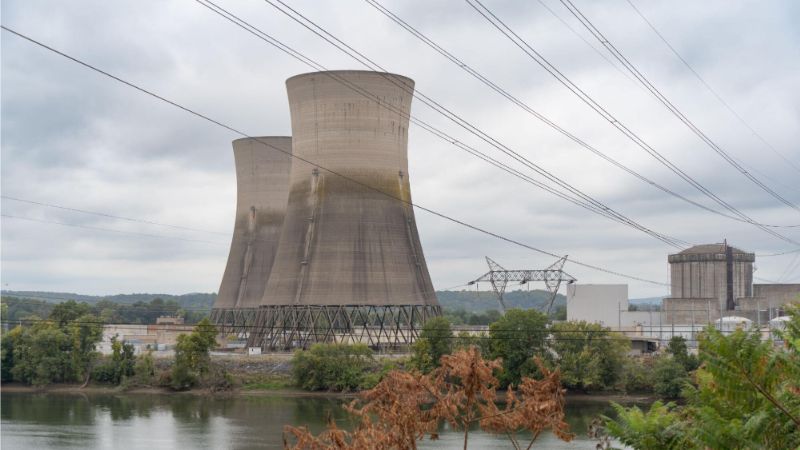
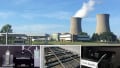
Three Mile Island will reopen to supply energy exclusively to Microsoft. Image used courtesy of Adobe Stock
Microsoft Resurrects Three Mile Island
Microsoft’s energy consumption doubled from 2020 to 2023, according to its sustainability report. In 2023, it devoured 24 TWh of electricity, mostly to power data centers hosting its cloud services. As it continues to develop its Azure AI, its energy needs are expected to jump.
To counter the strain, Microsoft is recommissioning Three Mile Island, the site of a near-disastrous partial meltdown in 1979. After the event, the faulty reactor was permanently decommissioned, but the other reactor continued to operate safely until 2019 when owner Constellation Energy closed the plant for financial reasons.
Microsoft has made a deal with Constellation to reactivate Three Mile Island exclusively for the tech giant’s power needs. The Pennsylvania facility will begin generating electricity by 2028.
In the 20-year agreement, Microsoft will pay Constellation $100-$115 per MWh. Since nuclear generation is carbon emissions-free, Microsoft says the plan contributes to its goal to be carbon-negative by 2030.
Three Mile Island will be renamed the Crane Clean Energy Center. The deal will add $16 billion to Pennsylvania’s GDP and create about 3,400 jobs.
Google Buys a Fleet of Nuclear Power
Google is partnering with Kairos Power to develop a fleet of nuclear power generators in California. The six or seven small reactors will help power the company’s data centers as its generative AI services continue to grow. In November, the company expanded its generative AI tool, Gemini, to mobile phones.
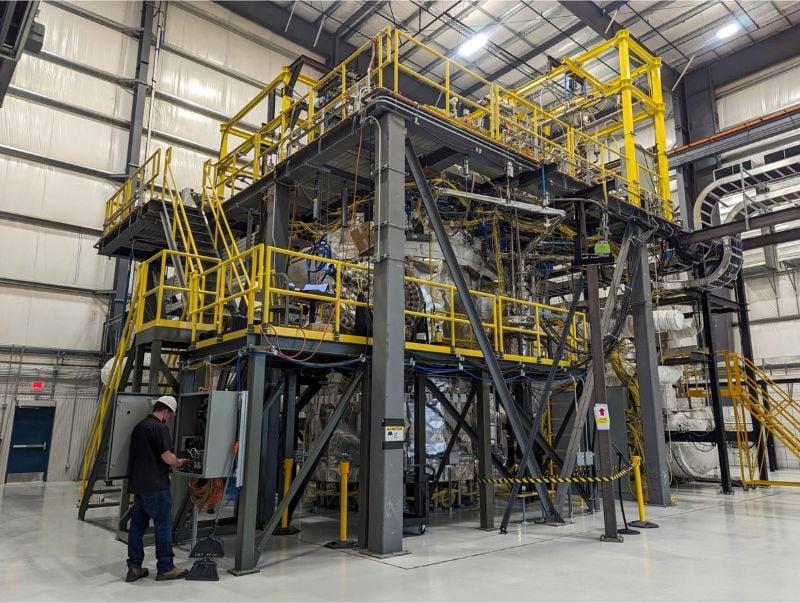
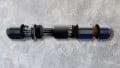
Kairos Power testing facility. Image used courtesy of Kairos Power
The small nuclear reactors (SMR) will produce about 500 MW of power. The first reactor is projected to come online in 2030, with project completion scheduled for 2035.
Meanwhile, Google will purchase power from energyRe, a renewable energy developer. The 12-year agreement will help EnergyRe build a solar farm near Houston. The 435-MW project will generate enough electricity to power 56,000 homes.
The project is part of Google’s goal to use 100% carbon-free energy in every grid where it operates. Google owns two large data centers in Ellis County, Texas, about 200 miles northwest of Houston. The company’s greenhouse gas emissions have risen by 48% since 2019.
In another move, Google will use its cloud technology to lower costs for the Texas grid and bolster its resilience by partnering with a 1 GW AI-enhanced virtual power plant (VPP) in Texas. The tech giant will join NRG Energy and Renew Home to provide thousands of smart meter thermostats. The VPP can supply power during peak demand to about 200,000 homes.
The VPP will use Google Cloud for data analytics, weather forecasting, and predictive pricing. The AI system can also optimize wind and solar generation.
Amazon Makes Nuclear Deals
Amazon Web Services uses more than 100 data centers worldwide to handle cloud storage, hosting, AI, and other needs. Earlier this year, the company committed $108 billion over the next decade to build 216 more.
Like Google, Amazon is investing in small nuclear reactors to offset the increased carbon emissions the data centers cause. The company will invest $500 million with three companies to develop SMRs to generate emissions-free electricity for community needs.
In Washington, the company partnered with Energy Northwest, a public utilities consortium, to develop four SMRs to produce enough electricity to power over 770,000 homes. The project will initially generate 320 MW of capacity, with options to ramp up to 960 MW.
Energy Northwest will use X-energy’s gas-cooled, pebble-bed nuclear reactors. These SMRs are considered safer and more efficient than conventional reactors. Amazon invested $500 million in X-energy.
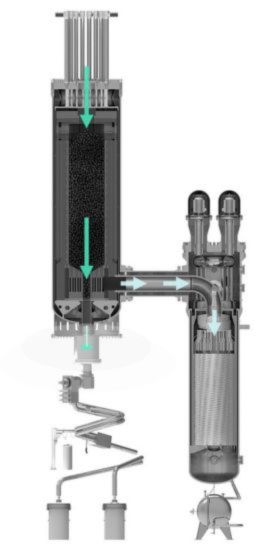
X-energy’s pebble-bed reactor. Image used courtesy of X-energy
Finally, Amazon and Dominion Energy will work together to develop SMRs near the utility’s North Anna nuclear power station in Virginia. The deal aims to produce 300 MW. Dominion expects energy demands over the next 15 years to increase by 85%. Amazon operates over 50 data centers in Virginia with plans to build more.
Bill Gates and Sam Altman Join the Nuclear Crowd
Bill Gates’ nuclear venture is TerraPower, which is building a nuclear power plant at an abandoned coal plant in Wyoming. The plant will use an advanced reactor that uses sodium cooling and molten salt energy storage. When finished in 2030, the facility will produce enough electricity for 400,000 homes.
The Department of Energy partly funded the project. Gates co-founded the company in 2008 and serves as board chairman.
Sam Altman, founder of OpenAI, is another tech innovator involved in SMR development. Altman is the board chairman of Oklo, a nuclear startup planning microreactors at the Idaho National Laboratory in southeastern Idaho that uses liquid metal-cooled, metal-fuel fast reactors. The project is awaiting approval from the Nuclear Regulatory Commission.