Facebook
 Google
 GitHub
 Linkedin
Wind, Water, and Megawatts: Powering Turbine Transport
Transporting giant wind turbines across choppy waters takes power and finesse.
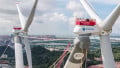
The GE Haliade-X offshore wind turbine stands 260 meters tall, with a 220-meter rotor and 107-meter blades. It weighs 600 tonnes. The Vineyard Wind development off the Massachusetts coast will use 62 turbines, and each heavy piece must be transported across the water for installation.
Learn about the vessel that takes wind turbine parts offshore. Video used courtesy of Barge Master
That’s where Aggreko, a modular power supplier, and Netherlands-based Barge Master combine their skills. The barges carry the turbine components to the Vineyard offshore location, while Aggreko’s generators supply power to the hydraulic stabilizers.
It’s not an easy feat, given the ocean conditions. Brent Robinson, Aggreko's business development manager, spoke with EEPower about the process and the project.
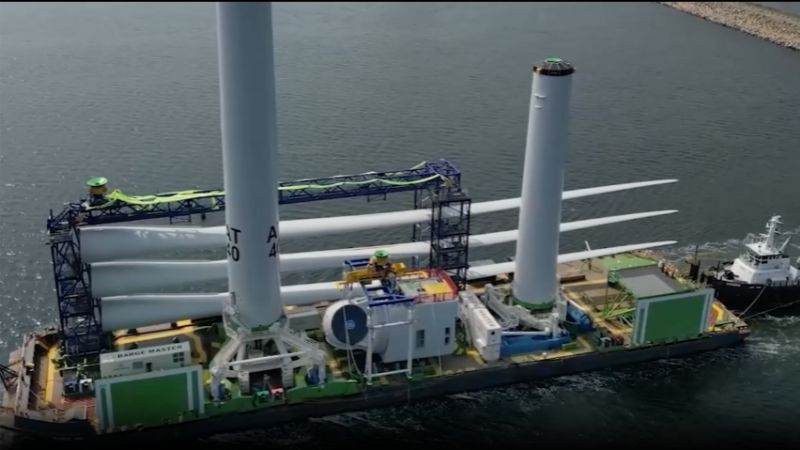
Barge carrying wind turbine parts. Image used courtesy of Barge Master
Vineyard Wind
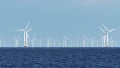
Vineyard Wind, 15 miles south of Martha’s Vineyard, will be the first utility-scale offshore wind farm in the U.S. Once completed, it will generate 800 MW of power, enough for 400,000 homes. Developed by Avangrid, Inc. and Copenhagen Infrastructure Partners, Vineyard’s first turbine came online on January 2, 2024, delivering 5 MW of power to the grid. By mid-February, five turbines were producing. The remaining turbines are expected to be operational by the year’s end.
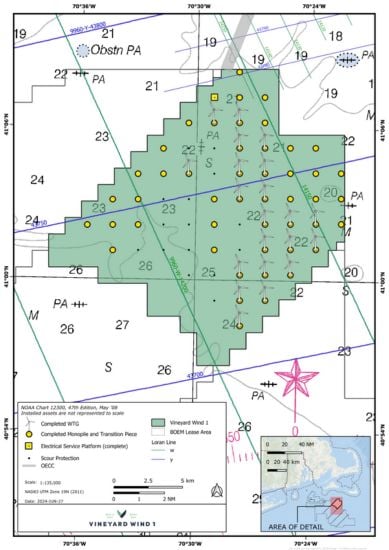
Vineyard project completion as of June 2024. Image used courtesy of Vineyard Wind
For grid connection, two undersea cables, buried six feet below the ocean floor, will be installed from the facility to Barnstable, Massachusetts. The cables will then run below Barnstable roads to an onshore substation.
The wind farm is expected to eliminate about 1.68 million metric tons of carbon dioxide emissions yearly. That’s equivalent to removing 325,000 vehicles from the road.
Vineyard’s emphasis on decarbonization is one reason why Aggreko was selected, Robinson said. The company’s low-emission generators could power the barges without significantly raising the project’s carbon footprint.
Feeder Barges
Installing wind turbines is complex and requires using contractors with specialized equipment who can also meet regulations. The turbine components are manufactured on land but must be taken to offshore platforms for assembly. Vessels called feeder barges typically transport the turbine pieces.
However, Vineyard developers needed to comply with the Jones Act, a federal shipping law stating that only U.S.-owned and registered vessels can transport cargo in U.S. ports and coastal waters. They hired Barge Master, which is Jones Act-compliant, and its barges were retrofitted with the equipment needed to carry the gigantic monopiles, blades, nacelles, and other turbine parts.
However, the task is complicated by weather and sea conditions. Wind and rough seas can rock the barge, risking damage to turbine parts.
“When the turbine is on the barge, and it’s on the ocean, it’s difficult to keep everything steady,” Robinson explained. “Hydraulics are needed to keep it stable.”
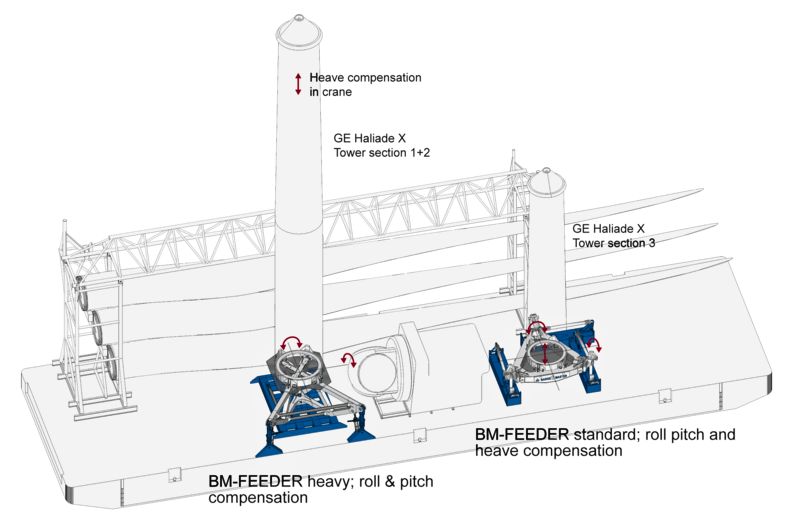
Barge Master’s motion compensation system. Image used courtesy of Barge Master
Aggreko’s Tier 4F generators provide power to the hydraulic system and auxiliary needs on the barges.
Low-Emission Generators
Aggreko equipped the two feeder barges with two twin-packs of its 1.2 MW Tier 4F generators for the hydraulics. The twin-pack design, combining two generators, saves space on the barge. The two units (four generators) deliver 4.8 MW of power. Two smaller generators were added to each barge for redundancy and to power auxiliary electronics like lights.
.jpg)
Aggreko’s 1.2 MW generators. Image used courtesy of Aggreko
The low-emissions generator also contributed to the Vineyard project’s decarbonization goals, which Aggreko also shares, Robinson said. “For most companies today, they’re looking to reduce emissions,” he said. “For offshore wind, a renewable energy project, they want to keep their emissions as low as possible.”
Aggreko claims its Tier 4F generators emit carbon monoxide, nitrogen oxides, and particulate matter at near-zero levels. The generators use a diesel particulate filter, a selective catalytic reduction system, and diesel oxidation catalysts to treat the fuel.
The generators use variable-speed fans to reduce noise.
Vineyard Wind’s Future
Vineyard Wind’s progress was temporarily halted last summer when a turbine blade broke away and pieces washed up on beaches in Nantucket, Massachusetts, angering residents, who questioned the project’s safety and environmental impact.
The blade was undergoing testing when it failed. Onsite vessels recovered most of the fiberglass scraps, but a few remaining parts reached shore. An investigation pointed the blame at the manufacturing process in Gaspe, Quebec. GE Vernova stated that the bonding applied to the blade was insufficient.
After following safety protocols, Vineyard Wind resumed the project in August.
Ørsted is planning a slightly smaller wind farm off the Rhode Island coast. Revolution Wind, now under construction, will provide 704 MW, enough to power 350,000 homes in Rhode Island and Connecticut. Completion is expected by 2026.