Facebook
 Google
 GitHub
 Linkedin
The X Factor: Twin Turbines Power Offshore Wind
China’s OceanX double-rotor offshore wind turbine generates 16.6 MW of power in deep waters.
OceanX, the world’s largest single-capacity floating offshore turbine, has completed its three-day journey to a wind farm in the South China Sea. The 15,000-tonne platform bears two 8.3 MW turbines and is suited for zones as deep as 114 feet. The 16.6 MW system will produce 54 million kWh annually, powering 30,000 households.
How does the OceanX floating wind turbine work? Video used courtesy of Mingyang Smart Energy
Although each blade has a 597-foot diameter, the parallel impellers reach a maximum height of 718 feet and a width of 1,210 feet. In August, the unit was towed for three days over 191 nautical miles to reach its destination at the 505 MW Qingzhou IV Offshore Wind Farm in Guangdong. With a 22-mph rated speed, the turbines can tap strong winds in the northern South China Sea. Researchers estimate the region’s annual mean wind speed is 9-18 mph at 32 feet above the sea’s surface and up to 22 mph at a 328-foot elevation.
The dual-turbine system, developed by China-based Mingyang Smart Energy, employs cable-stayed structures for enhanced structural adaptability. The maximum preload of the main cable is 350 tonnes, reducing the tower’s structural load by more than 50%. The system’s 13 main and six auxiliary cables provide tension for the mainframe, tower, and foundation, while the single-point mooring system adapts to extreme conditions. The compound anchoring mechanisms also reduce system load and sea impact.
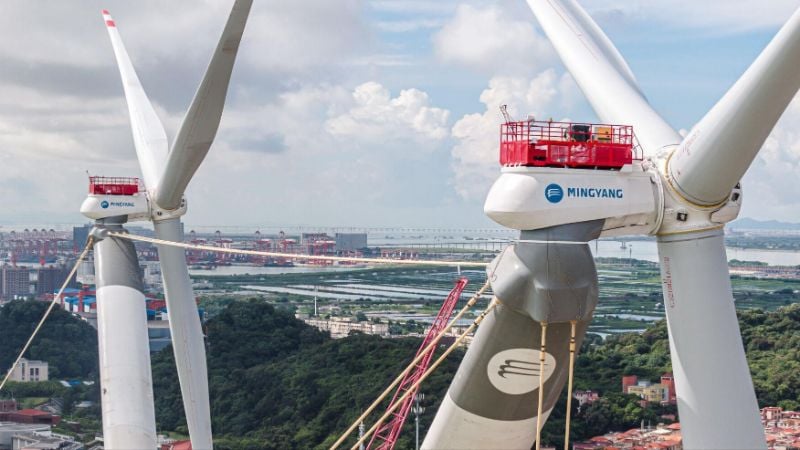
OceanX’s dual-turbine cable system.
OceanX Floating Wind Platform: How It Works
OceanX leverages the coupled vortex effect, in which the twin turbines counter-rotate to minimize efficiency losses. The parallel impellers cover a 52,000-square-meter area, with the blade tips positioned 16 feet apart to optimize pitch and efficiency. After startup, the impellers spin in opposite directions to increase the central area’s speed and boost electricity generation from kinetic energy by 4.29% compared to other turbines with an equivalent swept area.
With typhoon-resistant features, the system can withstand winds up to 178 mph. The tower’s lightweight pontoons enhance power generation and reliability in strong waves. The salt- and alkali-resistant foundation comprises high-performance concrete, steel, fiber-reinforced plastic, PVC foam, and protective coating. The concrete’s compressive strength exceeds 115 megapascals, four times stronger than standard concrete. The blades are made of glass and carbon fiber, which aren’t as heavy as pure carbon fiber materials.

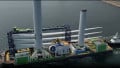
The OceanX platform in August 2024.
The OceanX double-rotor design also incorporates an auto-yawing system that always orients downwind to maintain stability in all weather conditions. An anti-typhoon backup system automatically stops the turbines when winds exceed 55 mph for 10 minutes. The angle between the blades and impellers increases to 90 degrees for stability. The blade angle then reverts to the standard 0 degrees once winds return to normal levels.
Next-Gen Upgrade
Mingyang Smart Energy’s MySE 16.X-260 turbine was launched in 2023 as the world’s largest floating offshore wind turbine, featuring the longest anti-typhoon offshore wind blade. The product’s floating motion control strategy ensures constant adaptation to dynamic winds, waves, and currents.
The next-gen system represented a significant upgrade from the previous floating offshore wind design, MySE 7.25-158, a hybrid-drive system that marked the first semi-submersible “double 100” turbine after its release. This means it could accommodate waters deeper than 100 meters (328 feet) and a shore distance exceeding 100 kilometers (62 miles).
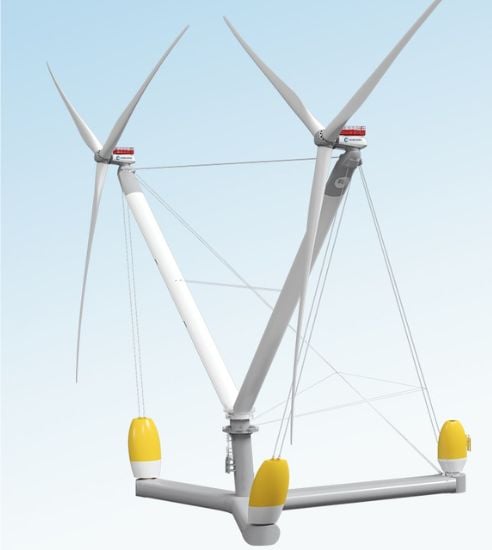
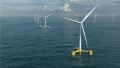
OceanX design rendering.
The 7.25 MW system was demonstrated last year in the CNOOC Tide project in 393-foot-deep waters near the Wenchang oil fields, about 84 miles from shore in the South China Sea. According to Mingyang, the platform could withstand a level 17 typhoon with maximum speeds surpassing 134 mph for 10 minutes. The product supplies 22 million kWh annually to the oilfield’s offshore power grid.