Facebook
 Google
 GitHub
 Linkedin
Testing Turbines: Mobile Emulator Speeds Offshore Wind Connection
German researchers developed a mobile platform to emulate realistic grid conditions for offshore wind turbine compliance tests.
Before offshore wind turbines are connected to a power grid, they must undergo rigorous validation and certification procedures to prove their stability in changing conditions. Germany’s Fraunhofer Institute for Wind Energy Systems has developed a mobile test bench to streamline this process.
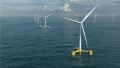
Watch the mobile grid emulator at work. Video used courtesy of Fraunhofer Institute for Wind Energy Systems
Mobil-Grid-CoP connects on-site prototypes to a grid emulator that produces conditions at full loads, allowing engineers to test the turbine’s reaction to frequency fluctuations and provide support during fault events. The system accommodates testing up to 28 MVA and a voltage level of 66 kV.
The mobile test bench is part of a publicly funded project to improve the procedures used to verify whether offshore wind turbines are compliant with local codes before joining public power networks. The test connection has a minimal effect on the grid’s downstream power supply.
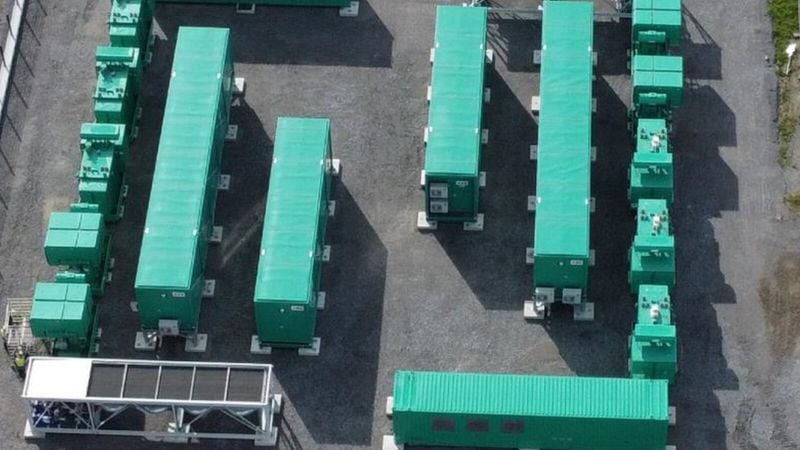
The Mobil-Grid-CoP setup. Image used courtesy of Fraunhofer IWES
Industry Context: Larger and Higher Capacity Turbines
Fraunhofer IWES’s dynamic testing platform comes as offshore wind innovations are outpacing Germany’s grid codes. Next-generation turbines are growing in size and output, leaving today’s testing frameworks somewhat outdated.
For example, China-based Goldwind installed the world’s largest turbine last year, a 16 MW unit with an 826-foot-diameter impeller and 410-foot-long blade. Vestas’s 15 MW, 774-foot-diameter model recently came online in Denmark, while Siemens Gamesa’s equally sized 14 MW product will soon be installed in Germany, Denmark, and the Baltic Sea. GE Vernova’s 13 MW Haliade-X is featured in England’s Dogger Bank and the U.S.’s Vineyard Wind projects.
Some of the latest prototypes push these benchmarks even higher. China-based Mingyang Smart Energy recently unveiled the largest single-capacity unit, operating at 18 to 20 MW with an 853- to 958-foot rotor diameter. Assuming an average wind speed of 19 miles per hour, the model can produce 80 GWh annually for 96,000 residents. Dongfang Electric also installed an 18 MW, 853-foot-diameter turbine at a test facility in South China, potentially serving enough power for 36,000 households.
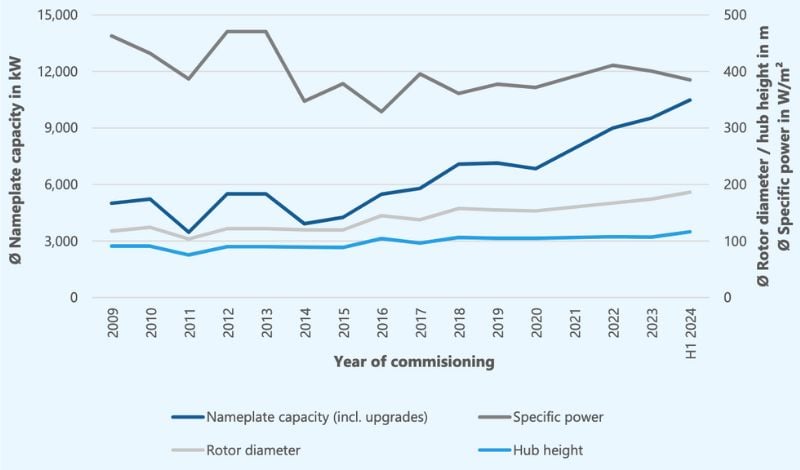
Offshore wind turbine configurations in Germany from 2009 to mid-2024. Deutsche WindGuard (Page 7)
As turbines get larger and larger, Fraunhofer IWES has said its Mobil-Grid-CoP platform can be configured to test up to 20 MW, reflecting most projects currently underway in Germany. Deutsche WindGuard data shows that in the first half of this year, the country’s newly commissioned turbines had an average nameplate capacity of 10.5 MW, a 610-foot rotor diameter, and a 380-foot hub height.
Although Germany installed its first 11 MW turbine in early 2024, Deutsche WindGuard estimates the 15 MW mark will likely occur next year.
Simulating Turbine-Grid Connection Conditions
Before connecting to the grid, offshore wind turbines must demonstrate compliance with electrical limit values and account for frequency fluctuations, voltage drops, short circuits, and other dynamic events.
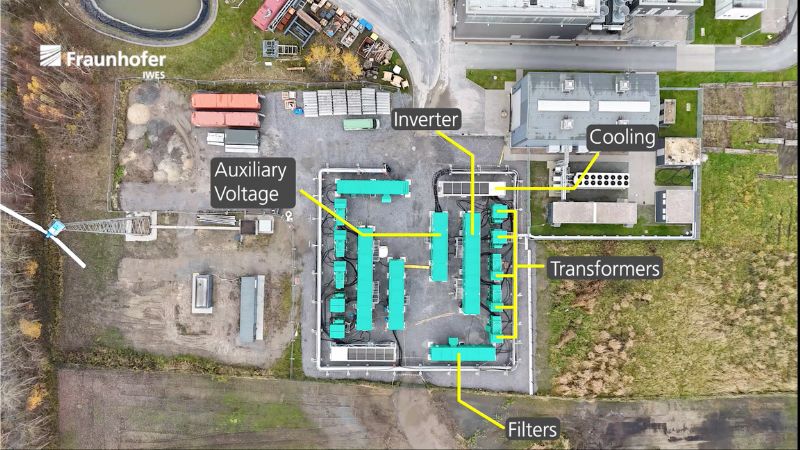
Components of the Mobil-Grid-CoP system. Image used courtesy of the Fraunhofer IWES
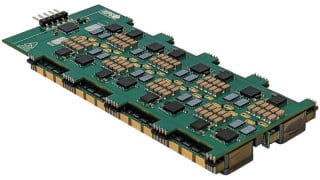
Fraunhofer IWES used commercially available modules for the components, such as ABB’s ACS6080 Power Electronics Grid Simulator, which replicates steady-state and dynamic grid conditions. A power supply connects to the modular containerized system, which combines transformers, an inverter, auxiliary voltage, filters, and cooling equipment. Two independent converter strings can be coupled to test 20 MW wind turbines.
Fraunhofer IWES mentioned that since certification tests can impact downstream power supply, ever-increasing turbine sizes add new demands on the connection linking the fault ride-through container to the grid point. Mobil-Grid-CoP has a minimal impact on the downstream power supply and no grid interference due to the inverter technology. The emulator switches between the test unit and the public grid, simulating the grid’s behavior in response to the turbine’s operation—and vice versa.
Testing covers common issues demanding a milliseconds-long response time. For instance, if a short circuit leads to a 66 kV to 0 kV voltage drop, the turbine must employ reactive current to support the grid’s voltage.
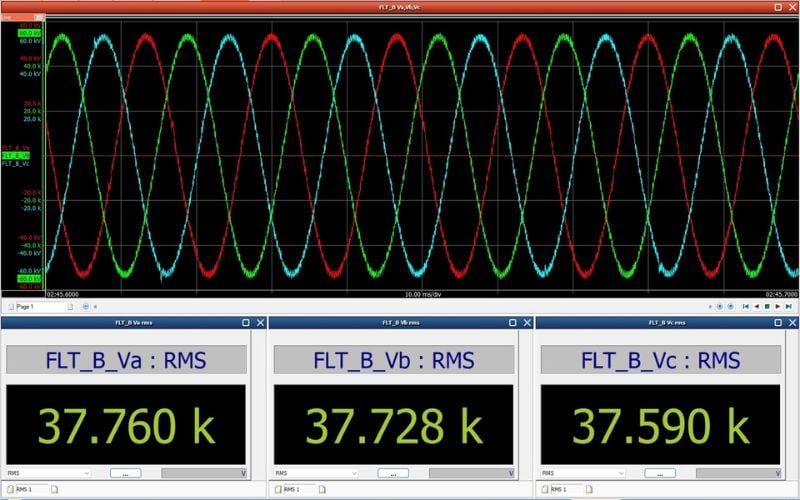
Mobil-Grid-CoP analysis software shows voltage measurements during 66 kV operation. Image used courtesy of Fraunhofer IWES
Mobil-Grid-CoP’s containers can be transported to manufacturers’ prototype testing sites, typically along coastlines. This mobile resource will help manufacturers complete certification and commissioning faster.