Facebook
 Google
 GitHub
 Linkedin
UC San Diego Launches Testing Lab for DER Management
The DERConnect lab can replicate the entire California grid to study distributed energy management scenarios and renewable energy integration.
As more renewables enter the power grid, it’s imperative to consider how they impact local, regional, and national grid systems. Finding a balance between energy generation and usage is critical and requires advanced control and management systems to manage all the data generated within smart grids.
Learn how UC San Diego plans to address distributed energy resources integration. Video used courtesy of Jacobs School of Engineering
California aims to have a 100% renewable grid by 2045, which, while possible, will require careful management to prevent transmission bottlenecks and ensure a continuous supply of energy at all times. Researchers at UC San Diego have developed an advanced testing facility known as DERConnect―a hybrid facility of physical infrastructure and simulated data―that will provide multiple research, control, and management capabilities to simulate full grid environments.
DERConnect contains multiple controllable resources found in modern-day smart grids―including energy storage systems, electric vehicles, and solar cells―and aims to help more resilient, decarbonized, and decentralized grids for the state of California and worldwide.
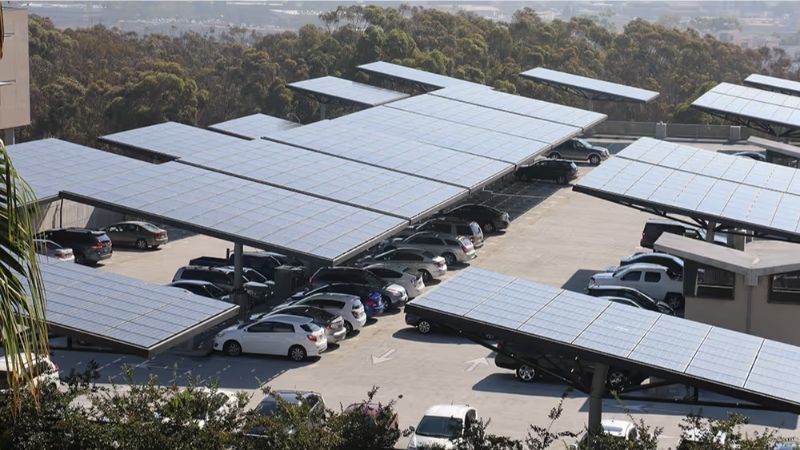
Solar canopies on a parking lot at UC San Diego. Image used courtesy of UC San Diego
Efficiently Managing Intermittent DERs
Distributed energy resources (DERs), such as solar cells and wind turbines, are intermittent energy generators. When numerous DERs are added to the grid, they can provide high amounts of energy at certain times and none at others.
When the harvesting potential is high, any excess energy must be stored to prevent bottlenecking in the transmission line and to save the energy for times when the harvesting capabilities are low, in order to ensure that energy always flows.
Energy must be stored to provide higher reliability and resilience due to unexpected downtime in the grid (due to heatwaves or other environmental factors) and for when unexpected, localized energy spikes occur, such as when multiple EVs are connected to a local grid. All these aspects need to be managed in all grids, but the more DERs in the grid, the more robust and accurate these control and management systems need to be.
How DERConnect Helps Simulate the California Power Grid
UC San Diego’s DERConnect facility plans to provide an environment to simulate and test all potential energy management scenarios. The researchers are replicating the entire Californian power grid using the UC San Diego university campus, and any assets that are not available across the campus are simulated.
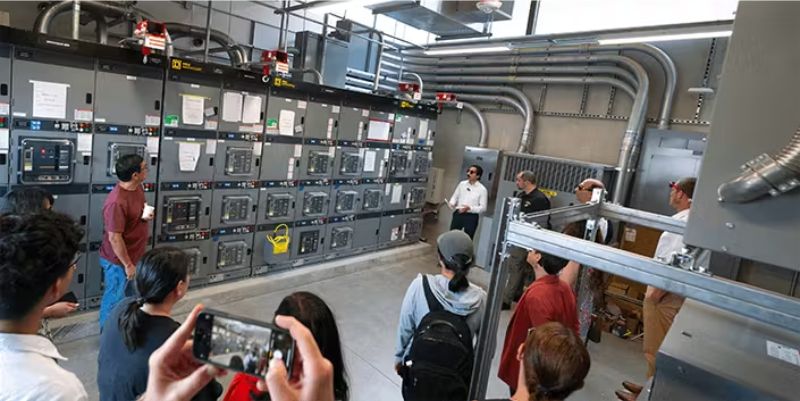
DERConnect facility. Image used courtesy of UC San Diego/Erik Jepsen
One of the current obstacles in testing and integrating renewables into existing grid systems is a lack of realistic testing capabilities at appropriate scales. DERConnect aims to change this landscape by helping to provide a wide range of test case capabilities and enabling utility companies to better balance the power generation and demands in grids with more integrated DERs.
The DERConnect test facility helps researchers and companies to better understand the energy demands at different points of the day to balance supply and demand. For the on-campus testing, the system can tell when no one is present in a building to turn off systems to save energy and redirect any surplus energy from the renewables to battery storage if not needed, and distribute it when the systems show a demand.
DERConnect’s Testing Capabilities
The DERConnect testing facility will encompass over 2,500 DERs on the campus microgrid, including solar panels, fuel cells, and various buildings. It will manage the energy supply and demand in everyday consumption scenarios, EV charging stations, and an energy storage integration lab. DERConnect can use these on-campus assets and physical and software testing systems to provide researchers with testing and simulation of renewable-heavy grid systems.
DER Management System Virtual Power Plant
DERConnect has a Distributed Energy Resource Management System platform containing multiple built-in tools, load flexibility calculators, and the ability to develop and run custom tools in a virtual power plant (VPP) environment.
VPPs are a network of decentralized DERs―including energy storage devices, solar cells―that are managed as a single entity. VPPs aggregate all the DERs and optimize their output to enhance the grid’s flexibility and stability.
Real-Time Simulation and Emulation
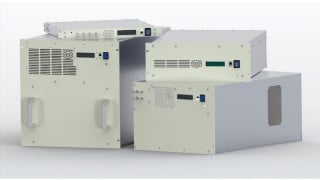
The DERConnect testbed contains a real-time simulator that can simulate large-scale transmission and distribution networks within the grid and model DERs within real-world scenarios. The simulations run in real time, so the simulated physical power systems can interact with the simulations using the amplifier at DERConnect.
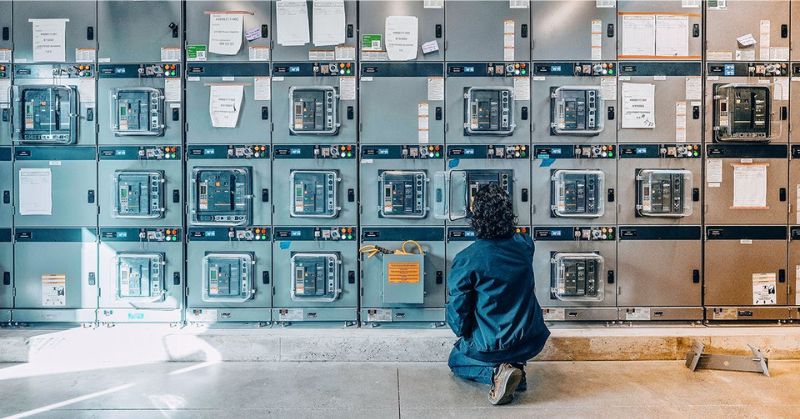
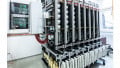
DERConnect switchgear. Image used courtesy of UC San Diego/Erik Jepsen
Hardware-in-the-Loop Testing
DERConnect’s amplifier can also help to test and validate hardware. By operating the physical hardware alongside real-time simulations in the testbed, the real onsite power systems―batteries, supercapacitors, etc.―can be tested with real controllers and validated.
Machine Learning and Data Analytics
With a growing interest in smart grids, machine learning algorithms are becoming more important for analyzing the large swaths of data produced by the sensor nodes at multiple points throughout the grid. The DERConnect testbed assesses the performance of grid-enabled machine learning algorithms and how well they can predict system behavior, improve grid reliability, and optimize control strategies.
Cybersecurity
The switch to renewable-integrated smart grids opens up more potential entry points for cyberattackers to exploit. Grids that fully connect utility companies to grid operators and consumers run a high risk across the whole system network if a cyberattack is successful. The DERConnect contains testing capabilities to evaluate the robustness of grid network systems against various cyberattacks, including data tampering and denial of service attacks. These systems can be tested in real-time to spot potential intruders and implement secure communication protocols and other security measures.