Facebook
 Google
 GitHub
 Linkedin
Prepping for Fault-Managed Power Adoption
Industry group supports the global adoption of a new method for safely delivering more power over long distances.
The 2023 National Electrical Code (NEC) edition debuted fault-managed power technology as a new power circuit with a unique classification (Class 4) for improved power delivery.
Introduction to fault-managed power systems. Video used courtesy of VoltServer
VoltServer, the company that invented the first fault-managed power (FMP) system, recently started a nonprofit with electrical cable providers Belden, Cisco Systems, Panduit, and Prysmian to support the global transition to safe and efficient FMP systems. Fault-Managed Power Alliance members will contribute expertise to accelerate NEC Class 4 uptake.
FMP systems, which carry power via cables from a transmitter to a receiver, are designed to monitor faults and shut off the energized circuit(s) to prevent hazards from short circuits, ground and line faults, overcurrent conditions, control malfunctions, and other fire or shock risks. These parameters were built into the newly updated NEC and UL Solutions standards.
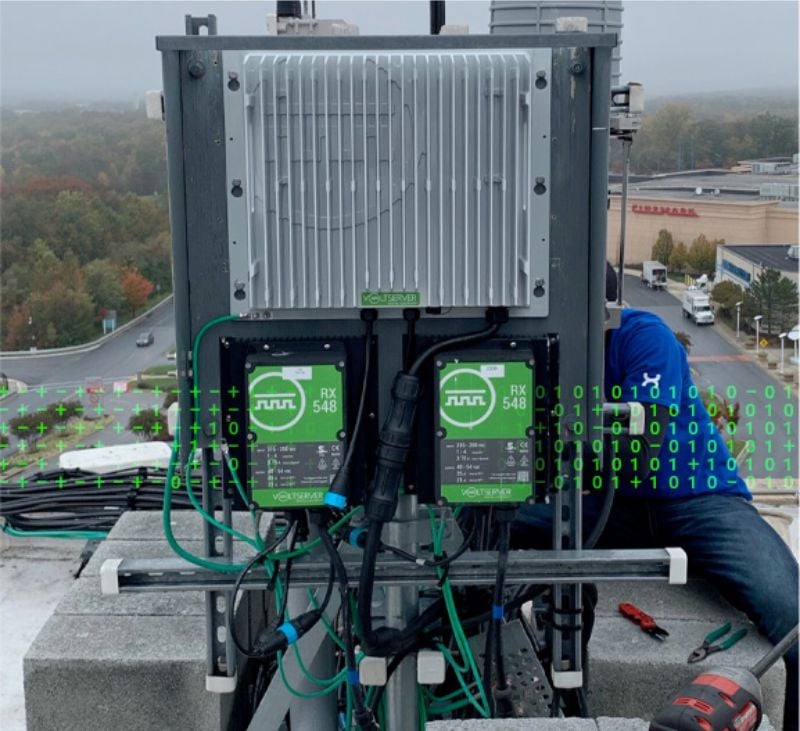
FMP creates a safer environment for electronics and technicians. Image used courtesy of VoltServer
FMP Unlocks High Power Delivery Over Long Distances
FMP delivers more power than conventional remote line power devices without compromising technicians’ safety. While FMP systems have no power limit, the energy transferred under a fault is subject to a voltage limit (450 V). Built-in fault monitoring enables higher voltages—hundreds of watts per pair of conductors—to transfer over thousands of feet safely. This advantage meets several applications, from industrial manufacturing to wireless networks to indoor farming. Smart buildings can deploy FMP to monitor HVAC, lights, security, and other connected devices communicating over a network.
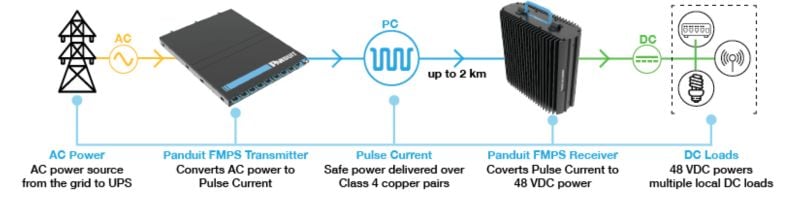
Panduit’s FMP system. Image used courtesy of Panduit
In a typical FMP setup, a transmitter carries power from the main supply (such as a building or renewables) or a battery backup. Power is then converted to an FMP circuit and transferred via cable to the receiver, a standalone or integrated device that converts the power to meet the final load’s needs.
FMP systems’ main advantage is mitigating fault conditions to avoid dangerous fires or shocks. FMP also has the same wiring practices as power-over-ethernet (PoE) and can run in the pathway of Classes 2 and 3 circuits and fiber or hybrid cables.
Last year’s NEC update incorporated Article 726, debuting a new classification governing safe and efficient power delivery for high-powered devices. Class 4 is distinct from classifications that govern circuits’ maximum voltage and power. Class 1, commonly used in buildings, accommodates high power levels but limits the voltage to 600 V. Classes 2 and 3, typically found in PoE or wireless applications and sound systems, restrict power to 100 W and voltage to 60 and 150 V, respectively.
_and_Class_4_FMP_components_(bottom).jpg)
Power delivery classes (top) and Class 4 FMP components (bottom). Images used courtesy of Panduit (Page 3, Table 1 and Figure 2)
FMP systems are tested to prevent fire hazards from short circuits, series arcs, and line-to-line resistance or arcs. Upon detecting a Class 4 fault, the system will interrupt electricity flow in milliseconds.
FMP also averts shock hazards by monitoring line-to-ground, line-to-line, and line-pair faults. This expands the scope of existing protection methods like industry-standard Ground Fault Circuit Interrupters (GFCIs), now ubiquitous in modern kitchens and bathrooms. For example, a GFCI can detect line-to-ground faults, such as a person touching a wire, and close the circuit and current flow to prevent shocks. However, if the person contacts both lines of the circuit, GFCI can’t distinguish between a person and a load.
Class 4 power expands this protection by detecting additional fault conditions that pose a risk to technicians and the general public.
Fault-Managed Power Alliance
Efforts to standardize FMP systems date back to 2020 when UL formed a group to collaborate on power delivery technologies that don’t fit into Classes 1, 2, or 3. The result was two standards, UL 1400‐1 (FMP safety requirements) and UL 1400‐2 (FMP cable requirements), both published in 2022. The National Fire Protection Association also issued the 2023 NEC edition with a new class of power under Article 726.
Although most states have made progress on NEC implementation, only 13 have completed the 2023 update process. It could be a few years before FMP systems are widely adopted nationwide. Meanwhile, trade organizations are developing training materials for FMP installation and interoperability.
Still, Class 4 power has already been deployed to support power distribution infrastructure, LED lighting, passive optical networks, and distributed antennas at airports, offices, and manufacturing sites. The Fault-Managed Power Alliance’s five founding members lead much of the existing market and are motivated to help adopters deploy FMP. The organization will also work with standards organizations and regulators to ensure codes keep up with technology growth.
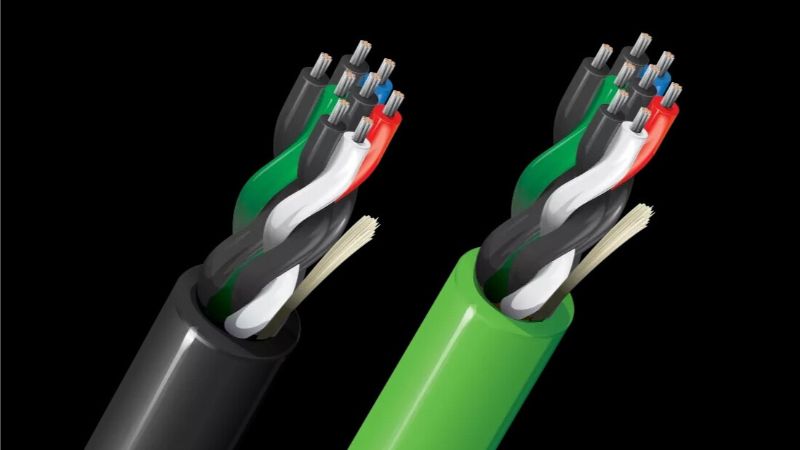
Belden’s Class 4 cables. Image used courtesy of Belden
The alliance’s founding members have deployed several FMP projects. VoltServer’s industry-first FMP, Digital Electricity, currently powers 1,000 stadiums, hotels, medical buildings, and other locations. VoltServer is also working with California utilities to build an FMP roadmap for non-residential buildings. The project will include market and field assessments on using FMP to deliver DC power to DC-driven devices.
Using a fault-managed power system. Video used courtesy of Dagostino Electronic Services
Belden and Panduit, also founding members, earned early certifications for their FMP-focused products. Belden was the first to have its cables UL-certified for Class 4 systems. Panduit’s FMP system was the first to be approved as a Class 4 power distribution system. Panduit’s FMP system boasts several benefits, delivering six times the power and 30 times the distance of incumbent Class 2 solutions.