
 Facebook
 Google
 GitHub
 Linkedin
Going Digital: Technology Is Key to Meeting Energy Demand
Grid digitalization faces many challenges, but it also means more efficient performance and a more robust platform for renewables integration and power management. This is the second part in a series that examines technical challenges to grid digitalization in depth.
Renewable energy, decentralization, and smart technologies transform the power grid into a digital environment. Traditional grid operations give way to distributed energy resource management (DER). Although a smart grid offers more resilience and flexibility in meeting demand, digitalization requires technical changes for reliable operations.
For example, as electric vehicle ownership increases, energy use can vary due to home charging and vehicle-to-grid energy transfer. Handling the load requires the installation of sensors and systems to monitor and respond to demand. These changes will lead to a better-managed, more responsive, and resilient grid.

Renewable energy and smart technologies are driving grid digitalization. Image used courtesy of Adobe Stock
The Challenges Surrounding Energy Supply and Demand
Digitalization can respond to unpredictable changes in energy flow and demand, voltage rises, grid congestion, and security. However, as more renewable energy sources are connected to the grid, digitalization will be more difficult without solutions to these challenges.
Increasingly, distributed energy resources (DER) associated with renewable energy sources are being attached to the grid. DERs are small-scale energy resources on the consumer side, such as rooftop solar panels. These small energy sources have expanded rapidly in recent years and are changing how electricity is generated, traded, delivered, and consumed. While DERs can offer consumers more control over their energy and usage, they also present some challenges when the power grid has not been properly prepared to accept energy inputs from these sources.
Grid digitalization can address these supply and demand challenges by leveraging evolving power system configurations, minimizing network reinforcement costs, and maintaining operational efficiency and service quality. Using smart technologies—including smart sensors, smart meters, artificial intelligence, and robotics—could help optimize grid operations, improve asset management, enhance customer services, and improve existing functionalities.
Enhancing System Operation Efficiency
System operations enable the distribution grid to function reliably and efficiently. These operations involve data collection, analysis, and control to maintain grid reliability, manage integrated advanced technologies, balance supply and demand, support transmission systems, and facilitate interactions between distribution and transmission operators.
Digitalization could transform system operation capabilities by providing real-time data management, analysis, and control. The benefits result in greater visibility of power flows, loads, and connections at the distribution level. Controlling energy distribution networks and monitoring them in real time will be needed to improve operational efficiency. DER management system software could help grid operators integrate and manage DERs more smoothly. Digitalization could also offer improved predictive analytics for better failure management and predictive maintenance.
Improving System Management Efficiency
System management involves long-term activities crucial for maintaining and managing the power grid. It monitors the impact of DER and EV adoption on the grid and considers things like population growth and economic development. By identifying potential risks, system management protocols provide mitigation strategies for prioritizing the grid's workflow, designing smarter equipment to enhance grid performance, and overseeing the connection and disconnection of DERs.
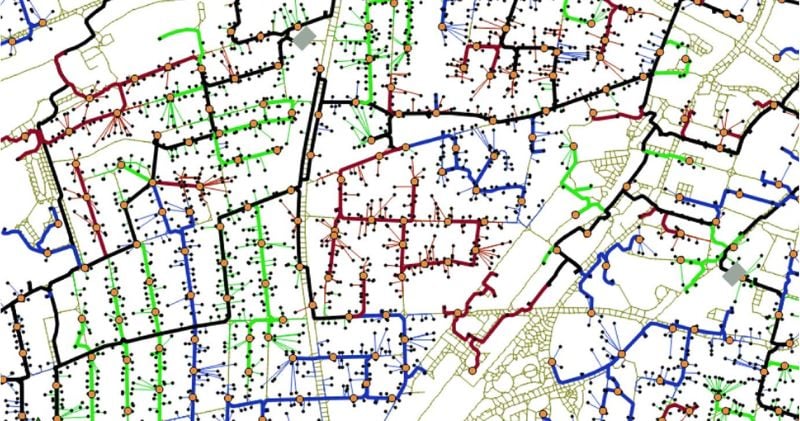
DER tools include distribution network simulations. Image used courtesy of NREL
Digitalization in DERs uses geographical information systems to map the distribution network. Energy management systems can harmonize data from various sources to optimize energy management and efficiency in centralized hubs within a digital ecosystem.
Digitalizing Network Planning Protocols
Network planning protocols analyze, design, and optimize distribution grids to meet current and future electricity demands.
Traditional approaches have used load forecasting and infrastructure optimization to provide these analyses. Digitalizing these protocols provides grid operators with new digital tools—such as distribution network simulation software—using real-time and localized data to reduce reliance on grid reinforcement as the main route for solving voltage and congestion issues within grid networks. A digitally enabled and coordinated approach could help facilitate more effective information exchanges and planning at the transmission level to ensure the energy keeps flowing across the whole network rather than just local networks.
Responding to Supply and Demand Fluctuations
Flexibility management operations ensure the distribution system and the grid can respond quickly to electricity supply and demand fluctuations. This emerging functionality is required for managing DERs and has been brought about thanks to advances in real-time management technologies. DERs also use local network operators to cover certain tasks, such as congestion management and voltage control. This process includes demand response, Volt-VAR, and network capacity management.
Digitalization allows for much more flexibility in network planning through more efficient demand-response platforms, virtual power plants, and the ability to optimize DERs to improve grid operations and efficiency. Blockchain technologies could also play a role in the digital ecosystem in the future by creating new market opportunities in secure peer-to-peer energy trading.
Before widespread grid digitalization can happen, grid operators face technical challenges involving interoperability, integrating legacy equipment into the digital world, enhancing cybersecurity operations, and protecting consumer data. However, many energy supply and demand areas will benefit from smart or intelligent grid networks.
Part 3 in this series examines the technology handling the vast amounts of smart grid data.





Oil and other fuels dug up from the ground are plentiful and safe. There is no true scientific evidence to contradict that statement. The best way to replenish oil reserves is to drill for more oil. Oil and gas have the highest energy density at the lowest cost.