Facebook
 Google
 GitHub
 Linkedin
Out of Sight: Remote-Operated Drones Automate Grid Inspection
In a world first, National Grid has used automated drones to inspect U.K. grid infrastructure Beyond the Visual Line of Sight.
Grid inspection drones typically require a licensed drone pilot to see the drone as it conducts the infrastructure inspections directly. However, this might be about to change. A U.K. utility is operating the world’s first Beyond Visual Line of Sight (BVLOS) drone inspections.
National Grid has partnered with data firm Sees.ai to launch BVLOS drones remotely for grid inspection. This will allow the drones to get close to live power infrastructure in remote areas without a nearby pilot. Instead, pilots monitor the drones from a central control room.
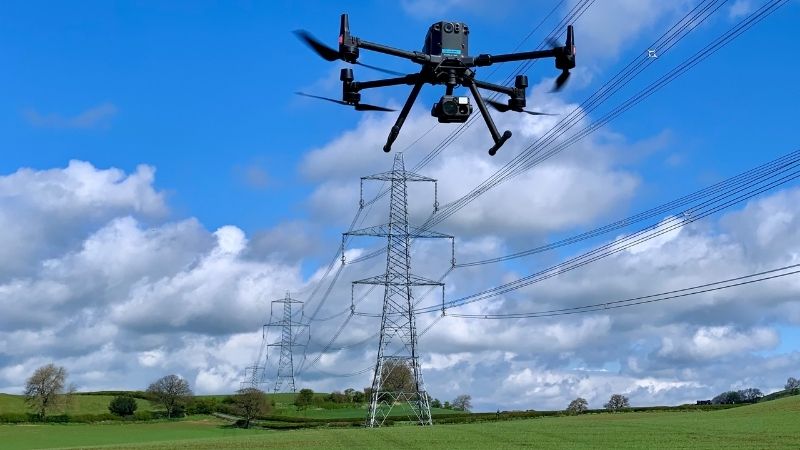
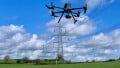
Inspection drone. Image used courtesy of National Grid
The National Grid’s Drones
National Grid uses a combination of DJI M350, M300, Mini 3, and Mavic2 drones daily to survey, image, and inspect various grid aspects. Some are used for adverse weather conditions, whereas others operate in indoor environments, such as substations. The smaller drones can get closer to the power lines to look at faults more closely.
While each drone differs in capabilities, all carry a range of visual, photogrammetry, Light Detection and Ranging (LiDAR), and thermal imaging sensors to provide visual and infrared information to detect faults, such as transmission line hotspots, damaged conductors, or corroded steelwork. In smarter grids, the drones can capture information to create 3D model data that can be integrated into digital twins, allowing for better real-time monitoring of multiple grid assets.
National Grid Drones Go Beyond Visual Line of Sight
Drones can make grid infrastructure stronger, safer, and cheaper to maintain. They are relatively inexpensive and versatile, enabling inspections without endangering grid personnel. Until now, licensed drone pilots needed a direct visual line of sight to the drone. Under U.K. regulations, drones can only fly up to 500 meters from the pilot and must always maintain a visual line-of-sight. However, the Civil Aviation Authority (CAA) gave National Grid permission to fly its automated drones at distances much longer than current regulations.
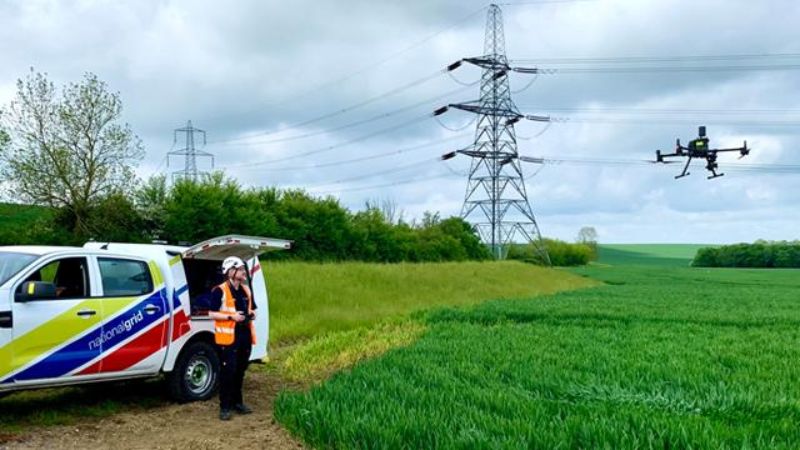
Line of sight drone pilot. Image used courtesy of National Grid
A central control room oversees the drone flights, and artificial intelligence and machine learning interpret the inspection data. National Grid successfully conducted an autonomous inspection at a test location for up to 3 km, six times the current regulations for line-of-sight drones. The tests’ success could lead to changed regulations so that drones can cover large distances from a central control room. This could help to significantly improve the speed and accuracy of grid inspections in the U.K. and beyond.
National Grid’s success enables its line workers and helicopter fleet to focus on other specialist tasks requiring human input, such as manufacturing, logistics, and other industries. The shift toward more centralized automation can free up time for personnel to perform other critical tasks.
National Grid plans to use the automated drones as a key part of its grid asset management to ensure safety, reliability, and resilience. The remote drones will capture images and other data on the transmission grid’s pylons and cables to better understand maintenance needs, which will improve maintenance cycles and infrastructure investments across the grid.
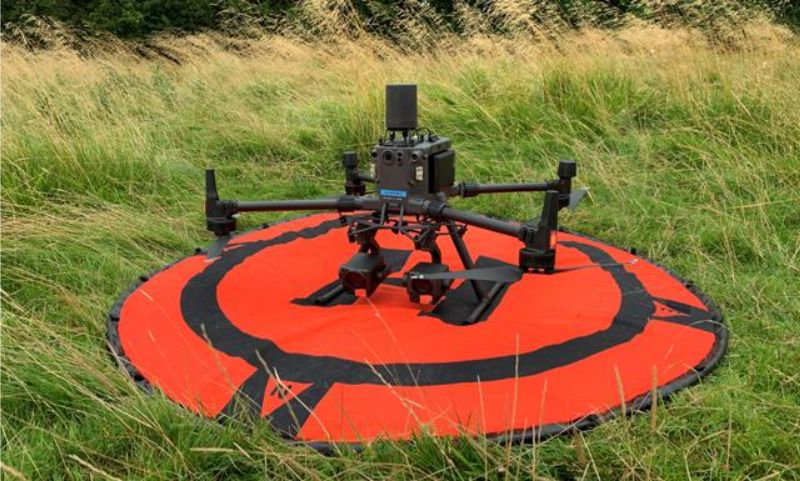
A National Grid drone. Image used courtesy of National Grid
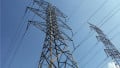
The U.K. grid has 7,200 km of overhead lines, 300 substations, and 22,000 pylons to investigate for possible maintenance and upgrades. Using remotely controlled drones with smart processing and analysis also improves data processing speed, efficiency, and consistency. It reduces the risks and environmental impact of traditional grid data capture methods.
Autonomous Drones and the Wider Digitalization Strategy
In the U.K., the Regulatory Innovation Office is working with companies, operators, and regulators like the CAA to further the transition toward more efficient grids and cleaner energy. The National Grid’s autonomous inspection deployment is part of a wider digitalization strategy.