Facebook
 Google
 GitHub
 Linkedin
Addressing Automotive LED Design Challenges
Light-emitting diodes have become the backbone of interior and exterior vehicle lighting systems. This article examines the challenges they present to designers.
This article is published by EEPower as part of an exclusive digital content partnership with Bodo’s Power Systems.
Light-emitting diodes (LED) have become the backbone of interior and exterior vehicle lighting systems. They can be used within a vehicle’s headlight assemblies to produce high-intensity light beams and within the cabin to illuminate light pipes to create lighting effects and information displays around the dashboard and other structures around the interior. LEDs work by passing current through a semiconductor material, which emits electroluminescence. LEDs are a better option than traditional halogen or incandescent light bulbs thanks to their superior power efficiency, ruggedness, higher light intensity, and longer lifetime.
LED Design Challenges
Typically, LED designs for automotive applications involve LED arrays to achieve desired brightness and lighting effects. Despite all their advantages, driving the arrays efficiently and safely in automotive applications presents several challenges for the designer.
One primary issue is ensuring consistent brightness and performance throughout the array. This requires precise control over the current supplied to each LED, otherwise known as individual pixel control. Any variations in current can lead to inconsistent lighting and even potential failures.
Automotive environments can be extremely harsh, with wide temperature ranges and potential exposure to moisture and dust, impacting LED performance and longevity. As LEDs generate heat and electromagnetic interference, thermal management and electromagnetic compatibility (EMC) must also be considered to ensure reliable operation.
High Brightness and Advanced Functionality
OEMs need to develop lighting systems that deliver high brightness and advanced functionality while offering a range of customization and aesthetic options. An example is adaptive driving beam (ADB) technology, which more accurately illuminates the path ahead while reducing glare for oncoming drivers, enhancing their visibility.
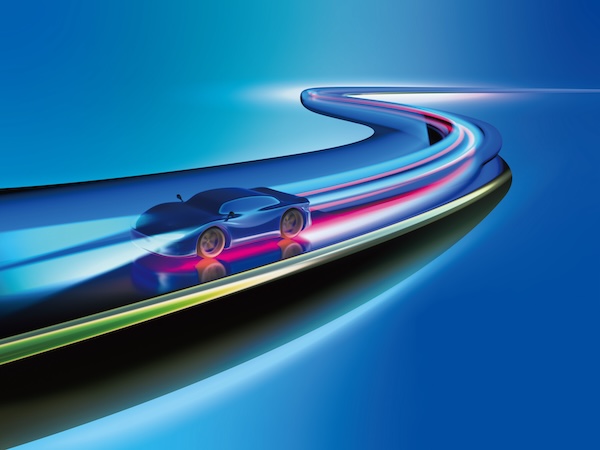
Figure 1. LEDs are often used in vehicle headlights for their brightness, energy efficiency, long lifespan, and improved visibility in challenging weather conditions. Image used courtesy of Bodo’s Power Systems [PDF]
To create these increasingly complex solutions, high-performance multi-channel LED drivers are required. These drivers enable precise control of individual LEDs in complex lighting schemes, allowing dynamic lighting effects and high-resolution dimming. They must support a range of current and voltage settings to accommodate different LED types and configurations. Additionally, advanced diagnostic features are needed to monitor the health and status of the LEDs, ensuring safe and reliable operation. Such drivers must also integrate seamlessly with the vehicle’s electronic architecture, supporting communication protocols like CAN (controller area network) for efficient data exchange.
Simplifying Automotive LED Design and Deployment
Innovative technologies are emerging to simplify the design and deployment of automotive LED applications, particularly those requiring individual pixel control. Integrating automotive LED solutions into a single IC simplifies the overall design process by reducing the number of components, leading to more compact and reliable lighting systems.
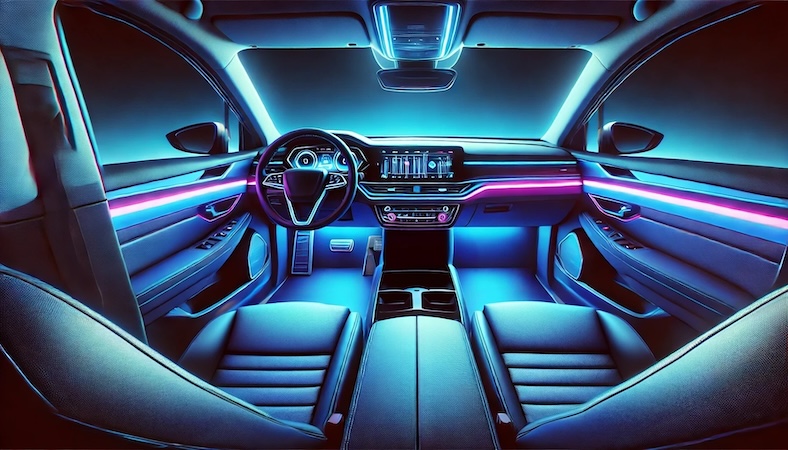
Figure 2. LEDs are increasingly used in vehicle interiors, offering customizable, energy-efficient lighting solutions while enhancing visibility and aesthetics. Image used courtesy of Bodo’s Power Systems [PDF]
For instance, LED drivers with built-in communication interfaces and advanced control features can reduce the complexity of wiring and control systems and improve EMC. Single IC solutions with better thermal management and power efficiency also help designers create more compact and robust lighting solutions that can withstand the harsh conditions of automotive environments. These advancements enable manufacturers to quickly adapt to new design trends and comply with regulatory requirements, further accelerating cutting-edge lighting systems’ development.
Lighting Tech With Pixel-Level Control
Novosense Microelectronics offers one such single IC solution with the NSL21924, a highly integrated and versatile 24-channel LED driver designed specifically for automotive applications. This innovative device provides flexible LED control and minimizes the need for additional components, making it an ideal solution for modern automotive lighting systems.
The NSL21924 is an automotive-qualified IC available in configurations supporting up to 24 channels. It features flexible dimming and control capabilities, including 12-bit independent PWM dimming and phase shift PWM dimming, ensuring precise LED brightness control. The device can drive high-side currents of up to 100 mA for each channel, providing the power needed for high-brightness applications.
The NSL21924 also includes on-board programmable EEPROM, allowing configuration adjustments to meet different application requirements. This flexibility is needed to address the diverse needs of automotive rear lighting, exterior lighting, ISD lighting, and general body lighting applications.
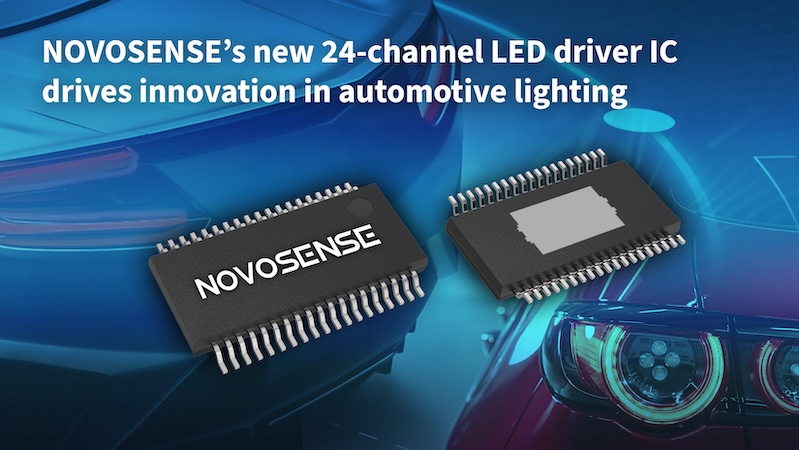
Figure 3. The compact and highly integrated NSL21924 is an automotive-qualified device that offers a variety of driving options for up to 24 channels and features flexible dimming and control capabilities. Image used courtesy of Bodo’s Power Systems [PDF]
Designed for robustness, the NSL21924 meets AEC-Q100 Grade 1 standards, operating reliably in temperatures ranging from -40°C to 150°C. Its low dropout voltage of just 600 mV Max. (@ 50 mA) ensures efficient power utilization, while multiple diagnostic features—such as LED open-circuit, LED short-to-ground, and single LED short-circuit detection—enhance safety and reliability.
The device also includes a configurable watchdog timer to automatically configure failsafe states if the connection to the host microcontroller is lost and a patented thermal sharing mechanism that dissipates heat via a shunt resistor to protect against excessive temperature rises.
The NSL21924 offers a comprehensive solution for the complex demands of modern automotive lighting. Its high integration, flexible control options, and robust design make it a critical component in the design of more efficient, safe, and reliable vehicles.
This article originally appeared in Bodo’s Power Systems [PDF] magazine.