Facebook
 Google
 GitHub
 Linkedin
How Do Drones Make Smart Grids Smarter?
Oak Ridge National Laboratory recommends drone surveillance to enhance smart grid infrastructure.
Weather events, from strong winds and lightning to natural disasters, can damage grid infrastructure, leading to power outages. People and animals can also disrupt power lines. Old legacy infrastructure can break, become faulty, or wear down over time, causing key grid parts to fail due to age.
To combat power outages, smart grids are being developed to provide a better network connection and use distributed energy more effectively during down periods to ensure electricity still flows around the grid. The Oak Ridge National Laboratory (ORNL) has suggested that drones could be effectively used with smart grids to improve grid efficiency and safety.
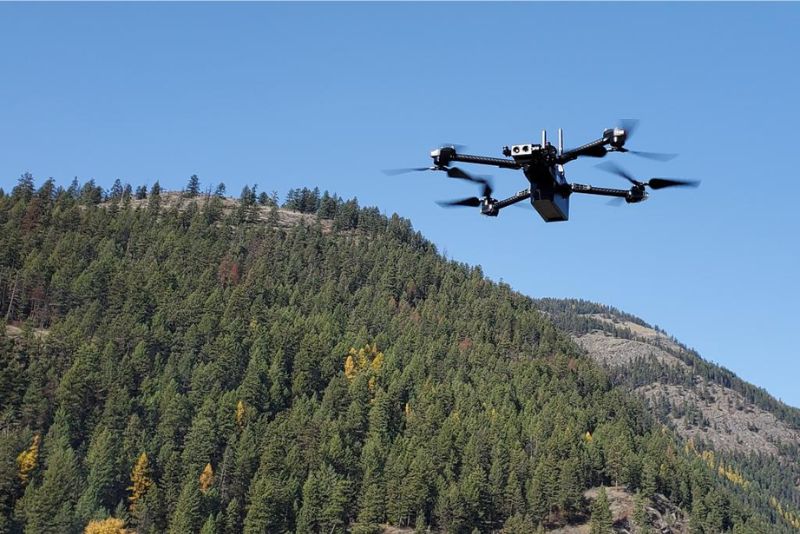
Drone inspecting grid infrastructure. Image used courtesy of Oak Ridge National Laboratory
The Rise of Smart Grids
Smart grids manage the various grid assets using sensors, digital technologies, and advanced software algorithms. They combine existing grid infrastructure with IoT and artificial intelligence-based smart capabilities.
Smart grids can better react to outages, plan for high load scenarios, respond to unexpected demand, and manage distributed energy resources (DER), such as various renewable energy sources and their energy storage devices. Smart grids use advanced control algorithms (down to the inverter level) to control the energy flow around the grid and improve energy efficiency and load balancing. At the same time, advanced data analytics gives operators more insights into how to optimize the grid.
Smart grids can manage energy distribution in real time to optimize the supply and demand around the grid. When a power outage occurs, energy from DERs, microgrids, and energy storage devices around the grid (including electric vehicles that are a part of vehicle-to-grid operations) can provide intermittent power sources until the grid gets back online. This improves grid reliability and resilience and reduces the costs associated with grid downtime and inefficient grid operations. In widespread natural disasters, smart grids can prioritize which areas are first recovered, such as emergency services, hospitals, and first responders.
In any national emergency affecting power distribution throughout the grid, smart technology quickly allows access to energy sources ranging from industrial to residential to get the grid repaired and restored.
Adding Drones to Smart Grid Operations
Optimization algorithms can improve smart grid capabilities even further. The ORNL is testing drones that could improve smart grid safety, efficiency, and cost-effectiveness.
The ORNL uses drones equipped with advanced sensing capabilities, such as thermal sensors, ultraviolet (UV) cameras, and high-resolution cameras. These drones can quickly and accurately scan power lines to detect regions of the transmission network that are overheating, corroding, or damaged.
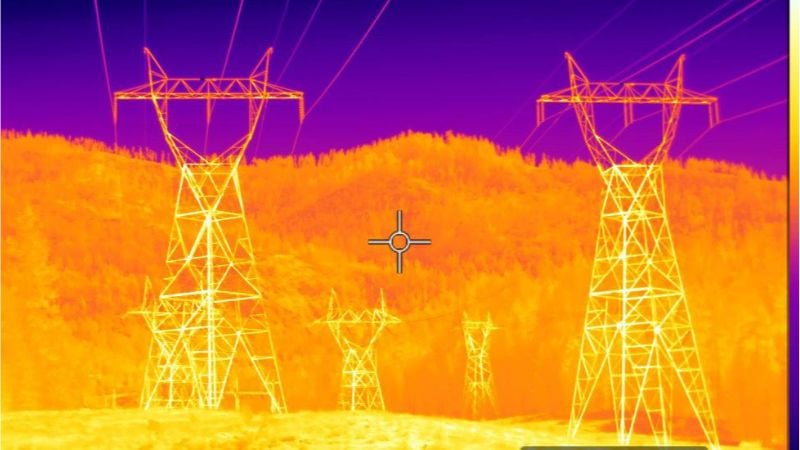
Heat-sensing drone inspects power lines. Image used courtesy of ORNL
ORNL’s drones use Autonomous Intelligent Measurement Sensors that can respond to abnormal grid behavior, particularly in remote regions. These drones also use UV cameras to detect any corona discharges, which can cause equipment degradation and radio interference.
Drones with advanced sensing capabilities can help improve smart grids’ data collection and analysis capabilities. Unlike traditional grids, smart grid networks can take real-time monitoring data live-streamed from the drone to control centers, and operators can make immediate decisions based on any potential issues the drone detects. Many smart grid networks are also looking to integrate AI and machine learning capabilities, so this real-time data could also be used to optimize maintenance schedules and preemptively predict potential grid faults.
Using drones could improve occupational safety and bring cost benefits. For example, drone inspections would prevent the need for ground crews to inspect an issue, eliminating safety threats associated with climbing towers and working near high-voltage lines. Drone inspections are also cheaper than mobilizing ground crews or deploying.
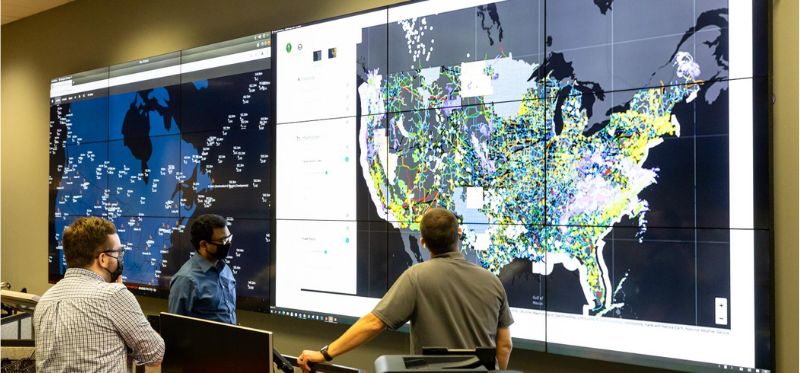
Drones can provide real-time data to operators. Image used courtesy of ORNL
Using drones alongside advanced smart grid systems could help improve grid resilience to potential outage issues and allow power delivery in challenging environments.
Time Required for Upgrading to Smart Grids
Implementing advanced sensors into various assets and locations around the grid can be time-consuming and expensive. Likewise, once the physical infrastructure is set up, it also takes time and money to install, run, and optimize the “smart” software. However, implementing smart technologies is growing across the U.S., with grid modernization occurring in 38 states and the District of Columbia. Still, it will take time before a completely digitized smart grid spans every facet of the U.S. grid.