Facebook
 Google
 GitHub
 Linkedin
NRL Battery Tester Named NASA Invention of the Year
A technology lets engineers trigger controlled internal battery failures, creating opportunities to study thermal runaway and failure propagation in spacecraft and more.
The National Laboratory of the Rockies (NLR) has created an internal battery-testing technology that NASA has recognized as the 2025 Invention of the Year. The device triggers controlled internal short circuits in lithium-ion batteries to improve safety testing for spacecraft and other high-risk applications. The KULR Technology group commercialized the technology.
The internal short circuit device (or ISC-D) gives researchers a repeatable way to study how failures develop and spread inside battery packs, an increasingly important capability as lithium-ion power systems become more widely used across crewed spacecraft, aviation, and electric vehicles.
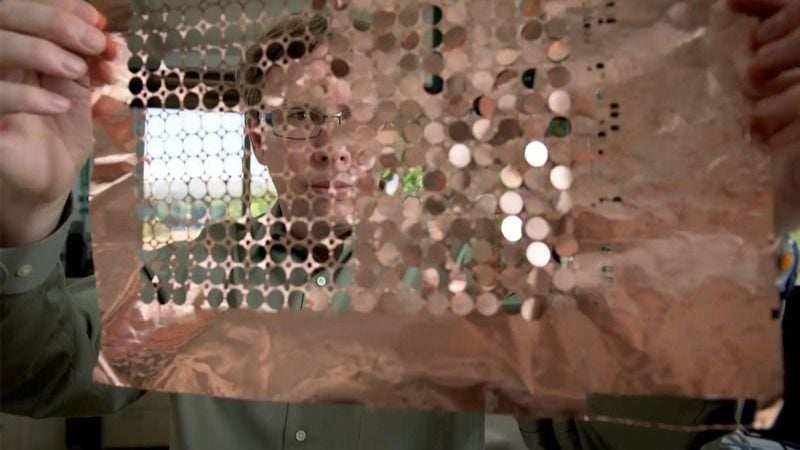
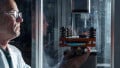
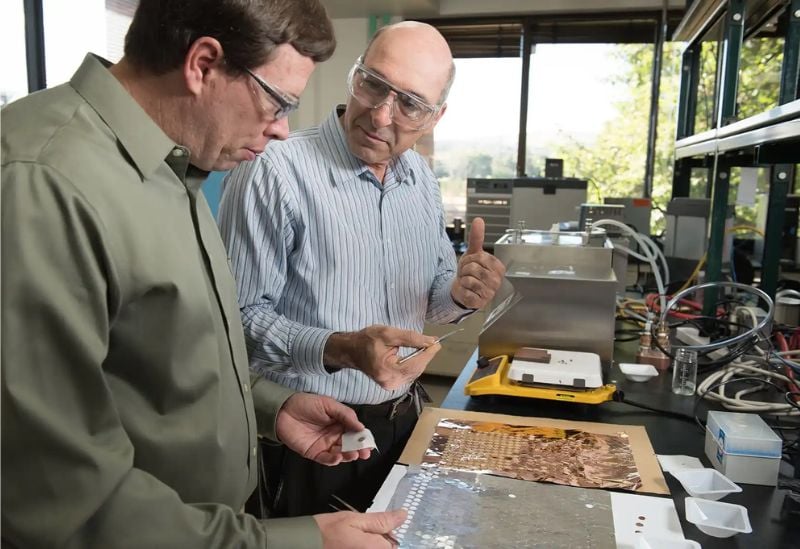
NLR researchers with the internal short circuit testing device made of tiny metal discs positioned between the cathode and anode. Image used courtesy of NLR/Ellen Jaskol
How the ISC-D Works
Conventional battery safety testing typically relies on external stress methods such as overheating, crushing, or puncturing cells to study failure. While useful, those techniques cannot fully replicate the internal short circuits caused by microscopic manufacturing defects, which can trigger battery failure from within.
Internally generated failures behave differently from externally induced ones. A defect as small as dust contamination during manufacturing can ignite thermal runaway, a chain reaction in which intense heat and vented gases spread from one battery cell to neighboring cells. In tightly packed battery systems used in spacecraft, that propagation can escalate rapidly, resulting in severe damage or catastrophic system failure.
The NRL developed the ISC-D to recreate those conditions in a controlled setting. The device places three metal discs separated by a wax-based insulator between a battery’s anode and cathode. When heated to about 57°C, the wax melts, and the metal layers make contact, producing a controlled internal short circuit. Researchers can then observe how thermal runaway spreads between cells and evaluate whether battery systems can prevent wider propagation.
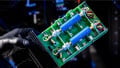
Copper discs used in the ISC-D are designed to trigger controlled failures inside lithium-ion batteries to improve safety testing. Image used courtesy of NLR
Engineering Controlled Failures in Batteries
The technology is aimed in part at crewed spaceflight, where battery systems face stringent safety requirements and even a single cell failure can threaten larger spacecraft systems.
The researchers reported that ISC-D testing has helped confirm that isolated battery failures can be contained without allowing thermal runaway to spread through an entire pack, a key safeguard for missions operating far from emergency support.
The ISC-D emerged from a NASA and NLR effort launched in 2010 to address a major challenge in battery safety research: reproducing internal short circuits in a controlled and repeatable way. Researchers spent years refining the device, focusing heavily on the insulating material that separates its metal components. Early wax formulations proved unsuitable, either too brittle or too soft for reliable use inside battery cells, before the team developed a blended paraffin-microcrystalline material capable of triggering consistent short-circuit events during testing.
The ISC-D technology received an R&D 100 Award and was exclusively licensed to Texas-based KULR Technology Group, which specializes in battery safety and thermal management.
The ISC device. Video used courtesy of NLR
KULR has expanded the technology’s use by supplying battery cells with ISC-D devices already installed, allowing customers to evaluate complete battery systems rather than individual cells alone. The approach prompted additional safety planning, leading KULR to work with NLR researchers on handling and shipping protocols designed to reduce the risk of thermal incidents during transport and storage.
NASA officials involved in battery safety testing reported the technology has become a preferred method for evaluating systems intended for crewed missions. ISC-D trigger cells are used to verify that individual battery failures don't spread throughout larger packs. In addition to space programs, the internal short circuit device has drawn over 80 companies, according to KULR, including players involved in testing batteries for electric vehicles, energy storage devices, and spacecraft, such as Volkswagen, Toyota, SpaceX, and Tesla.