Facebook
 Google
 GitHub
 Linkedin
Hot Wire: Batteries, Robots, Solid-State EVs and Expansions
Battery manufacturers, automakers, and smart grid technology developers are advancing technology through partnerships, funding, and innovative new products. Here’s the latest.
Manufacturers and developers in the power and energy industries have been busy expanding and developing new products. In the latest moves, tech leaders and automakers are partnering for robot batteries and solid-state electric vehicle batteries, while manufacturers are funding production and expanding facilities.
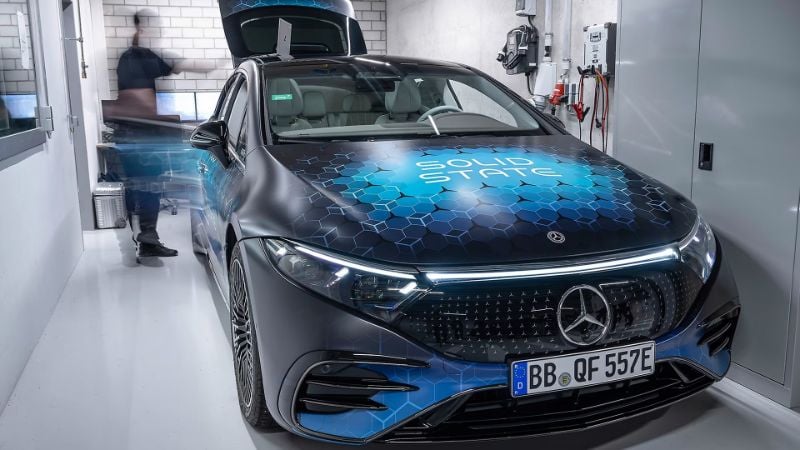
Mercedes-Benz test car with solid-state batteries. Image used courtesy of Mercedes-Benz
1. Probus Raises $5 Million to Expand AI-Powered Smart Grids
Probus Smart Things, a deep tech startup in India, has secured $5 million series A funding to scale up its smart grid communication technology, integrate advanced artificial intelligence capabilities into communication networks, and expand dual communication interface modules in smart meter devices across multiple states within India.
Probus Smart Things develops integrated hardware and software systems to aid the digitization of the Indian power grid. Probus integrates its IoT platforms to improve grid analytics and automation within power grids, which enhances power distribution and provides better resilience to power outages. The company’s last funding round in 2023 allowed the company to expand operations and personnel and open an innovation center.
2. Mercedes-Benz Tests the World’s First Solid-State Battery EV
Mercedes-Benz is testing the world’s first commercial EV car with a solid-state battery. The battery is a lithium-metal, solid-state battery with a sulfide-based solid electrolyte developed with Factorial Energy.
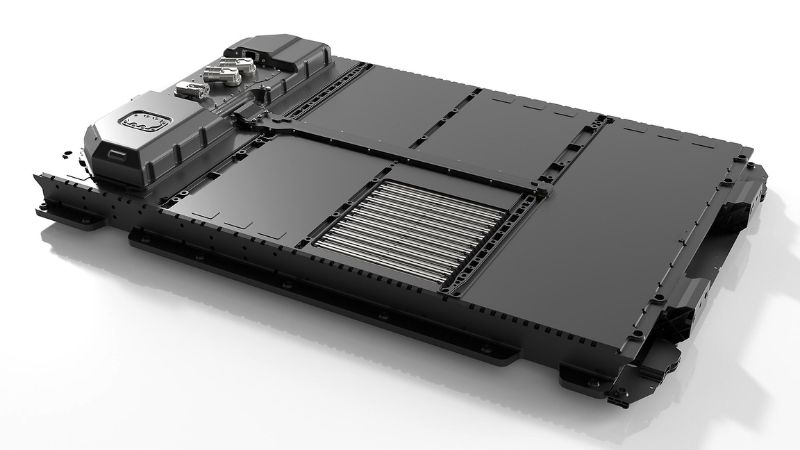
Mercedes-Benz solid-state EV battery. Image used courtesy of Mercedes-Benz
The batteries will be used in Mercedes-Benz’s next-generation EV models. The company claims the EVs will achieve over 621 miles in driving range per charge. The battery possesses an energy density of 450 Wh/kg, 40% weight saving compared to conventional lithium-ion batteries, and 33% smaller than current 90 kWh batteries. Mercedes-Benz confirmed the new battery housing will be flexible enough for various cell configurations.
Factorial Energy has been developing solid-state battery cells since 2021, but Mercedes-Benz and Mercedes AMG High-Performance Powertrains have applied the technology to real-world tests.
3. Hyundai, Kia and Samsung Develop Batteries for Service Robots
Three key South Korean companies—Hyundai, Kia, and Samsung—have partnered to develop high-performance batteries for service robots. Samsung will create high-capacity materials and optimize battery design to develop and manufacture batteries with higher efficiency. Hyundai and Kia will evaluate the batteries’ performance in the robotics applications, including charge and discharge performance, usage time, and qualification life.
The partnership has developed because many robots lack dedicated batteries and use batteries designed for power tools or light electric vehicles. Robots also have limited space to integrate batteries, and smaller cells tend to restrict capacity. The partners aim to develop a small battery with high energy density.
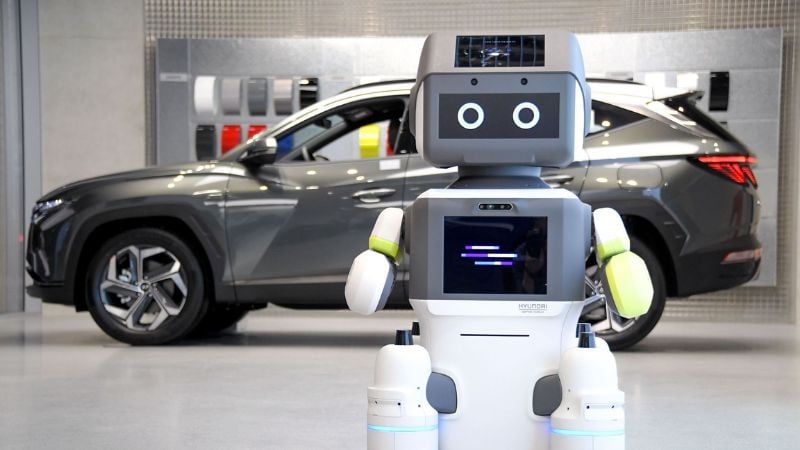
Kia humanoid robot, DAL-e. Image used courtesy of Kia Global
4. Ionetic Gives First Glimpse into £5 Million Battery Production Plant
U.K. battery pack developer Ionetic has provided the first details for the Arc Fab Pilot, a £5 million smart battery production pilot plant aimed at reducing EV development costs. The 5,000-square-foot plant will produce a wide range of battery pack designs on a single line, significantly reducing production times.
The plant will use Ionetic’s Arc Technology stack to optimize EV battery designs in days rather than months. The company believes its technology can produce off-the-shelf and custom battery packs while cutting the time-to-market for EV battery designs by 80%.
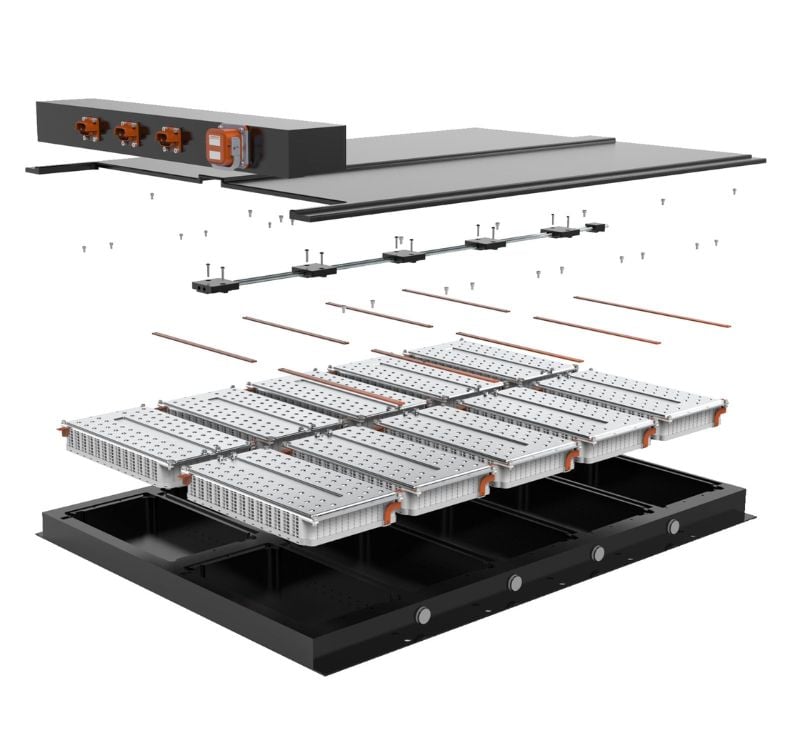
Ionetic battery pack design. Image used courtesy of Ionetic
5. DigiKey and Qorvo Set Global Distribution Agreement
DigiKey and Qorvo announced a worldwide distribution agreement to extend the reach of Qorvo products across North America, EMEA, and APAC regions. The agreement will allow Qorvo’s customers to order and receive orders easily, quickly, and efficiently. It also includes additional support in key technology markets, such as wireless infrastructure, power, automotive, aerospace, IoT, and defense sectors.
DigiKey distributes more than 15.9 million technical products worldwide. The semiconductor company Qorvo makes products for connectivity, power, and wireless spaces.