Facebook
 Google
 GitHub
 Linkedin
GaN Power Transistors and ICs in Emerging Humanoid Robots
In automation, robots are becoming increasingly sophisticated, thanks to several technological trends in advanced power electronics that offer high efficiency, compact size, and reliability.
This article is published by EEPower as part of an exclusive digital content partnership with Bodo’s Power Systems.
The world is entering a new era of automation, where robots are becoming increasingly sophisticated, capable of performing tasks once considered the exclusive domain of humans. At the forefront of this transformation are humanoid robots, designed to mimic the form and functions of the human body.
Humanoid Robots and the Need for Advanced Electronics
These robots are not merely machines; they are complex systems requiring advanced power electronics to operate efficiently and effectively.
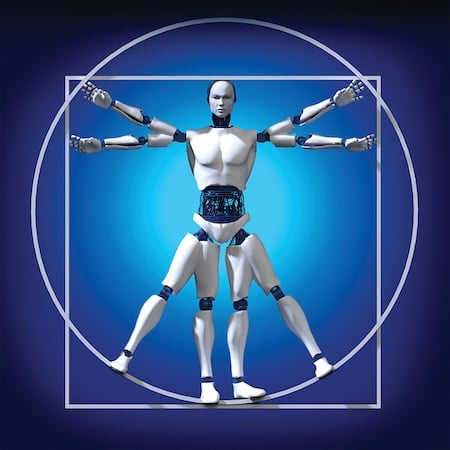
Image used courtesy of Bodo’s Power Systems [PDF]
The global humanoid robot market is poised for significant growth over the next several years. As our society ages and birth rates decline, particularly in developed countries, the need for automated labor is becoming more pressing. Humanoid robots are emerging as a viable solution to address labor shortages across various sectors, from healthcare and elderly care to manufacturing and service industries.
However, the widespread adoption of humanoid robots is currently limited by factors such as cost, functional speed, the expense of programming and teaching these robots, and their ability to adapt to unforeseen situations. The pace at which these challenges are overcome will determine the speed at which humanoid robots are deployed across various industries. Ultimately, the success of these advancements depends on society’s readiness to integrate robots into daily life and work environments.
Several technological trends are driving the development of humanoid robots, with cost and functionality being the most significant. Advanced power electronics that offer high efficiency, compact size, and reliability are central to these advancements. This is where gallium nitride (GaN) power transistors and integrated circuits (IC) come into play.
Motor Control: The Heart of Robotic Movement
At the core of any humanoid robot is its ability to move in a manner that closely resembles human movement. This is achieved using brushless DC (BLDC) motors, responsible for driving the robot’s joints, limbs, and other mechanical components. A typical humanoid robot is equipped with approximately 40 BLDC motors, each powering different parts of the robot, such as the fingers, toes, arms, legs, neck, and torso.
These motors vary in their power requirements depending on the specific function they perform. For example, the motors driving the robot’s fingers may require only a few amperes of current, while those powering the hips or legs may need 80 amperes or more. Regardless of the power requirement, the motors must operate with high efficiency to minimize energy consumption and heat generation, which are critical factors in maintaining the robot’s overall performance and reliability.
The Importance of GaN in Motor Control
GaN devices are particularly well-suited for motor control applications within humanoid robots due to their superior electrical properties compared to traditional silicon-based MOSFETs. One of the key advantages of GaN devices is their extremely fast switching speed, which is 10 to 100 times faster than that of silicon MOSFETs. This high-speed switching capability enables the motors to operate at higher frequencies, reducing motor losses and improving overall system efficiency.
The high switching speed of GaN devices also allows for the use of smaller, more reliable ceramic capacitors in place of bulky electrolytic capacitors. This is particularly important in applications where space is at a premium, such as in the motor drives of humanoid robots. By reducing the size of the capacitors, the overall size and weight of the motor drive can be minimized, making it easier to integrate the drive within the motor housing.
Another critical advantage of GaN devices is their lack of reverse recovery charge (QRR). In silicon-based MOSFETs, the reverse recovery charge can cause significant energy losses during each switching cycle, reducing efficiency and generating additional heat. The absence of QRR in GaN devices eliminates this energy loss, allowing the motor to operate more efficiently with less heat generation.
Furthermore, eliminating the reverse recovery charge means that less dead time is required in each switching cycle. Dead time reduces the amount of power delivered to the motor and can cause acoustic noise. By minimizing dead time from several hundred nanoseconds to just a few nanoseconds, GaN devices increase the torque per ampere, resulting in more efficient motor operation and a quieter system.
Overall, using GaN devices in motor control applications offers significant benefits, including improved efficiency, reduced size and weight, lower cost, and increased reliability. These advantages make GaN the ideal choice for powering the motors in humanoid robots, which require compact, efficient, and reliable power electronics to operate effectively.
GaN Monolithic Power Stages for Motor Drives
One of the most significant advancements in GaN technology is the development of monolithic power stages, such as the EPC23102. These monolithic GaN ICs integrate multiple functions into a single chip, including the power transistor, gate driver, and protection circuitry. The block diagram of the EPC23102 is shown in Figure 1. By integrating key functions into a single chip, the EPC23102 saves valuable design time and space, which are critical factors in the compact and complex environment of a humanoid robot.
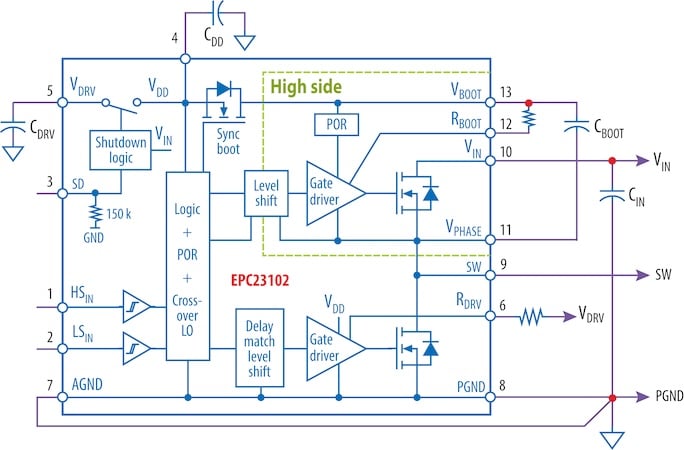
Figure 1. Block diagram of EPC23102 ePower Stage IC. Image used courtesy of Bodo’s Power Systems [PDF]
An example of a GaN-based motor drive using the EPC23102 monolithic IC is the EPC9176 reference design, whose block diagram is shown in Figure 2. The EPC9176 is a 400 W motor drive inverter using three EPC23102 integrated circuits with a wide input voltage range of 14 V to 85 V. It can deliver up to 20 ARMS current to the motor, making it suitable for powering most of the robot’s smaller joints and actuators.
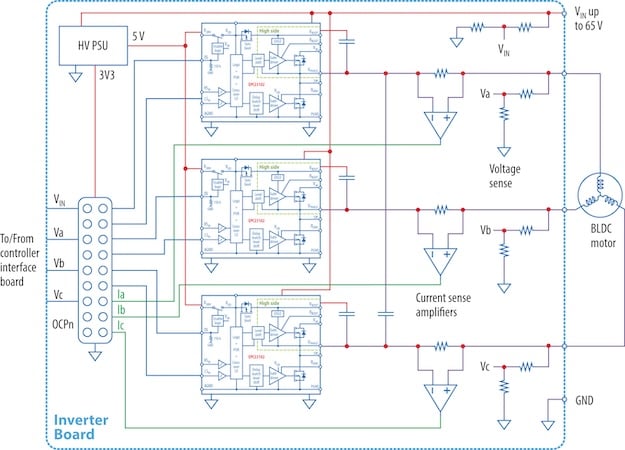
Figure 2. Block diagram of EPC9176 reference design board. Image used courtesy of Bodo’s Power Systems [PDF]
Enhancing Robotic Vision: GaN in Lidar Systems
In addition to movement, humanoid robots need to perceive and interact with their environment in a manner like humans. Vision is one of the most critical sensory functions for a humanoid robot, enabling it to navigate its surroundings, avoid obstacles, and perform complex tasks. To achieve this, robots rely on advanced vision systems such as Lidar (Light Detection and Ranging).
Lidar works by emitting laser pulses and measuring the time it takes for the pulses to reflect off objects and return to the sensor. By calculating the time-of-flight of these pulses, lidar systems can create a high-resolution, three-dimensional digital map of the robot’s surroundings. In contrast to a map made from camera images, this map provides precise X, Y, and Z coordinates for the entire surroundings, which can then be efficiently processed by the robot’s AI to develop spatial awareness and make real-time decisions.
Lidar is particularly well-suited for humanoid robots because it offers high resolution, long-range detection, and fast frame refresh rates, all of which are essential for tasks that require precise and timely information about the environment. However, to maximize the performance of lidar systems, the underlying electronics must be capable of operating at extremely high speeds and with high current density—requirements that are ideally met by GaN devices.
The Advantages of GaN in Lidar Systems
GaN technology has been a critical enabler of lidar systems for over a decade, particularly in applications such as autonomous vehicles and advanced driver-assistance systems (ADAS). The same properties that make GaN ideal for automotive lidar are equally beneficial in humanoid robots.
One of the primary reasons for GaN’s dominance in lidar systems is its exceptional switching speed, which is essential for achieving high resolution and fast frame refresh rates. GaN devices can switch at speeds that are 100 times faster than silicon MOSFETs, allowing the lidar system to emit and detect laser pulses at a much higher frequency. This increased frequency translates directly into higher resolution, enabling the robot to create more detailed and accurate maps of its surroundings.
In addition to speed, GaN devices offer a higher current density than silicon, allowing for more powerful laser pulses. This is particularly important for long-range detection, where the laser pulses need to travel greater distances and still return a strong signal. By conducting more current in a smaller footprint, GaN devices enable the design of compact lidar systems that can be easily integrated into the robot’s structure without compromising performance.
Another key advantage of GaN in lidar systems is that its small size and chip-scale packaging enable the minimization of parasitic inductances, which can degrade system performance. EPC has developed integrated circuits that combine a powerful GaN transistor with an integrated driver, effectively eliminating common source inductance and gate loop inductance. An example is the EPC21601, a 15 A, 40 V integrated GaN laser driver capable of over 100 MHz. Its 1 mm x 1.5 mm wafer-level package is compact, yet its solder bumps offer low inductance. Figure 3 shows the typical connection diagram for the EPC21601 as a laser driver. By integrating the transistor and driver into a single IC, EPC has improved the performance, reduced the size and cost, and increased the reliability of lidar systems in humanoid robots (The EPC9154 development board is available to help speed up new designs).
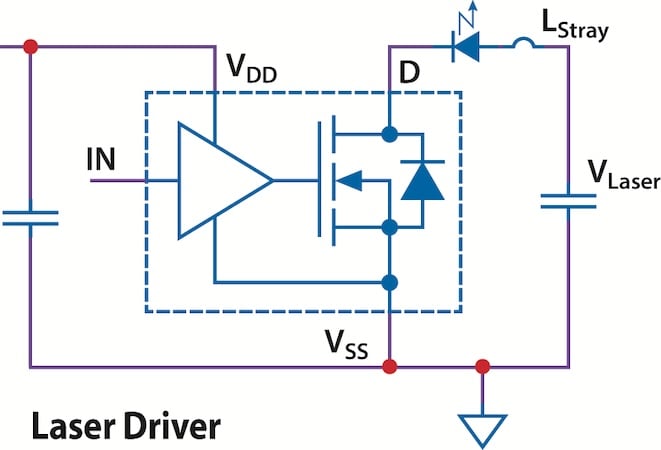
Figure 3. Typical connection using EPC21601 as a laser driver. Image used courtesy of Bodo’s Power Systems [PDF]
Powering the AI Brain: GaN in DC-DC Converters
The brain of a humanoid robot is its artificial intelligence system, which processes sensory data, makes decisions, and controls the robot’s movements. AI systems are computationally intensive and require significant power to operate, especially when performing complex tasks such as real-time image processing, decision-making, and motion control. To meet these power demands, AI server power supplies rely on highly efficient DC-DC converters that can deliver power with minimal losses.
In humanoid robots, the AI system is responsible for processing sensor data, making decisions, and controlling the robot’s movements. This requires a constant supply of power, and any inefficiency in the power supply can lead to reduced performance, increased heat generation, and a shorter operating time. GaN-based DC-DC converters help to address these challenges by delivering power with minimal losses, ensuring that the AI system can operate at peak performance.
GaN in AI Server Power Supplies
Using GaN in AI server power supplies provides a glimpse into the future of power electronics in humanoid robots. AI servers, which are produced by companies such as Nvidia, AMD, and Alibaba, require extremely high power densities to fit within the limited space of a server board while delivering large amounts of power efficiently. GaN-based DC-DC converters have proven to be highly effective in meeting these requirements, offering power densities of over 5,000 watts per cubic inch with efficiencies approaching 98%.
One example of such a GaN-based DC-DC converter is the EPC9159 reference design, shown in Figure 4, which measures just 23 by 18 mm and can deliver 1 kW of continuous power. This design achieves peak efficiency of more than 97.5% and full load efficiency of over 95.5% when delivering 1 kW into a 12 V load. The compact size, combined with high efficiency, makes the GaN-based DC-DC converters an ideal solution for powering AI systems in humanoid robots, where space is limited and power efficiency is critical.
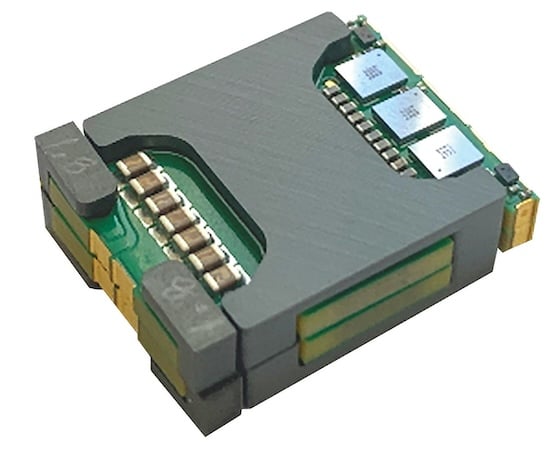
Figure 4. EPC9159 is a 1 kW, 48V/12V LLC Converter. Image used courtesy of Bodo’s Power Systems [PDF]
GaN’s Role in the Future of Robotics
Humanoid robots are already being deployed in various environments. Semi-humanoid robots are delivering room service in hotels, serving as security guards in airports, and even delivering food on city streets. Soon, humanoid robots are expected to find high-volume applications in warehouses and factories, performing repetitive or dangerous tasks. As birth rates decline in developed countries, there is a growing concern about the availability of workers to support an aging population. Humanoid robots have the potential to fill this labor gap, helping to maintain economic stability and improve the quality of life globally.
As the global humanoid robot market grows, the demand for advanced power electronics will only increase. GaN technology is uniquely positioned to meet this demand, offering superior performance, efficiency, and reliability compared to traditional silicon-based devices. Whether it’s powering the motors that drive the robot’s movements, the sensors that allow it to perceive and navigate its surroundings, or the AI systems that control its actions, GaN is the key to unlocking the full potential of humanoid robots. The ongoing advancements in GaN technology ensure the development of humanoid robots that are more efficient, reliable, and capable than ever before.
This article originally appeared in Bodo’s Power Systems [PDF] magazine.